What to do when orchids won't bloom? Master these methods to promote flowering
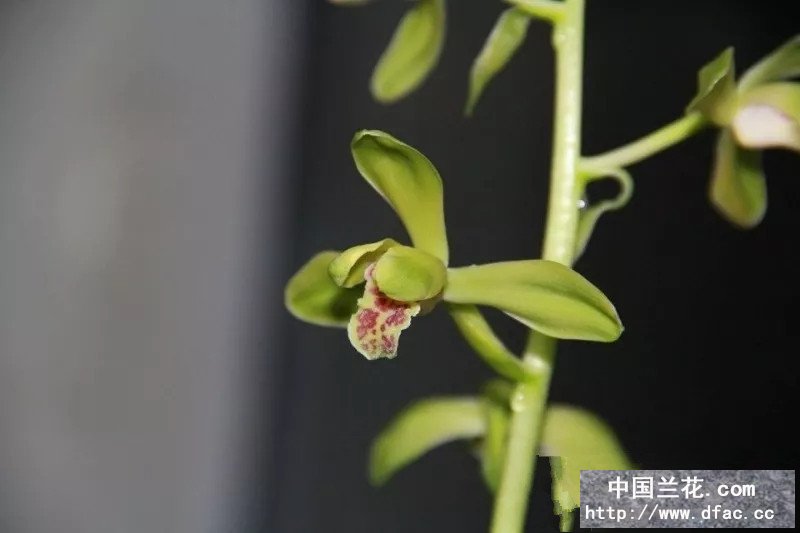
The most commonly reported issue is: “Orchidsare lovely, very fragrant and beautiful, but after you buy them and take them home, they never bloom again the next year.” This has become an obstacle to the popularity of orchids.
Based on the knowledge and practical experience we have gained, the factors affecting orchid bloomingfloweringare many and varied.(China Orchid Network http://www.dfac.cc)
The first is sunlight. Only with sufficient light can you grow strong plants, and strong plants are the foundation for orchids to bloom. Although all orchids enjoy sunlight, the major genera of orchids have different requirements for sunlight. Those needing the most light, in order, areCymbidium faberi、Four SeasonsOrchid、Cymbidium goeringii; those that cannot be exposed to direct sunlight for long periods in summer, in order, are Cymbidium hookerianum, Cymbidium sinense, winter orchid, followed by Cymbidium goeringii, Four Seasons orchid, and summer orchid. Outdoors, I used granular potting medium, Songliwang, soillesscultivation, and mixed potting medium separately to plant wild-collected orchids as an experiment, and all four pots of summer orchids survived. One pot of orchid plants grown soillessorchid plantseven produced a spike of flowers in mid-September. Nowadays, summer orchids blooming around National Day is not considered unusual.(China Orchid Network http://www.dfac.cc)
One orchid enthusiast grew spring orchids, summer orchids, and autumn orchids on a rooftop terrace, leaving them exposed to wind, rain, and sun. Of course, orchids grown this way won't look very attractive, but they bloom more than those grown by ordinary methods. It should be noted here that growing orchids well still requires appropriate shading; the purpose of emphasizing sunlight regulation is to grow strong plants that can bloom more. Different varieties should be treated differently -- when to shade and for how long cannot be generalized.
"Dry orchids, wet chrysanthemums" has always been a truth. How do we address the orchid issue? To ensure orchids not only grow foliage but also bloom, proper watering is required during the orchid care period. Sometimes, certain potted plants grow quite well and reach their expected size on schedule, but they don't bloom. To ensure orchids bloom in time, water should be given promptly during the sprouting and growing periods, so that the potted plants don't grow insufficiently or develop incompletely due to lack of water. Then, during the flower bud differentiation period (for example, when spring orchids have four or five leaves on the previous year's growth, and when there are five or six clumps of grass in the pot -- by late August, the new growth has basically matured), water should be forcibly withheld two or three times at intervals. Under conditions where the plants won't be scorched by sunlight, do not water for two or three days, until the pot's water level drops below 20%, then supply water to the pot, allowing the orchid plants to absorb enough water, then withhold water once or twice more. With this treatment, generally, provided there is no shortage of fertilizer and flowering elements, flower buds will emerge in September. This method is applicable to summer orchids, winter orchids, and Cymbidium sinense. On dry, windy days, attention should be paid to environmental humidity.
Many orchid enthusiasts report that the plants grow very vigorously, especially autumn orchids, which often fill the pot to the brim with growth, yet don't bloom for two or three years. Particularly small-leafedTiegusuis even harder to bloom, even when grown to a large clump of multiple shoots, with nopests or diseases, yet simply no flowers. This problem lies in fertilization. When we grow orchids, most enthusiasts use fertilizer, but there is a lack of phosphorus and potassium fertilizer and trace elements. Most use soybean cake water or fish scraps, and in recent years, “Osmocoteslow-release fertilizer”is most commonly used. The main component of these fertilizers is nitrogen, containing only a small amount of phosphorus and potassium. The plants grow very vigorously, with a sprouting rate of up to 100%, and many even produce “double dragons” from a single growth, creating a lush green display. In technical terms, at this point the plants are only engaged in vegetative growth and not reproductive growth——the more vigorously the plants grow, the less they bloom, ultimately becoming “mute plants” year after year. When this happens, stop regular fertilization and apply defatted bone meal heavily. This can be done over a longer period, applying once every half month, sprinkled on the pot surface, slightly stirred and mixed into the topsoil, so the fertilizer can seep into the soil with watering. For foliar feeding, it is very important to add trace elements such as magnesium, selenium, and boric acid, with boric acid being especially important. Trace elements should be dissolved in alcohol and then diluted a thousand times with water, applied once a week, with a 5-7 day interval, and water withheld once, for a period of three months to half a year.
We often find colored flowers amongwild-collected orchids, but when cultivated in pots, we find that the flower color fades -- purple flowers lose their purple, red flowers lose their red, yellow flowers lose their yellow, etc. Besides adding targeted chemical substances such as clear lime water, sulfur water, ammonium nitrate, superphosphate, and alum water according to the different colors of the flowers, some people now recommend using rare earth elements as fertilizer, or growing colored flowers in a medium mixed with maifan stone, so that both the colored flowers and the variegated leaves become more brilliant and vivid. Those that have lost their variegation may regain it -- it's worth a try.
Orchids blooming on schedule is a multi-factor issue. Orchids have strong heredity; stubborn plants that don't bloom still won't bloom after being divided and replanted for two or three years. We call these plants “eunuch plants.” For these “lazy” plants, hormone stimulation should be given, such as the “blooming fertilizer” sold on the market. Through experiments on autumn orchid seedlings, it was found that of five pots of “Jinsi Mawei”treated with blooming fertilizer, three pots bloomed twice and two pots bloomed five times. Of the five comparison orchids, one pot bloomed twice, one pot bloomed once, and three pots showed no flowers but produced one extra shoot each. As for two pots of wild-collected transparent high-variegation single plants that had not bloomed in three years of cultivation, after applying blooming fertilizer, they both produced beautiful flowers this year.
The main contradiction between orchids blooming and not blooming lies in the issue of vegetative growth versus reproductive growth. Plants that grow too vigorously are difficult to bloom, while orchid plants in “harsh” environments with “poor” conditions mostly can bloom. As the saying goes: “The rich man laments having no heirs; the beggar has many children.” To make orchid plants bloom, you must put effort into light, ventilation, and watering.(China Orchid Network http://www.dfac.cc)