Sharing some insights on growing orchids on the roof
Repost: A brief discussion of some experiences in growing orchids on the roof
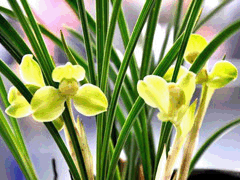 Repost: A brief discussion of the roofgrowing orchidssome experiences
Growing orchidsGrowing orchidsGrowing orchids is an elegant artistic enjoyment. For middle-aged and older people, it can cultivate the mind and character, enrich amateur spiritual and cultural life, and benefit physical and mental health. In 1989, I used the balcony of my sixth-floor residence to grow more than 20 pots offour-seasonorchidsandCymbidium goeringii. Thanks to careful maintenance, they grew well. After several years of exploration and practice, I initially mastered the techniques of growinggrowing orchidsand also greatly increased my interest in cultivatingorchids. In 1992, I used the rooftop platform to build an orchid shed with an area of more than 90 sq m, growing more than 400 pots of various varieties oforchids. The varieties included more than one hundred varieties amongCymbidium goeringiisuch as Luyun, Junqi, Huanqiu Heding, Yumeisu, Yu Hudie, Da Fugui, Sixi Die, Song Mei, Wang Zi, Long Zi, Xiashan Mei, Diehua, YunnanLianbanorchid, and others. Among them,four-seasonorchidsincluded more than 20 varieties such as Mei, Die, He, and Qihua, and there were alsoCymbidium faberivarieties such as Cheng Mei, Zheng Xiaohe, Nanyang Mei, Yongyan, Lao Ranzhi, Da Yipin, and Guanding. They generally grew well, with orchid leaves emerald green and delightful, very few spots or scorched tips were found, and basically nopests or diseasesoccurred. They bloomed abundantly and were widely praised by orchid friends. According to my own experience, to cultivateorchidswell, the most important thing is to create a suitable growing environment for theorchids'growth and development. Jiaojiang is located along the coast of central Zhejiang and is the central urban district of Taizhou City, with a dense population and a prosperous economy; it is a newly emerging port city. It has a mid-subtropical maritime monsoon climate, with an annual average temperature of 17°C, an extreme high temperature of 38.1°C, an extreme low temperature of 7.1°C, and an annual temperature range of 21.8°C: the annual average precipitation is 1519.9 millimeters: the annual average evaporation is 1360.4 millimeters: the annual average relative humidity is 82%. Because it is located along the coast, the wind is relatively strong, and when affected by typhoons the maximum wind speed exceeds 45 m per second. In summary, the climatic conditions of Jiaojiang are basically suitable for orchid growth. However, when growing orchids on the roof, factors such as strong wind, high evaporation, intense sunlight in summer and autumn, and sharp temperature changes between day and night must be taken into account. This should be based on the characteristics of orchids: "they like the sun but fear heat, like wind but fear cold, like rain but fear waterlogging, like moisture but fear dampness, like dryness but fear parching, like soil but fear thickness, like fertilizer but fear turbidity, like tree shade but fear dust, like warm air but fear smoke, like people but fear seclusion, like clustering but fear separation from the mother, like cultivation but fear pampering." I built an orchid shed on the rooftop platform that can block wind, shelter from rain, provide shade, and appropriately regulate temperature and humidity. The materials were mainly flat glass and scrap steel, with low cost and convenient applicability. In the process of orchid care, the main tasks are the following: 1. Appropriate lighting. Orchid plants are shade-loving plants. In high-temperature seasons, avoid exposure to the blazing sun. But there must be appropriate light to enhance photosynthesis, speed up orchid plant growth, strengthen roots and leaves, promote flower bud development, and allow more blooming and better blooms. Generally, from late April to mid-October, because the temperature is relatively high and the sunlight is strong, honeysuckle vines and wisteria are planted above and on the west side of the orchid shed, providing shade and also helping retain moisture. Keeping light transmittance at 10-30% is more suitable. From late October to early April of the following year, the temperature is not high and the sunlight is not strong, so shading is not needed. But honeysuckle vines and wisteria happen to begin shedding leaves and can receive sunlight, and in late April of the following year they grow green leaves again and can provide shade and retain moisture. Planting honeysuckle vines and wisteria is relatively ideal. 2. Pay attention to ventilation. Appropriate ventilation can keep the air inside the orchid shed fresh, benefit orchid plant growth, and prevent the breeding of pests and diseases. In hot weather, opening the orchid shed for appropriate ventilation can also regulate temperature and prevent excessively high temperatures inside the orchid shed from inhibiting orchid plant growth. 3. Maintain suitable air humidity. The ancients said, "dry orchids, wet chrysanthemums." Orchids have fleshy roots, so the growing medium (generally referring to soil) must have good aeration and drainage to prevent water retention. Prolonged water accumulation will reduce the air in the growing medium, affect the physiological activities of orchid roots, and cause root rot. Therefore, the moisture in the growing medium should not be too much, but the demand for air humidity is relatively high. If the air is too dry, it will affect orchid plant growth. Therefore, when the air is dry, methods such as spraying should be used to increase air humidity. Air humidity should preferably be maintained at around 75%. 4. Regulate temperature.Cymbidium goeringiiThe most suitable temperature for growth is between 15°C and 28°C. When the summer temperature is higher than 32°C, the orchid shed should use methods such as ventilation, spraying, and watering the ground to reduce humidity. If a low temperature below 0°C occurs in winter, then the orchid shed should be appropriately heated. For example, hang several electric lights inside the orchid shed. I boil water with an electric kettle inside the orchid shed, which can also produce a heating effect. 5. Prevent various kinds of pollution. When growing orchids on the roof, it is unavoidable to be polluted by smoke, dust, and other pollutants. Generally, methods such as washing the leaves with water or chemical prevention and control can be adopted. My orchid shed is built on the roof of the sixth floor, with glass windows on all four sides and an openable roof; opening it at night can receive rain and dew while sheltering from wind, and the windows on the windward side should not be opened or should be opened less. This can avoid and prevent pollution. The above is only my preliminary experience in growing orchids on the roof, and it remains to be further practiced and explored.