The Relationship Between Orchid Sprouting Rate and Seedling Size
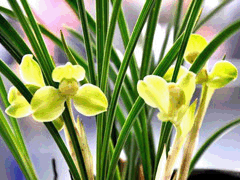 Orchid Orchid Stone Studio Orchid Talks No. 8: Sprouting Rate and Orchid Seedling Size
Together with "A Brief Discussion on Orchid Seedling Division and Sprouting Rate," this forms a complete piece on division management, discussing division, sprouting rate, and seedling size from the perspectives oforchid plantsthemselves and later-stage management. Sprouting Rate and Orchid Seedling Size Orderorchid plantsProducing many seedlings and producing large seedlings is what every orchid enthusiast hopes for and takes delight in, but not every orchid enthusiast can achieve it.orchid plantsThe sprouting rate is related to many aspects, including the orchid variety, the vigor or weakness of the orchid plant, the size of the orchid clump, cultivation and care, and the light intensity of the environment. I will start from the above aspects, combining my own practice and the knowledge learned from books, orchid friends, and the internet, and discussCymbidium goeringiiwith everyone. 1. The relationship between sprouting rate and variety. The sprouting rate of orchid plants has a certain relationship with variety. Some varieties sprout very easily and are relatively easy to grow, while some are both difficult to grow and poor at sprouting. Generally speaking, some butterfly-type and multi-petal butterfly types have a higher sprouting rate, and butterfly types also tend to produce flowers easily; lotus types sprout at an average rate, and when the mother plant is vigorous, they occasionally produce double growths, but second and third generations are rarely seen, and especially Lvyun (classified as lotus type) is the most difficult to sprout, though once the plant grows large, it can still produce flowers reasonably well; plum and immortal types vary in how many seedlings they produce, and some have a relatively high sprouting rate, often filling a whole pot without producing flowers, while the lowest sprouting rate is also found among plum types, which are extremely difficult to grow: when new plants emerge, the old seedlings decline, and they do not easily produce flowers; variegated-leaf types also vary in how many seedlings they produce, but some variegated-leaf types are difficult to grow, and those with too high variegation are even harder to care for. 2. The vigor or weakness of orchid plants and the size of the orchid clump have a certain relationship with the sprouting rate. Orchid enthusiasts have often encountered this situation: in orchid plants of the same variety, the sprouting rate of the rear pseudobulbs is higher than that of the front pseudobulbs, and the sprouting rate of weak plants is higher than that of vigorous plants. In fact, this is related to the plant's survival instinct. When the plant is relatively weak (except for the pseudobulb), in order to survive and reproduce, the plant often manifests a phenomenon of producing more seedlings, mainly through asexual reproduction, but the orchid seedlings produced in this way are often weak and small, will not produce a second-generation shoot within one year, and the plants produced the next year are also not large; some even become smaller and smaller as they are grown, and it is very difficult to get them to develop vigorously. Multi-seedling connected rear pseudobulbs are somewhat better; some plants with vigorous seedlings and large connected clumps mainly complete reproduction through sexual reproduction, that is, flowering and fruiting, so vigorous seedlings and clumps with many connected plants tend to produce flowers and often produce fewer shoots, but the shoots produced are vigorous and large in plant type, with new seedlings becoming more vigorous year by year and having more leaves than the old plants. In order to pursue the goal of producing many seedlings and large seedlings, it is therefore necessary to divide the plants at the right time so that they produce more seedlings. In order to produce vigorous seedlings, the orchid plants cannot be divided too small.orchidsare plants that like to grow in clusters. Large plants should have at least three connected seedlings, and generally, judging by the growth direction, it is suitable to divide into three to five seedlings. Such plants are easy to cultivate and also easy to flower. However, for some more expensive plants, when purchasing varieties and pursuing seedling count, it is also acceptable to divide them relatively smaller. 3. Later-stage cultivation and care are greatly related to the sprouting rate of orchid plants and whether the plants are vigorous or weak. First, choose pots appropriately according to the strength and size of the orchid seedlings, and prepare a reasonable growing medium. Pots should preferably be small rather than large. When weak plants and small plants are potted separately, the growing medium should be slightly less fertilized, and the particles of the growing medium should also be smaller. The depth at which orchid plants are planted also has a certain relationship with the sprouting rate and the vigor or weakness of the orchid plants. When planted deep, they tend to sprout, the plants are tall and upright, but the plants are relatively thin and the pseudobulbs are not robust; when planted shallow, they sprout less, but the pseudobulbs are robust and they tend to flower. Therefore, according to the known characteristics of orchid plants, appropriately adjust the planting depth. Generally, orchid plants should be planted to a height where the pseudobulb is neither fully exposed nor fully buried. As for watering, when the firstCymbidium goeringiibuds of orchid plants begin to stir, the sprouting rate is higher under moist conditions than under dry conditions, so moisture should be maintained, and some fertilizer to help promote buds should be used. For plants grown in hard granular growing medium, it is better to keep them moist rather than dry. Until the leaf tips of the new seedlings open, moisture should still be the main focus, which helps the growth of orchid seedlings; apply some fertilizer for growth. When the new plants are half-grown, which is in summer, watering should be slightly controlled, and the watering interval should be lengthened, but when watering, it must be thorough. According to weather conditions, appropriately use some fertilizer that helps growth and strengthens the plants. In autumn and winter, the amount of watering should be reduced, so that the pseudobulbs of the new seedlings become robust, which is also beneficial to the development of flower buds. 4. Environmental light conditions are also greatly related to the sprouting rate, the size of orchid seedlings, and the flowering rate. When environmental light is intense, orchid plants are robust, the plant type is short, the leaf color is light, and they tend to flower, but the sprouting rate is not high; when light is weak, the sprouting rate of orchid seedlings is somewhat higher, but the plant type is tall and large, the pseudobulbs are not robust, they do not easily flower, disease resistance is relatively poor, and they adapt slowly after a change of environment. To make orchid plants both productive in sprouting and robust, it is very important to provide reasonable light. In early spring, late autumn, and winter, sufficient diffused light should be provided. In summer, when orchid plants grow vigorously, reasonable diffused light should also be provided, but orchid plants must not be placed under the scorching sun. In autumn, apply phosphorus and potassium fertilizer to makeorchidsrobust, increase the size of the pseudobulbs of the new plants, and accumulate sufficient nutrients for producing many seedlings and vigorous seedlings the next year. This article was already published in the November 2005 issue of "Lanhui"