How to grow weak and small orchid seedlings? Sharing the cultivation method
Cultivation method for weak and small orchid seedlings (reposted)
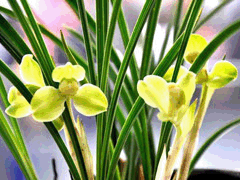 Weak and smallorchidseedling cultivation method (reposted)
The reasons for producing weak and smallorchidseedlings include: dragon-root seedling plants grown from orchid seed development, or weak and small seedlings developed from bulb regeneration after orchid plants are damaged by humans or livestock or die abnormally. Such seedlings have poor disease resistance, a very low survival rate, and are not easy tocultivate; generally, without 7 to 8 years it is very difficult for them to bloom. Therefore,cultivatingsuch seedlings must be selectively chosen with a purpose. For example, regenerated seedlings of precious and rare orchid varieties, and unnamed seedling plants that you believe have relatively highcultivationvalue.
When first obtaining small seedlings, regardless of the variety, the residual roots and decayed leaves should first be trimmed, and the soil and remnants on the roots and leaves washed clean with clear water, then use 0.5% thiophanate-methyl or another fungicide to soak the entire orchid seedling for 5 to 10 minutes, shake it slightly, lift it and hang it upside down in the shade to dry. Wait until the root system turns slightly white and becomes somewhat soft, then it can be potted. For a single seedling or double seedlings, a pot with a diameter of 10 to 20 cm may be selected, and before use it should first be soaked for 1 to 2 hours in a 5% sterilizing agent. The cultivation substrate is best made of fresh sawdust with low fat content and relatively fine particles; steam it or chemically sterilize it, filter off the yellow wastewater, sprinkle it dry, and then plant in it. Sawdust has a certain heat-retaining and water-retaining property, which helps the root and bud differentiation and prompting of orchid seedlings. A chemical nutrient solution fertilizer (commercially available) can be applied year-round, and it is very suitable for the initial directional cultivation of orchid seedlings.
After the small seedlings are potted, the first soaking with water must be thorough. After the water has drained completely from the pot holes, wait a moment, then supplement with a mixture of 0.3 to 0.5% chemical nutrient solution and 0.2% thiophanate-methyl, best applied by fine-hole spraying. Finally, use a sterile cotton ball to absorb the accumulated water in the leaf axils of the orchid leaves, place it in a cool and ventilated place for 10 days of care, and spray a little clear water on the orchid leaves every morning and evening, with the goal of moistening the orchid leaves. After they survive, move them out, and afterward the number of water sprays may be appropriately reduced; every 10 to 15 days, regularly apply a mixture of 0.3% and 0.1% nutrient solution plus thiophanate-methyl. The pot soil humidity should be kept at 65 to 70%, and the temperature (pot soil) should always be kept above 18°C. After about 15 days, roots can burst out explosively, and strong seedlings can grow in the same year. If management is proper year after year, flower buds can form in 4 to 5 years.
After planting, observe the seedling condition carefully at all times, pay attention to weather changes, and do a good job of heat prevention and freeze prevention and warmth retention. In winter, pay attention to temperature differences when using water, and let the small seedlings receive more morning sunlight. Medicine and fertilizer should be applied frequently and lightly; if it is found that medicine or fertilizer application is too heavy and harms the seedlings, they can be rinsed with clear water, or the roots can be lifted and the pot turned promptly, rinsed, and then planted again. A hygrometer can be inserted into the pot to observe temperature and humidity differences. After three years, the pot should be turned once, and afterward a humus mixed soil can be used for cultivation, and management can follow traditional care methods.