Detailed Explanation of the Growth and Development Stages of Cymbidium sinense and the Characteristics of Each Period
Growth and Development Stages of Cymbidium sinense
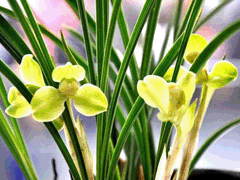 Cymbidium sinensegrowth and development stages
According to observation,Cymbidium sinensegrowth and development roughly goes through the following stages:
February to March (Gregorian calendar, same below) new buds sprout;
April to May new buds emerge from the soil;
June to July new leaves elongate;
August to September new leaves continue to elongate, forming new orchid plants; new roots sprout and grow, forming an independent root system;
October to November new orchid plants gradually mature, the pseudobulb enlarges, and flower bud differentiation occurs;
December to January of the following year the flower scape elongates;
February flowering period.
1. New shoots elongate, growing fastest
According to the author's fixed-point survey in 1987—1988 on majorCymbidium sinensecultivatedvarieties, during the four months from June to September, the growth height of new shoots as a proportion of the height of adult plants was: Qijian Baimo 70%, Qihei 68%, Jinzui Cymbidium sinense 66%, Yinbian Cymbidium sinense 52%, averaging 65%
2. New orchid plants form an independent root system
Before the new shoots emerge from the soil and unfold their leaves, they mainly rely on the mother plant for water and nutrients; by late July and early August, when the new shoots have fully developed their leaves and formed new orchid plants, a large number of new roots sprout; August to September is the period when new orchid plants form an independent root system. At this time, roots and leaves grow in sync, so it is necessary both to promote the new leaves to grow taller, wider and thicker, and to cultivate a healthy root system.
3. Susceptible to summer heat and pest and disease damage
In June and July, when the new leaves begin to fork open, they are susceptible to red spider mite damage, causing small red spots to appear on the central leaves. Red spider mite is a type of mite pest, usually too small to see with the naked eye, with about 10 generations per year. When summer temperatures reach 30 degrees, a generation can form in 5 to 7 days. Last summer, due to high temperatures and frequent rain, red spider mite damage was relatively widespread. According to a June survey of the Qihei variety, the damage rate to new shoots was 3 to 8%, with the worst cases reaching as high as 12%.
In August and September, with high temperatures and intense heat, if shading is insufficient and water supply inadequate, plants are easily scorched by the burning sun, causing leaf edge burn or scorched tips, with broad-leaved varieties such as Huizhou and Jinzui being especially susceptible. This is a physiological disorder and can be completely avoided through human intervention.
From late September to early October, although the summer heat has passed, spells of lingering heat after autumn occasionally occur (commonly known as the "autumn tiger"), with midday temperatures often reaching above 30°C, and extremely dry conditions, catching people off guard. If shade netting is removed too early, or watering is insufficient, or the root system is poor, it can trigger a major outbreak of black spot disease. Within three to five days, black spots appear dotting the once green orchid leaves (with tender leaves being more severely affected), posing a great risk of losing a whole year's effort overnight. This is the period when growing orchids is most prone to problems, and one must never be careless.