Detailed Explanation of Single-Plant Cultivation Methods and Technical Key Points for Orchids
Single-Plant Cultivation of Orchids
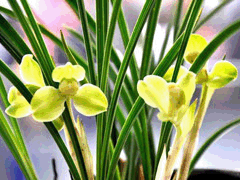 Orchids' single-plantcultivation
, in addition to the need for careful maintenance beyond normal cultivation, there are several steps that must be taken seriously in order to achieve good results.
1. The planting method must be determined according to specific circumstances. Single-plantcultivationcan accelerateorchidpropagation, but it is by no means true thatorchidplants are all suitable for single planting, nor that single planting will necessarily produce good results. Although cluster planting propagates slowly, when repotting and dividing orchids, whether to use single planting or cluster planting should be determined based on the plants' growth conditions and the original planting method. The growth condition of a plant that can be single-planted is mainly judged by the daughter generation and the grandfather generation. If the daughter-generation plants are robust and mature, and the grandfather-generation root system is still acceptable, and they can survive independently after being separated, then the new and old generations can be separated and planted singly to strive for more propagation of the new generation. Otherwise, the daughter-mother generation or mother-grandfather generation plants should be planted as clusters to ensure safety and give the propagated offspring better quality. If the mother generation was originally cultivated as a single plant, it is generally not suitable to separate it again; it can be allowed to grow as a cluster for a period, and after maintenance and rejuvenation, single planting can be considered according to the situation. This is because with continuous separation and single planting, some plants may no longer sprout new shoots, and some plants may quickly wither and die; those that can propagate will produce offspring of even poorer quality. Only by seeking truth from facts and using the two planting methods in combination, letting them complement each other's advantages, can a balance between quantity and quality be achieved.
2. Careful separation and meticulous planting are required. In clustered orchids, the gap between daughter and mother plants is the narrowest, making separation relatively difficult; and the season suitable for repotting and dividing orchids is often also the time when daughter-generation plants begin to sprout leaf buds. Therefore, separation must be done with extreme care, minimizing wounds as much as possible and avoiding damage to young buds or growth points. After the plants are separated, the root systems of each plant differ; a single plant has far fewer roots than a cluster, and its ability to anchor the plant is weaker. Therefore, after planting, depending on how stable the plant is, measures should be taken to reinforce it when necessary, to prevent the plant from toppling and damaging the orchid.
3. Temperature, humidity, and light must be well controlled, fertilizer should be applied appropriately, and work on promoting budding and strengthening seedlings should be done well. The sprouting of orchid leaf buds is closely related to temperature, humidity, and light. For repotting and division in spring, choose a time when the temperature is relatively high and the weather is relatively stable (generally between Grain Rain and the Beginning of Summer). After division and planting, cover the pot surface with sphagnum moss, covering the pseudobulb base, and constantly maintain relatively high humidity for the plant (including the sphagnum moss) and the environment. At the same time, provide appropriate light to help the plant sprout quickly and produce many buds. The fastest growth period for autumn orchids is generally in summer and early autumn; during this time, water must be sufficient and thin fertilizer applied frequently to promote robust growth of the new orchid seedlings.