What are the key points for managing orchids during the bud stage?
Key Points for Managing Orchids During the Bud Stage (Repost)
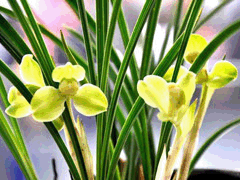 OrchidKey Points for Managing During the Bud Stage (Repost)
As Grain Rain arrives, temperatures rise and rainfall increases,orchidssprout and break through the soil one after another, full of vitality.Orchidbud stage management thus becomes an important item on the agenda for orchid growers. So-called orchid bud stage management refers to the daily management of orchids during the period from sprouting, emergence from the soil, to leaf unfolding. In practice, I feel that how well the orchid bud stage is managed determines the success or failure of a whole year of orchid growing, and the following four aspects must be noted.
1. Air humidity should be increased, and the potting soil should be moist, not dry. In long-term orchid growing practice, people have found that orchids during the budding stage need a relatively humid environment, including higher air humidity and relatively moist soil humidity. If the potting soil is too dry and the air humidity is too low, it easily causes bud stagnation and atrophy of orchid root growth points, which is very unfavorable to theorchid'sgrowth. Therefore, orchid bud stage management should emphasize the word "moist," and strive to create a relatively moist environment for theorchid-growingsite and the potting soil. Specifically, through watering the orchid garden, spraying water on the leaves, increasing humidity with water trays, humidifiers, and other means, one should strive to create a daytime relative air humidity of no less than 40%. On the premise of ensuring that the potting soil is breathable and drains well, watering can be done somewhat more frequently, so that the orchid potting soil remains in a relatively moist state, ensuring that orchids sprout, emerge from the soil, unfold leaves, and grow robustly.
2. Fertilize skillfully during the budding period to promote strong buds and benefit growth. OrchidFloralbudding and rooting require large amounts of nutrients, so moderate fertilization is necessary. The whole year's work depends on a good start in spring. Experienced orchid growers generally choose a sunny day around Qingming, when all things revive, to apply a dilute fertilizer once to orchids that have notflowered, and apply it again after more than half a month; orchids that have already flowered generally need a short dormant period, and can only be fertilized more than 10 days after flowering. Spring fertilization is very important for orchid buds to grow strong, for later emergence from the soil, and for the growth of new buds and leaf unfolding. If no fertilizer is applied, new buds and new leaves are often thin and weak, and it is not easy for them to bloom, or it may affect next year's growth and flower size. Therefore, old orchid growers who use traditional methodsto grow orchidsattach great importance to applying bud-promoting and root-strengthening fertilizer to orchids in spring. After sufficient application, they generally do not fertilize again that year, which is quite reasonable.
3. Watering during the bud stage should be done with caution, and do not let water accumulate in the bud center. To create air humidity in theorchid-growingsite during the orchid budding stage and to clean the orchid leaves, people often spray water on orchids, which is very necessary. But one point must be treated with special caution: when orchid buds break through the soil, open their mouths, and unfold leaves, protective measures should be taken for the new buds when spraying water on orchids. Cover the orchid buds before spraying water to prevent water from accumulating in the bud center and causing bud rot and disease; if orchid buds accidentally get water in them, use a toothpick wrapped in toilet paper to absorb the water dry, so as to eliminate future trouble. There are many lessons in which improper watering during the bud stage causes bud rot and heart withdrawal, and orchid enthusiasts must treat this with caution.
4. Let orchids receive spring rain according to local conditions; orchid buds growing vigorously have a remarkable effect. As the saying goes: spring rain is as precious as oil. Spring rain has an irreplaceable effect on plant growth. Rainwater is the best water for growing orchids and also the best bud-promoting agent. Orchids in nature grow robustly precisely by being nourished by rain and dew. Practice has proved that as long as the air pollution in the place of residence is not heavy, after half an hour of rain on a spring rainy day, pollutants in the air are greatly reduced, and then letting orchids receive the rain is very beneficial to the growth of orchid buds, often achieving the remarkable effect of orchid buds growing vigorously after a long drought gives way to rain. Of course, nothing should be done with a one-size-fits-all approach; specific problems should be analyzed specifically. Places with severe air pollution are not suitable for letting orchids receive rain. Remember this, remember this.