Key Points for Orchid Care and Management in Shanghai in October
October Orchid Care Points for Shanghai
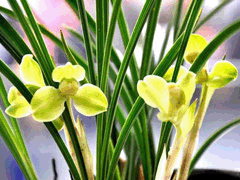 October Orchid Care Points for Shanghai
In October, the maximum daytime temperature in Shanghai is generally around 27°C, and the minimum nighttime temperature is around 13°C. Weather above 30°C is uncommon, and minimum temperatures below 10°C are also uncommon. Sunny weather predominates, with little rain. Although cold air occasionally arrives, temperatures also rise quickly. The average temperature throughout October stays around 18-20°C, which isorchidsthe golden period for growth. At the same time,orchidsdaily care has also entered a busy period, which can be summarized into two key points, namely reducing dryness and strengthening the plants.
One, reducing dryness.
The temperature in October is suitable and very favorable fororchidsgrowth, but at this time, the wind is strong and the air is dry, and the usual relative air humidity is only 30—50%, which in turn poses a threat to the normal growth oforchids. Therefore, reducing dryness should be the top priority in our orchid care in October and for some time afterward. Generally speaking, there are several methods for reducing dryness:
1. Place water basins. You can place water basins around the orchids or under the pots, using the natural evaporation of water to increase environmental humidity;
2. Spray water on the leaves. Spraying water on the leaves is a good method commonly used to increase humidity, and it can also help clean the orchid leaves. At this time, the number of sprays can be appropriately increased, up to 3-4 times per day, but note that the finer the water droplets, the better, and the leaves should not be dripping wet;
3. Moisten the pot surface. At this time, the surface potting medium of the orchid pots dries out very easily, while the orchid pots are not short of water internally. A sprayer should often be used to moisten the surface potting medium of the orchid pots;
4. Appropriate ventilation. Orchids like a well-ventilated environment, but at this time, to ensure air humidity, the amount of ventilation can be appropriately reduced.
5. In reducing dryness, we should also pay attention to one situation, namely that orchid pots dry from the bottom upward, especially when the orchid pots are placed suspended in the air. Usually, you must observe the bottom holes of the orchid pots more often. This can be solved by placing water trays under the orchid pots, and at the same time, note that when watering, you should water thoroughly.
Two, strengthening the plants.
As the orchid saying goes: strengthen the plants in autumn. In Shanghai, October is the key period. Because orchids grow relatively quickly this month, and it is also the last growth period of the year, the new plants produced in spring and summer have all grown up, and it is exactly the time of node formation (the pseudobulbs begin to enlarge). To achieve the goal of strengthening the plants, the only way is to start by strengthening the management of water, fertilizer, and light.
1. Water management: Orchids need moisture to grow, and in dry autumn, timely watering is needed. Therefore, relatively speaking, watering this month can be appropriately increased, always keeping the potting medium moist to meet the needs of orchid growth. Even if there is excess water, it can be resolved through the transpiration of orchid leaves and the blowing of autumn wind. This is precisely the essence of "do not let them dry out in autumn."
2. Fertilizer management: Crops rely on fertilizer to thrive, and if orchids are to be grown strong, fertilization is indispensable. This month, fertilization can combine root application and foliar spraying, and the concentration can be appropriately increased. After root application, the time before flushing with water can be extended to more than 10 hours, and if applied lightly, it may even be unnecessary to flush with water. The type of fertilizer is preferably a compound fertilizer containing nitrogen, phosphorus, potassium, and other trace elements.
3. Light management: Although orchids are shade-loving plants, their growth still cannot do without sunlight. Moderately sufficient light can enable orchid plants to manufacture and accumulate nutrients through photosynthesis, making orchid leaves upright, broad, and thick, and the pseudobulbs robust and round, and making them less susceptible to disease. The temperature this month is suitable. Below 25°C, orchids can be given full light, and above 25°C, they can be given two or three hours of morning sun.
4.Pest and diseasecontrol. This month there are relatively fewpests and diseases, but prevention should still be the priority. A sterilizing agent can be sprayed once or twice; for insect pests, guard against red spider mite infestations. Usually check the undersides of orchid leaves more often, or spray drugs such as dicofol or omethoate for prevention.
Three, a few notes.
1. The above is my ownorchid-growingexperience, and I only hope it is helpful to fellow orchid growers, even though it is a bit late.
2. Our country is vast in territory and abundant in resources, and the climate varies greatly from place to place. Moreover, each person'sorchid-growingenvironment and cultivation methods are also not entirely the same. The above items are only for reference for the Shanghai area, mainly fororchid growingunder natural home conditions.
3. The above items all refer to medium-sized plants with three or more growths. Weak plants, diseased plants, and small plants are another matter.
4. A few days ago, I visited several orchid friends and saw that some had already started repotting, and some had already begun withholding water and increasing light to harden the plants. I felt it was a great pity. These matters might as well be left until next month.