How should flowering-period management be done well? Keep the key precautions firmly in mind
How should one pay attention to flowering-period management!?
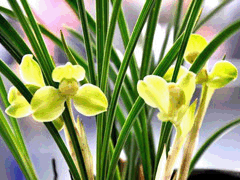 How should one pay attention to flowering-period management!?
In autumn, spring Cymbidium faberi and ColdOrchidbuds emerge from the soil one after another, and this is the critical period for bud management! Orchid growers often ask me: the buds come out but do not grow, and sometimes they even turn black, shrivel, and drop off, so the plant cannot bloom and all the effort is wasted? Wegrow orchidsand throughout the year there are only 3 joyful periods: in spring, many new shoots, exciting; in autumn, many buds, exciting; the next year, many flowers, exciting. Amid the excitement and happiness, when you think back on how hard-won the success bought by a year of diligent work really is!
If you wantorchidsto bloom, the first priority is to protect the new shoots; if the new shoots die young, how can there be flowers! Spring Cymbidium faberiorchidbud differentiation is formed during the maturation period of the new shoots and lasts nearly a year. Just think, what problems can occur over the course of a year!? Generally speaking, after spring Cymbidium faberi has accumulated nutrients for a year, the buds emerge from the soil, and the management during this period cannot be separated from routine management. Everyone knows that the flowering periods of different varieties are different:Cymbidium goeringii, Cymbidium faberi,Cymbidium sinense、Cymbidium kanran, Chun Jian,Lianbanorchid, etc., from the time the buds emerge from the soil, have a relatively long process of growth, bud development and vernalization. This process takes at least 5-6 months, and at the longest even 7 months.Four SeasonsOrchid, summerCymbidium kanran, etc., from the time the buds emerge from the soil to flowering, do not take long: as short as about 20 days, as long as 30-40 days. Whether or not a variety has a vernalization period, attention should be paid to fertilizer, water and light management during both the vegetative growth period and the reproductive growth period! Buds turning black, scorched, dropping off and dying have causes in many aspects, and most are caused by excessive moisture, excessive fertilizer, and stuffy, unventilated conditions. Generally, being able to produce flower buds is enough to show that nutrition is sufficient, so there is no need to keep applying fertilizer to the roots; only foliar topdressing is needed. The so-called need to pay attention to fertilizer and water management during the flowering period to promote the buds to swell and grow fully, in my experience, refers to spraying topdressing! At the same time, the temperature during this period is still high, the orchids are still continuing to grow, and sterilization and disinfection should be strengthened. When the buds emerge from the soil, if you apply fertilizer heavily and water heavily, and add occasional high temperature, stuffiness and lack of ventilation, the buds will turn black, shrink, and dry up, and all previous efforts will be wasted! For spring Cymbidium faberi during the bud pregnancy period, from the Start of Autumn to before the Winter Solstice, topdressing with phosphorus and potassium fertilizer should be strengthened to promote the buds to swell and grow fully. Whether for sterilization and disinfection or for spraying dilute fertilizer, the interval should be controlled at 7-10 days, and it must not be too frequent or too concentrated. Appropriate exposure to more sunlight is also needed; otherwise, damage to the bud sheath and rot at the heart are also troublesome matters. Another point to note is water and fertilizer control before flowering. When the buds are small and in the "pai ling" stage, water should be withheld 1-2 times, and this has a direct relationship with the later flower quality. If you are not in a hurry to participate in an orchid show, do not deliberately adjust temperature and humidity; let it open naturally.
By the way, let me say one more thing: during the vegetative growth period of new shoots, multi-element fertilizer mainly based on nitrogen fertilizer should be used to promote sturdy growth, achieve disease resistance and drought resistance, and ensure the conditions for flower bud growth. Therefore, if buds cannot bloom normally, it is inseparable from earlier management. Everyone can analyze the causes on this basis, correct incorrect management methods, and gradually improve their own orchid-growing skills.