What is the relationship between the formation of orchid buds and water restriction?
On the formation of orchid buds and the relationship with water restriction
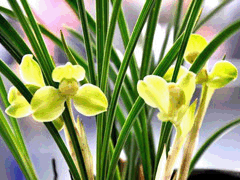 On the formation of orchid buds and the relationship with water restriction
Buds grow from bud primordia. After differentiation, bud primordia develop into leaf buds and flower buds. Once a bud primordium has differentiated and taken shape, it cannot change again. No matter how you treat it, you can only determine whether it continues to grow or dies; you cannot make a flower bud turn into a leaf bud, or vice versa. So how are flower buds formed? As far as current research shows: the formation of flower buds in plants is mainly affected by factors such as the carbon-to-nitrogen ratio, hormones, accumulated temperature, day length, day-night temperature difference, and high and low temperatures. These factors can act alone or several can act together. For example, in large-floweredCymbidium faberi, the main flowering factor is the day-night temperature difference; in Phalaenopsis it is mainly low temperature; in Rhododendron hybridum it is mainly accumulated temperature; in chrysanthemum it is mainly day length, and so on. Of course, for any factor to bring about flowering, vegetative growth must reach a certain level, and the photosynthetic products must be in surplus after supplying the plant's own growth, so that reproductive growth can be completed smoothly. As for the flowering factors of the Spring Orchid, Cymbidium faberi, Jianlan,Cymbidium sinensethat we cultivate, I personally think they are all affected by the carbon-to-nitrogen ratio,Jianlan (Cymbidium ensifolium)may also be affected by high temperature. Why do I say this? BecauseJianlan (Cymbidium ensifolium)flowering all occurs in summer when temperatures are relatively high, while in Spring Orchid,Cymbidium faberialthough flowering is also relatively concentrated, after being grown at home, flower buds have been found in all fourseasonsof the year, and water restriction to induce flowering also proves this point. What we call shade producing buds and sun producing flowers, water producing buds and drought producing flowers, mainly refers to this type of flower affected by the carbon-to-nitrogen ratio. After water restriction, vegetative growth is inhibited by the lack of water; because of water loss, the concentration of carbohydrates rises, the carbon-to-nitrogen ratio becomes larger, forcing the bud primordium to differentiate into flower buds. When light is strong, on the one hand more carbohydrates are produced, and on the other hand water is lost faster, raising the carbon-to-nitrogen ratio and causing flowering. As for spraying phosphorus and potassium fertilizer making flowering easier, this is because phosphorus and potassium fertilizer can promote the formation of carbohydrates and thus lower the proportion of nitrogen. Similarly, spraying too much nitrogen fertilizer will raise the proportion of nitrogen and thus lower the carbon-to-nitrogen ratio, causing the bud primordium to differentiate into leaf buds. Having rambled on so much, I do not know whether I have made it clear. Please point out anything inappropriate. The above content is for reference only.