Environmental regulation methods for balcony orchid care
Environmental regulation for growing orchids on a balcony
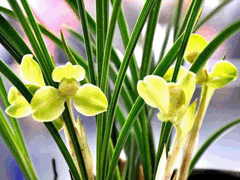 Environmental regulation for growing orchids on a balcony
Potted orchids on a balcony are among the most difficult plants to care for, and the reason lies in the special environment of the balcony and the special needs of orchid growth. Below I discuss my own experience with regulating the balcony environment.
1. Light characteristics of orchids and light regulation on a balcony
Orchids grow on the forest floor and are semi-shade plants; both excessive and insufficient light are unsuitable for their growth. If light is too strong, chlorophyll is destroyed and the orchid leaves turn yellow; in severe cases the mesophyll cells are scorched, causing the leaves to wither and die. If light is too weak, the orchid leaves are tender green, less nutrients accumulate inside the leaves, the leaves are thin and soft, prone to drooping and bending, the plant is weak and its resistance declines. So can a balcony meet the light needs of orchid plants?
First, looking at the amount of light on a balcony, there are two situations: summer, and spring, autumn and winter. Because our country is located in the Northern Hemisphere, in summer sunlight shines almost vertically and is very intense, while in spring, autumn and winter sunlight comes at a slant and is soft. Balconies facing different directions also differ. For example, an east-facing balcony receives light from morning to noon all year round; a south-facing balcony receives light all day in spring, autumn and winter, and receives light in the morning and evening in summer; a north-facing balcony has fairly good light before eight or nine o'clock in summer, but has no light in spring, autumn and winter; a west-facing balcony is fairly similar to a south-facing balcony, except that it receives less light in the morning and more light in the afternoon.
Looking at the quality of light, sunlight contains seven visible colors - red, orange, yellow, green, cyan, blue and violet - as well as invisible light such as ultraviolet rays. What suits orchid growth better are the red, orange and yellow series of visible light. Because of refraction and reflection, these rays are more abundant in the morning.
Looking at the light temperature, the light temperature of morning sunlight in summer is lower and suitable for orchid growth; the light temperature of noon sunlight is higher and unsuitable for orchid growth. In spring, autumn and winter the light temperature is suitable for orchid growth from morning to night.
From this it can be seen that the light amount, light quality and light temperature of an east-facing balcony are the most suitable for the growth requirements of orchids all year round. A south-facing balcony meets the growth requirements of orchids in spring, autumn and winter, but its light conditions in summer are not very good. A north-facing balcony fairly suits the growth requirements of orchids in summer, but has no light in spring, autumn and winter. A west-facing balcony is similar to a south-facing balcony. Each household generally has only one or two balconies, and they should be used according to local conditions in different seasons. For example, if there is only a south-facing balcony, the potted orchids can be placed on the balcony in spring, autumn and winter, and in summer they can be placed on a north-facing windowsill enclosed with a security grille. Whether in summer or in spring, autumn and winter, use one or two layers of shade netting for shading.
2. Dust prevention for orchids on a balcony
The leaf surfaces of orchids on a balcony easily become covered with dust, which not only affects their appearance but, more importantly, causes disease; the growth of the orchid plants is hindered and they may even die. Because balconies are often located in busy downtown areas, they are places with relatively high dust content in the air. This dust mainly comes from people and vehicles on the streets, industrial smoke and dust, and so on. Wild orchids do not have this trouble. The environment where wild orchids grow generally has very little floating dust, and the air is especially clean. In addition, orchids have a self-cleaning method: dew moistens and rinses the leaves every day, so wild orchid leaves are generally smooth and dust-free, and relatively speaking they suffer less disease. For growing orchids in the city, it is best not to use a balcony facing a main street for orchid growing; if there is only this kind of balcony, it is best to enclose it. Next is to put up shade netting, which has a certain dust-prevention effect. You can also regularly wipe the orchid leaves with damp toilet paper with a little vinegar added, to remove the dust accumulated on the leaf surfaces.
3. Humidity regulation for orchids on a balcony
Most orchids grow in ravines, where the air humidity in the early morning is high and the leaves are covered with dew; after the sun rises higher, the air becomes moist and fresh, and the humidity generally stays at around 70% (except in dry seasons), equivalent to the humidity when the air is fresh after spring rain. Generally, in southern regions there is no problem with the humidity of a balcony for growing orchids, but in the north it is relatively difficult for a balcony used for orchid growing to reach this humidity requirement. Either it is too dry and the leaf surfaces are rough and lack luster, or it is too humid and the leaf surfaces are tender and weak with disease spots appearing everywhere. The main method is to set up a water trough to increase humidity; the next is to do good monitoring: place a hygrometer, observe at any time, and use a humidifier to regulate air humidity according to the displayed data. In the plum rain season in the middle and lower reaches of the Yangtze River, there is long-lasting continuous rain, few sunny days and very high air humidity, which is very unfavorable to orchids. The best method is to increase ventilation and strengthen air convection, to prevent disease caused by excessively high air humidity.
4. Temperature regulation for orchids on a balcony
The suitable temperature for orchid growth is 20-30°C; above 35°C or below 5°C is unsuitable for growth. The growth period of potted orchids on a balcony is noticeably longer than that of wild orchid plants. Taking Hubei as an example, potted orchids on a balcony begin to sprout in March, half a month earlier than wild orchid plants, and stop growing later than wild orchid plants, while the summer dormancy period is longer than that of wild orchid plants. If regulated well, orchids on a balcony can grow all year round. First, in winter an enclosed balcony can be used as a low-temperature greenhouse; on overcast and snowy days when the temperature is too low, a fish tank temperature controller can be used with a bath heater lamp plugged in to warm it slightly. Open balconies can also use this heating method to build a simple greenhouse. When the temperature is too high in summer, as long as the orchids are placed indoors with air conditioning at night, the orchids can continue to grow without summer dormancy.
Temperature control during the flower bud stage of potted orchids on a balcony is also relatively important. Taking Cymbidium goeringii as an example, flower buds begin to form in June and July, and from December to early February they need to go through a 50-60 day low-temperature stage below 5°C, after which the temperature is adjusted to 18-23°C for them to bloom successfully; this is the so-called vernalization phenomenon. Therefore in winter, Cymbidium goeringii with flower buds must not be placed indoors, otherwise after the beginning of spring the flower buds may rot and die. Cymbidium faberi also exhibits this phenomenon and should be treated with caution as well.
Orchids that are not given temperature regulation still need attention to frost protection. When the air temperature is below 0°C, the potting soil will freeze, and orchid roots are very easily damaged by freezing; if the temperature drops further, orchid leaves will also be damaged by freezing, so attention must always be paid to orchid frost protection. Potted orchids without flower buds can be moved indoors, or overwintered inside an enclosed balcony. Orchid plants with flower buds need to be placed in a low-temperature spot, but to guard against cold waves, on days when the temperature drop is too great and the air temperature is below 0°C, they should also be moved indoors for temporary shelter. A sudden drop in temperature is also the most likely to cause freezing damage. (Liu Jingqiu)