Correct methods and precautions for fertilizing and applying pesticides to orchids
Fertilizing and applying pesticides to orchids
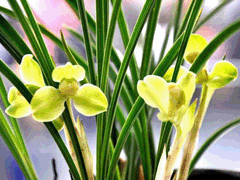 Fertilizing and applying pesticides to orchids
http://www.dfac.cc/showtopic-17-231997-0-0-1.htm
Because each person's orchid house has a different management environment, the methods I list now may not necessarily suit everyone's orchid house, so they can only serve as reference...
Basically, in terms of fertilizing and sterilizing with pesticides, I currently still place more emphasis on sterilization. For fertilizing, I mostly use the 5 choices of "Hyponex" alternately according to the seasonal progress (roughly depending on the orchid's growth progress), using the dilute fertilizer application method (it is said that dilute fertilizer should be applied frequently! The ratio is nearly 6000~10000 times). If the fertilizer concentration is high, then the next day it should be watered to wash it away (including sterilizing pesticide application). Why still "wash it away"? Mainly to avoid pesticide residue on tender buds and sunlight exposure, and to reduce chemical pesticide residue in the planting material causing acidification...
Orchid pests and diseases basically require "prevention over treatment"... (do not wait until disease occurs, as it becomes more troublesome)
The approximate types that occur include: 1. Black spot disease. Anthracnose
(High temperature, high humidity, and poor ventilation in summer make it easiest to get the disease. Last summer, because an orchid friend taught me: adopt the principle of only exhaust air without intake air for management (this method cannot be adopted), as a result, the whole batch of Fushan that carried bacteria developed the disease, and moreover, it was very serious) Later, it was treated with Baolizan "Prochloraz (3000~4000 times)" and "Tackle (2500 times)" and so far it has not recurred!)
2. Fusarium: Tebuconazole (3000~4000 times). It is also a fungus very easily acquired in summer
3. Soft rot: Metalaxyl (2000 times) or doxycycline (1000 times, not suitable for use at high temperatures, easily causes pesticide damage, yellowing; apply at night below 28 degrees and water slightly the next day)
4. Phytophthora blight: doxycycline or etridiazole
The above is an approximate explanation of fungi~~~
5. Nematodes: Wanqiang pesticide 1000 times
6. Scale insects: carbosulfan 3000 times (prone to occur under high temperature, high humidity, and poor ventilation)
7. Thrips: same as above
The above is only my rough summary, please refer to it! However, I conclude: "an environment with poor ventilation" is absolutely the beginning of pathogens... remember this!
This garden manages orchids this way