How to diagnose orchid diseases? Find the root cause from leaf characteristics
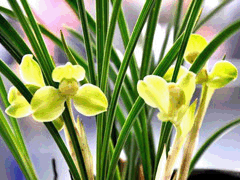 Judging the root cause of a disease from the characteristics of orchid leaves
http://www.dfac.cc/showtopic-18-311572-0-0-1.htm
1. Orchid leaves turn yellow but growth is normal: this is too much light. 2. Orchid leaves turn yellow and new shoots are small: excessive light, lack of nitrogen fertilizer and necessary humidity. 3. Old leaves yellow and fall off: normal aging or caused by repotting. 4. Old leaves yellow and fall off rapidly: watering too much and too often, improper potting when repotting. 5. Tips of new leaves are scorched: excessive fertilizing, unclean potting material. 6. Both new leaves and old plants have scorched black tips: excessive damp heat inside the pot, with rotted roots among the root system. 7. New shoots emerge from the soil and then stop growing: there are rotted roots or unclean matter beside the new shoots; open up the growing medium around the new shoots and remove the unclean matter and growth will resume. 8. Orchid leaves have scorched spots with no yellow rim: sunburn spots. 9. Leaf tips appear scalded and shriveled: the water temperature for watering is too high; the air temperature is too high when watering; exposure to sudden rain showers during high summer temperatures, etc. 10. New shoots rot at the core: water poured into the shoot core cannot evaporate or be absorbed, and unclean growing medium in the pot causes leaf rot disease, etc. 11. Orchid leaves have spots with water-soaked rims: excessive humidity, pot moisture combined with air humidity causing suffocation, accompanied by leaf rot fungi. Poor ventilation and air movement. 12. Leaves have yellow-brown spots: caused by the root area being overheated. 13. Orchid leaves have irregular yellow spots, with the leaf mesophyll tissue necrotic and sunken: caused by viral disease, also known as Baras. 14. Leaves have small yellow spots: caused by scale insects. 15. Orchid leaves show purple-black color while the underside remains green: caused by low-temperature frost. It can also occur from phosphorus deficiency. 16. Leaves dehydrated, pseudobulbs wrinkled and shrunken: caused by long-term excessive dryness and dehydration in the pot.
http://www.dfac.cc/showtopic-18-311570-0-0-1.htm
Orchids are ornamental plants of the family Orchidaceae, and the common diseases mainly include anthracnose and leaf spot disease.