Tips for Using Lime in Orchid Cultivation and Management
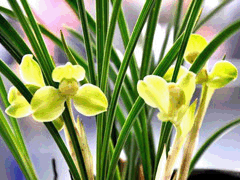 Tips for Using "Lime" in Orchid Cultivation and Management
http://www.dfac.cc/showtopic-17-262054-0-0-1.htm
Today I will talk about the techniques for using lime in orchid cultivation and management, hoping to give orchid growers a dual option during the hot and humid plum rain season.
We know that lime plays an indispensable role in crop disease prevention and control, such as: lime and sulfur are neutralized and boiled into the household-known lime-sulfur mixture (lime-sulfur mixture is widely used in forestry and fruit cultivation, and every agricultural technology station has prepared solutions for sale), and it is mixed with copper sulfate to make the famous Bordeaux mixture (first the two solids need to be dissolved in water into liquids before being mixed in a prescribed procedure). The above two preparations have professional instructions for their production and use methods, so they will be skipped here and not introduced further.
However, one supplementary note is that Bordeaux mixture has already been applied in orchid cultivation with practical examples, and according to feedback the effect is remarkable. What is referred to here is for large-scale cultivation, while small-scale operations do not need this, because Bordeaux mixture must be used immediately after preparation, and moreover the requirements during the preparation process are very strict. Therefore, it is not suitable for orchid enthusiasts with small-scale cultivation, so there is no need to discuss it in detail.
In addition, lime mixed into a thin paste also has great significance in the winter protection of trees. Powdered lime also has a remarkable contribution in large-scale sterilization (what is referred to here is environmental sterilization), such as: it was widely used in the environmental sterilization of the H5 avian influenza virus this spring. As is well known, lime is a strongly alkaline medium and has the advantages of being able to quickly suppress and kill fungi that prefer to survive in acidic environments, with small side effects and little residue, which is also the main factor in its widespread use by people for prevention on crops. Little do people know that lime must not be used carelessly in the sterilization process either. Below I will talk about the scientific use of lime in orchid cultivation and management.
I. Regarding the selection of lime, first we must choose high-quality lime. Selecting high-quality lime should start from the following two aspects:
1. Visual inspection: through visual inspection, we can see that large blocks with a pure white or slightly yellowish appearance and without weathering are high-quality lime blocks.
2. Feel: this point is very important in selecting high-quality lime blocks. The lighter the lime block feels in the hand, the better (compared with other lime blocks of the same size); the lighter ones are more fully burned and of higher purity. On the contrary, the heavier ones are not fully burned during the burning process, so their impurity content is relatively high and they should not be chosen.
II. Regarding the preparation and use of lime clarified liquid
1. First, the high-quality lime blocks should be soaked or slaked with water into powder, then take pure lime powder and dilute it with water at a ratio of 1:10 into an aqueous solution (the lime powder that has just been slaked with water must not be taken immediately; for safety reasons, wait until it naturally cools before taking it). After soaking for about 12 hours and fully decomposing, the clarified liquid can be carefully taken out. Note that when taking the clarified liquid, a layer of crystalline matter like thin ice will solidify on the surface of the clarified liquid. This crystalline matter like thin ice is a high-purity alkaline substance crystal and should be regarded as unsuitable to take. Furthermore, this crystalline matter is not easily dissolved in the later water dilution, and once it enters the leaf core of tender tissue it will cause phytotoxicity, and it easily clogs spray nozzles, so discard it.
2. Take the lime clarified stock solution and dilute it with water at a ratio of 1:2000 into a liquid preparation. During the hot and humid plum rain season, adopt a combined ground and aerial operation by first watering to allow the entire pot's substrate to be penetrated, then spraying the entire orchid room and orchid site so that the preparation fully covers them, thereby achieving large-scale suppression or killing of fungi that prefer to survive in acidic environments. In this way, using it twice at intervals during the hot and humid plum rain season will effectively control the occurrence of stem rot, soft rot, and southern blight. Note: large orchid farms generally broadcast powdered lime on the ground to seal off and kill pathogenic bacteria on the ground surface, but this operation is highly polluting, with dust flying during operation, and it easily contaminates orchid leaves and causes damage to them, so it should not be chosen.
Note: 1. Lime clarified liquid aqueous solvent is purely alkaline, so it must not be mixed with any acidic pesticides, chemical fertilizers, or organic fertilizers.
Note: 2. Lime clarified liquid aqueous solvent has high alkali purity, so when diluting with water, ensure it is above 2000 times; slightly more water does no harm, please do not arbitrarily reduce the amount of water. Note: 3. This preparation is also only effective against fungi that prefer to survive in acidic environments, and its purpose is prevention first. The above statements are for reference only; interested orchid growers may wish to practice it again (personal experience is also a delightful thing). Solemn declaration: this lime leachate aqueous preparation is not a panacea, and moreover it should not be used dependently over the long term. Please alternate medications in cultivation and management to reduce the drug resistance of fungi and the possibility of the cultivation substrate becoming alkaline.