How to grow orchids? Growing the roots first is the key to orchid care
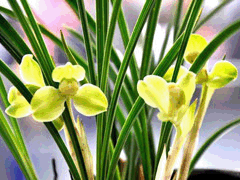 Grow the roots first when growing orchids
http://www.dfac.cc/showtopic-17-310883-0-0-1.htm
To grow orchid roots well, we must first understand the characteristics of orchid roots. Orchid roots are all fleshy roots, thick and plump. The fleshy roots grow directly below the pseudobulb, with no distinction between main and lateral roots, and a few have branches. The root system of an orchid plant is divided into three layers. The first layer is the root epidermis. Within the epidermal tissue and around the rhizosphere, there usually lives a kind of root fungus called orchid mycorrhiza, which is a type of true fungus. The hyphae of these orchid mycorrhizae invade the cortical tissue inside the orchid root, forming a symbiotic relationship; the second layer is the orchid mycorrhizal symbiont, which has a high water content. Its main function is to convert and digest the fertilizer absorbed by the surface layer. The nutrients and water in the cortical tissue of the orchid root create the necessary living conditions for the orchid mycorrhiza, allowing it to reproduce and develop. At the same time, the orchid root continuously decomposes and absorbs the hyphae of the orchid mycorrhiza as nutrients for orchid growth; the third layer is the root core of the orchid plant, which is responsible for transporting and delivering the nutrients and water needed for orchid growth. Second, to grow orchid roots well, what we need to solve is the aeration problem of the orchid roots. The potting media currently used by orchid growers can basically be divided into two types: coarse media and fine media. Whether coarse media or fine media is used to grow orchids, orchids can be grown well; the key is mainly to solve the aeration problem of the orchid roots. The fine media we refer to mainly include maple leaves, oak bark, pond foundation stone, volcanic stone, fairy soil, and so on. Growing orchids with coarse media provides good ventilation and aeration, and moisture is relatively easy to control, making it suitable for people with little time and busy work. The shortcoming is that nutrients are poor, and it needs to be used together with flower fertilizer to achieve good growing results. Third, to grow orchid roots well, flower fertilizer must be used reasonably. Flower fertilizer is an indispensable element for orchid growth; without fertilizer, orchids cannot grow well. Appropriate and selective fertilization is a powerful measure to ensure rapid growth of orchid roots. At present, there are many flower fertilizers available on the market for orchids, such as Huayi brand orchid mycorrhiza king produced in Sichuan, Huabao produced in the United States, domestically produced potassium dihydrogen phosphate, and so on, all of which are relatively good root-promoting flower fertilizers. When using flower fertilizer, be sure to apply it according to the manufacturer's instructions. It is best to fertilize around 5 p.m. on a sunny day each time, with an interval of 7 to 10 days. The general principle is that the fertilizer concentration should be low, and it should be applied thinly and frequently. What we need to pay special attention to here is that insufficient fertilizer or inaccurate selection will not cause fatal damage to orchid roots, though it will have too great a negative impact on the growth and development of orchid roots. However, fertilizer concentration that is too high, too frequent, or excessive will affect orchid roots to varying degrees, and in severe cases can cause orchid root death. Fertilizer damage often harms orchid roots and pseudobulbs. The pseudobulb and orchid roots are the source of life for the orchid plant, and we should attach great importance to them. Fourth, to grow orchid roots well, pest and disease prevention and control must be done well, and the principle of giving priority to prevention, with prevention more important than treatment, must be adhered to. Generally speaking, the diseases harmful to orchid roots mainly include root rot, southern blight, and so on. The insect pests harmful to orchid roots mainly include earthworms, snails, root-knot nematodes, and so on. Prevention and control of root pests and diseases is relatively difficult, and their harm to orchid plants is especially great. Before planting orchid seedlings, strict sterilization and pest elimination must be carried out on the orchid seedlings and potting media. In daily management, we can adopt methods such as soaking the pot and chemical control to eradicate them. At present, the main sterilizing chemicals on the market include thiophanate-methyl, copper hydroxide, carbendazim, and so on. Chemicals that are relatively effective at killing earthworms, snails, and root-knot nematodes include methamidophos, lambda-cyhalothrin, omethoate, and so on. You can also soak cigarette butts, scallions, ginger, and garlic in water, and use this water to irrigate the orchid roots, which also has a good sterilizing, insect-killing, and pest-preventing effect. Fifth, to grow orchid roots well, you must be patient. Many orchid growers are rather impatient. Soon after planting orchid seedlings, they keep thinking that the plant is not sending up shoots or is slow to send up shoots, and they become very anxious. Today they pull the potting media aside to take a look, tomorrow they water and fertilize again. This is mostly because they do not understand the growth of orchid roots. In fact, the growth of orchid roots requires certain conditions. There must be suitable external conditions such as sunlight, temperature, humidity (water), and ventilation, as well as its own growth cycle. Impatience cannot make orchid roots grow. Generally, it takes about half a year for an orchid plant to go from sending out new roots to completing growth. In short, as long as we are patient and meticulous in planting orchids, next year your orchids will certainly send up more shoots and good shoots.