How are Cymbidium sinense and Cymbidium ensifolium cultivated? These basic facts you need to know
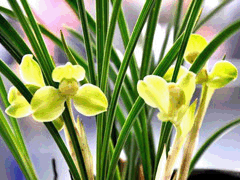 Basic knowledge for cultivating Cymbidium sinense and Cymbidium ensifolium
http://www.dfac.cc/showtopic-17-278174-0-0-1.htm
In growing orchids, the first thing to solve is the site and environmental conditions for planting them. Orchid planting can be divided into courtyard planting and large-area field planting. For ordinary home orchid growing, a balcony or rooftop can be used, or a small shelter can be built on a windowsill. If conditions permit, a glass greenhouse can be built. But no matter whether the growing site is a balcony, rooftop or windowsill, it must have proper shading and ventilation and maintain proper humidity; this is the foundation for growing orchids well. For those planting on a balcony, choose a balcony facing south, and use movable shade netting to block wind and heat. If the roof surface uses zinc-iron sheeting, it is best to replace it with imported transparent plastic tiles to ensure an appropriate amount of sunlight shines in. For growing orchids on a rooftop, water pipes can be used as supports, with 80% shade netting around the sides and on the top surface to block sunlight and wind heat. When summer is too hot, an additional layer of movable shade netting should be added on top of the shelter. Overall, environmental modification should be adapted to local conditions and should be continuously explored and improved through practice. Choose the growing medium and pots for orchids well; this is the basic condition for planting orchids. The orchid pot is the orchid's dwelling and has a relatively large effect on orchid growth. In the past, traditional orchid growing used large clay pots, but now most high-grade orchids are grown in small trumpet-shaped pots; there are ceramic pots and also plastic pots, each with its own advantages and disadvantages. Which pot is best to use depends on individual habits and the varieties being cultivated. However, within one orchid shelter it is best to use orchid pots of the same texture (with different size specifications), so that unified management will be easier in the future. For orchid growing media (base materials), pond mud was mostly used in the past; now for growing premium varieties, pond mud stone, floating stone, weathered stone, water-absorbing stone, ceramsite, etc. are used instead. For growing household orchids in large fields, most people use soft media such as sawdust, rice husks, medicinal dregs, coal cinders, sea sand, peanut shells, etc., with foam plastic as the bottom layer. Mixed use is relatively common. Using these media has both advantages and disadvantages. In cultivating orchids, you must continuously sum up experience in practice. Practice brings true knowledge. If you want to raise your orchid-growing level, you must personally take part in orchid-growing practice. At the beginning, you should read more books, visit more places, ask for advice more, ask when you do not understand, and continuously explore in practice and sum up experience and lessons; only then can you continuously improve your technical level in orchid cultivation. Mastering the management techniques of watering, fertilizing and pest and disease control is the key to cultivating orchids well. Fertilization is generally best done on sunny days; the fertilizing principle is light application, frequent application, and no application during the winter dormancy period. To make it easier for beginners learning to grow orchids to grasp, the monthly management precautions for cultivating Cymbidium sinense and Cymbidium ensifolium in the southern China areas of Guangdong, Guangxi, Fujian and Hainan are introduced as follows. January: Watering should be done in the morning. Insecticide and fungicide once each, and foliar fertilizer 1-2 times. February: Pay attention to disinfection, sterilization and insecticide once. But fertilization and pesticide use must be done with extra care to prevent overly concentrated fertilizer or pesticide from harming the buds. When fertilizing, pay attention to applying an appropriate amount of organic fertilizer by burying it, to stimulate the vitality of new buds. March: This is the time of the Spring Equinox; the weather gradually warms, animals and plants begin to wake from winter dormancy, new buds first return, pay attention to supplementing organic fertilizer and increasing light exposure; insects and fungi begin to become active, so pay attention to insect removal and sterilization (first read the pesticide instruction manual). April: Entering the plum rain season, soft rot, black spot, anthracnose and other diseases are very likely to occur. Therefore pay special attention to sterilization and disease prevention; spray the leaf surface with pesticide 1-2 times. Be careful to prevent water and fertilizer accumulation in the center of the plant from causing soft rot, and let the orchid plants have ventilation and light. May: Sunlight gradually becomes stronger, so pay attention to appropriate shading. Be careful to prevent pests from appearing on new buds. This month orchids grow rapidly, so more topdressing should be applied, but it must not be too concentrated. June: The plum rain season has passed, summer heat begins to rise, and it is not suitable to casually divide plants or change pots. Watering should depend on the dryness and moisture of the potting soil, with moistness being suitable. Mist in the morning and at night, and sprinkle the leaf surface 1-2 times. Pay attention to increasing the humidity of the orchid garden. Choose cool evenings for insecticide and sterilization. The pesticide dosage should be dilute, and must never be concentrated. July: This is the weather season of Minor Heat and Major Heat; pay attention to sprinkling water to wet the ground and lower the temperature, pay attention to ventilation, so as to protect the orchids. The shading level should be increased. Cymbidium sinense, Cymbidium goeringii and Cymbidium faberi can be given more organic fertilizer, and Cymbidium kanran can be sprayed with water-soluble fertilizer. August: Autumn begins; this month pay even more attention to preventing heat and lowering temperature. Insecticide and sterilization are still best done at night, and carry out a full disinfection of the orchid garden once. This month is the period when autumn buds begin to grow, and after the orchid plants have gone through the high-temperature severe summer weather, the nutrients in the pots are gradually depleted, so pay attention to increasing organic fertilizer and spray foliar fertilizer 1-2 times to benefit the growth of autumn buds. September: The heat is at its strongest; all kinds of orchids fear open-air exposure the most, so spray more water. Scale insects, spiders and other pests become increasingly rampant, and soft rot is prone to occur, so pay even more attention to insecticide and sterilization, but pesticide use must be appropriate. October: The autumn sun can enhance the rigidity of orchid leaves, so pay attention to increasing the amount of light exposure and increase the frequency of watering as appropriate. This month, except for orchid plants in bloom, fertilizer should be applied 2-3 times; pay attention to strengthening sterilization. Watering principle: look at the weather and air humidity; do not water during plum rain weather, water during Major Heat weather in the cool morning and evening, and water at noon in winter. November: Watering and pesticide spraying should be done in the morning; insecticide and sterilization 1-2 times to root out hidden dangers of orchid plant diseases. For insecticide and sterilization, be sure to read the medication instructions clearly. December: This month is the best period for selecting Cymbidium sinense floral art, trading upon seeing the flowers, and treating the flowers as treasures. This month, insecticide and sterilization are still carried out 1-2 times; watering should depend on the dryness and moisture of the potting soil, and watering should be chosen to be done on sunny mornings. Pay attention to cold protection and frost protection. Pot changing and medium changing should be completed before the end of this month.