Orchid Care Environment, Growth Conditions and Experience Sharing
 Reporting to all the teachers about my orchids - environment + plant conditions + experience
http://www.dfac.cc/showtopic-17-311124-0-0-1.htm
After repotting in November last year, I only recently found time to take a few photos and share them with everyone.
1200-1300 pots, single growths or 2-3 growths, the first batch of shoots are now basically 80% mature, the sprouting rate is around 1.5, still Cymbidium tortisepalum sprouts the most, with a sprouting rate close to 2, starting to sprout on the new shoots, Cymbidium ensifolium around 1.5, basically mature, Cymbidium goeringii and Cymbidium faberi around 1 and sprout late, only 50% mature.
I thought by dividing them into smaller pieces, I wouldn't need to repot at year end, but it looks like half of them need repotting.
Repotting is really tiring. Last year I spent almost 1 month preparing the medium, and repotting took me nearly 2 months, doing it all by myself while still going to work. After finishing, my fingers had even gotten thicker.
All the orchids get the same medium, the same watering, the same fertilizing.
Medium: ordinary peat soil (10 yuan per large bag) 35%, bark and leaves 30%, expanded clay pellets 25%, Xiantu (immature shale soil) 10%, plus a small amount of sheep dung pellets and cow dung
Experience: single growths, weak growths and old growths can also produce strong shoots, but they must be planted well.
(Reply based on a fellow orchid grower's question about growing single growths
Single growths must have good roots, be strong, already adapted to the growing environment, or be old rhizomes and old growths you couldn't bear to throw away after removing them.
If they are old growths and old rhizomes from your own cultivation, the new shoots they produce are also very strong.
If they are re-exported or have been grown in a greenhouse, they can basically be thrown away. Even if they produce new shoots, these will either be diseased or weak, with no value at all, and they will just put you in a bad mood.
Watering:
Use a showerhead for bathing attached directly to the tap water pipe to spray them, there is no fixed schedule for how long, (based on local climate) generally water thoroughly once a week (takes 1-2 hours), normally spray a little every 2-3 days (takes over half an hour), and when away on business trips in summer sometimes I haven't watered for 10 days. So orchids are not that delicate, just let nature take its course.
Environmental requirements (rooftop terrace): recommendations
Ventilation and air flow come first; it's best to have some greenery around and on top of the shelter to increase humidity; keep the environment fairly clean; at least 40 cm above the floor slab, and the pot surface about 20 cm from a non-ventilated wall top (more than that and it won't get air flow, less and orchid leaves are easily blown and broken)
It's best to have a roof cover, otherwise it's easy for black spots to develop in summer, and autumn rain and winter rain (rain after a long drought) can easily cause acid rain damage.
Fertilizing and sterilization: (for amateur orchid growing and relatively busy people)
Use a medium with some fertility; you can bury chemical fertilizer on the pot surface or 1-2 cm below the soil; when you have time, spray some foliar fertilizer.
During the peak growing season, spray fungicide and insecticide once every 2 weeks, at a dilute strength, and absolutely don't wait until there is disease before acting, this must be remembered.
Management:
Observe more, handle less!
——Personal experience for reference only!
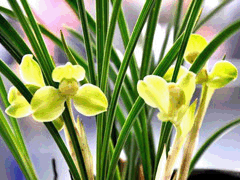
Growing environment, still no shade, some new growths have rather yellow leaves due to too strong sunlight.