How can orchids produce their best blooms?
How can orchids be made to produce their best blooms? (Repost)
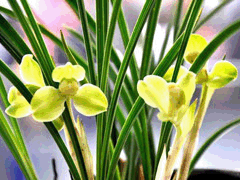 How can orchids be made to produce their best blooms? (Repost)
1. Selecting varieties
For common traditional varieties, try to obtain them from reputable orchid nurseries or from friends. Plants from street stalls or from itinerant orchid vendors are either fake or diseased, with too low a margin of safety.
1. Choose strong new shoots. Of course, the price of front-row plants is not low, but after two years of growing them, you will know whether it was worth it. This is especially true for friends new to growing orchids. Good shoots are easy to grow, have strong resistance, sprout readily and are easy to manage. If you introduce two or three shoots in spring, by autumn you will get double the results.
2. Focus on growing the plants strong. Healthy, robust plants are the foundation for their flower spikes to grow tall. Cymbidium goeringii flowering consumes a great deal of nutrients, and with insufficient nutrition from the start it is impossible to produce good flowers. Only sound plants can produce good flowers.
2. Bud care and bud thinning
1. The key to bud protection
Many shoots will inevitably produce flowers. After orchids form buds, watering must be done with great care; the potting soil must not be too wet, as this easily causes root rot, leading to the buds rotting and going moldy under the action of pathogens. Therefore, each watering should be a little less than usual; to avoid lack of water in the lower part, you can use the half-depth soaking method. If water splashes onto the buds when watering, ventilate promptly to prevent mold and rot.
2. The key to scape elongation management
Once the buds begin to awaken and the internodes start to elongate, move the pot indoors. The purpose of this: to ensure the orchid's color opens tender green and bright, except for yellow and red flowers. At the same time, watering becomes the top priority; try to keep the inside of the pot moist, do not let the pot surface get too dry, and the ambient humidity must be at least above 50%, laying the foundation for producing elegant, gracefully upright orchids.
3. The key to maintenance during the flowering period
To obtain the best blooms, the focus is on mastering watering. When the buds first open slightly, most petal-type flowers need water control, to prevent the side petals from elongating and the shoulders from drooping; for wavy, crinkled petal-type flowers, water somewhat more, so as to make the movement elegant; odd flowers need even more water, ideally reaching a thoroughly wet state.
4. Bud thinning
Once orchids form buds, the plants' nutritional demands are very great; generally a Cymbidium goeringii with 5 shoots needs only one flower bud. Keeping three or four buds per pot is enough; note that the time for bud thinning is around the end of November near the autumn equinox; earlier and they will form again, later and they will waste nutrients in vain.
Generally speaking, for each pot of Cymbidium goeringii with fewer than ten shoots, it is best to keep only two flower buds; with fewer than 5 shoots, keeping one is enough. When the stems rise and the buds are ready to open, then according to the height of the flower stems, remove the weak and keep the strong. For example, buds on weaker orchid plants, on plants that have had disease, and buds that only formed in late autumn should rightly be thinned out. For buds formed among the back-row shoots, keep only one healthy, plump one; if there are also buds among the front-row shoots, it is preferable to keep the front-row buds. If there are crooked or weaker buds, remove them as well.
When picking flowers, wait until there are three to not keep:
1. Flowers formed on the current year's new plants are not kept;
2. Flowers formed on pseudobulbs more than two years old are not kept;
3. For multiple flowers on one pseudobulb, keep one flower.
3. Vernalization
So-called vernalization refers to the low-temperature stage that cymbidiums must undergo during their reproductive growth; it plays an irreplaceable role in promoting the growth of flower buds. The degree of vernalization bears on how well cymbidiums bloom; the vernalization period is the time when, in nature, the air humidity and soil humidity for orchids are at their lowest.
Orchid masters through the ages have all attached great importance to the issue of adequate vernalization for Cymbidium goeringii. They advocate that in winter, especially during the period from Major Snow to Major Cold, orchids should be kept at a low temperature of 0-10°C, with the day-night temperature difference maintained at around 10°C, so as to accumulate sufficient nutrients in preparation for the flower spikes to grow tall and open after spring. For adequate vernalization, an appropriate temperature difference is a necessary condition for prompting Cymbidium goeringii flower spikes to grow tall and bloom properly, fully complying with the natural characteristics of Cymbidium goeringii flowering. If there is not enough vernalization during bud pregnancy, and not enough relative humidity during scape elongation, forcing the flowers open will defeat the purpose of speed and the bloom quality will be greatly reduced.
From bud emergence after autumn to flowering after spring, Cymbidium goeringii generally undergoes nearly half a year; in the long process of natural evolution, Cymbidium goeringii has developed the characteristic that only after undergoing low-temperature vernalization in winter can the flower buds swell and the flower spikes grow tall; if temperatures are on the high side during reproductive growth, the phenomenon of early spring opening very easily occurs, with flowers lying on the pot surface, greatly reducing flower quality and seriously affecting its ornamental value.
In this regard, three issues must be noted:
1. Vernalization must be adequate. Generally speaking, from Minor Snow to Major Cold is the best vernalization period for cymbidiums; during this period the temperature is best controlled between 0—12°, and the vernalization time generally must not be less than 1 month, especially the period from Winter Solstice to Major Cold, which is particularly important.
2. During vernalization the temperature must not be too high or too low. During the vernalization stage, temperature fluctuations must absolutely be avoided; low temperatures below -5° and temperatures above 15° are both unfavorable to the normal growth of flower buds, easily causing cymbidium buds to become dormant, affecting the elongation of the flower scape; Cymbidium goeringii often shows the phenomenon of early spring opening, greatly reducing flower quality.
3. Avoid excessively high humidity during vernalization. The vernalization period is the time when, in nature, the air humidity and soil humidity for orchids are at their lowest. The natural ecological environment of orchids is the direction we strive for in indoor orchid growing. Therefore, during the vernalization stage, neither the air humidity nor the potting soil humidity should be too high, otherwise buds and roots easily rot, which is very unfavorable to the growth of cymbidiums the following year. Practice has proven that low-temperature vernalization is an insurmountable stage in the reproductive growth of cymbidiums; we cannot violate natural laws and change it artificially, otherwise it directly affects the bloom quality.
4. Humidity, light
1. High humidity at flowering time is the catalyst for ensuring Cymbidium goeringii flower spikes grow tall. Maintaining relatively high air humidity during the flowering season of Cymbidium goeringii is very favorable to the elongation of the flower spikes. Orchid friends can adopt various measures such as humidifiers, spraying the pot surface, spraying the ground, and humidifying with water trays to strive to create a relative air humidity of no less than 50%, which can effectively increase the height of Cymbidium goeringii flower spikes, especially with more obvious effect for lotus-petal Cymbidium goeringii.
2. During bud pregnancy, give appropriate light, so that it accumulates enough nutrients and is poised to bloom. Note that light must not be too strong; if strong, it damages the bud sheaths; if weak, the flowers lack spirit. (Except for colored flowers.)
5. Fertilizer use
Generally, about half a month before the flowering period, potassium nitrate, monopotassium phosphate, Huabao No. 3 or borax, etc. can be used. After the flowering period, nutrient consumption is very great; about ten days after the flowering period, begin supplementing the orchid plants' nutrition, with a full-element organic fertilizer being preferable.