Orchid Cultivation Special: A Detailed Guide to the Essentials of Orchid Growing for Beginners
Orchid Cultivation Special: The Essentials of Orchid Growing for Beginners. "Books are mostly useless, and true masters stay deeply hidden," many new orchid enthusiasts find it hard to discover the way into orchid growing. Often many new orchid enthusiasts are...
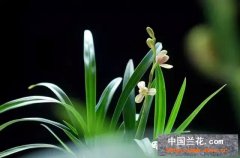 “Books are mostly useless, and true masters stay deeply hidden,” many new orchid enthusiasts find it hard to discover the way into orchid growing.Often many new orchid enthusiasts, with genuine sincerity, humbly askorchid growingthe way? And how many received a practical answer?
Of course, this article offers some reference for orchid enthusiasts just starting out in orchid growing. These methods are methods for keeping orchids alive, notmethods for growing them well or growing them to perfection; they belong to the most basic of the basics for beginners.
This article adopts a question-and-answer format, which makes it easier for people to read.
1. The "heart" one should possess for growing orchids——
I remember once seeing an article titled "The Heart Sutra of Orchid Growing" in a certain book. It was written with great refinement, leaving one amazed, but for new orchid enthusiasts it is unavoidably a bit too profound. In fact, for new orchid enthusiasts, the most important thing is perseverance; as for love, patience, confidence, sense of responsibility and so on, all of these should necessarily accompany perseverance. Without perseverance, it is probably very hard to speak of the rest. Growing orchids is a long-term process; you cannot lose interest just because one pot dies, and then use the excuse that “orchidsare hard to grow” to give up completely. People always shift their own responsibility onto external things and circumstances, and yet never reflect on themselves. “Orchidsare not grown poorly becauseorchidsare hard to grow, but because you have not yet mastered the method for keeping them alive. It is a problem with the person, not a problem with theflower.” This is what I have said to many flower buyers.
2. The most important goal of growing orchids——
Different people have different goals in growing orchids, such as cultivating character, improving one's qualities, adding interest to life, decorating the hall, and some even hold the mindset of getting rich, but none of these can surpass the two words “keep alive.” If you cannot even keep the flower alive, what is there to talk about? Therefore, “keeping alive” is the most basic first principle. My view is: “For those newly starting out with orchids, first keep them alive, then consider growing them well, then consider growing them to perfection. Follow the rules step by step, neither anxious nor rash, and only then can you enter the way of orchids. Haste brings change, and rashness kills the joy.”
3. Creating the environment——
Large environments such as region and climate cannot be changed by human effort, and certain small environments, such as home structure, orientation, and whether there is a balcony, also cannot be changed. One can only adapt to local conditions and make improvements within the controllable range. On the question of where to place orchids, generally it is still better to grow them indoors, where there are fewer situations of facing harsh environments, and they are also less likely to be lost. In accommodating the habits of orchids, ventilation and temperature are generally not a problem; the common problem is humidity. In areas with insufficient humidity, many methods can be used to increase humidity. Leaving aside those with large investment and numerous pieces of equipment, the simplest general method isorchid potsto always keep water in the water tray at the bottom, with the water not rising above the ventilation holes at the bottom edge of the pot, so as to ensure ventilation at the bottom. It is best to place another bowl of water beside the orchid pot; in this way the humidity of the small environment can generally reach a humidity requirement of about 60. If it is still too dry, a small decorative-style atomizer (not the humidifiers sold on the market) can be placed beside the orchid pot.
4. Selection and purchase of orchids——
Mainly wild-collected acclimated plants or ordinary varieties among named variety plants, because the price is cheap. When selecting plants, it is best to choose large clumps with many shoots, and at minimum no fewer than 3 shoots with 1 leaf bud. The reason for at least also having 1 leaf bud is to ensure that they are not all old shoots, because some old shoots have greater difficulty sending out leaf buds again. The more roots the better, and the thicker the better, with no hollow roots, no black roots, and no rotten roots; roots with crystal tips are the top choice. The pseudobulbs of the orchid shoots, the thicker and sturdier the better. It is best that the orchid leaves have no disease spots. There should be no dark brown leaf manifestations inside the leaf core. Leaf texture should be thick and hard, with luster. Leaf length, leaf width, leaf posture, and overall plant shape are chosen according to personal preference; after all, “flowers are enjoyed for a time, leaves are viewed all year round.”
5. Selection of orchid pots——
Considering comprehensive factors such as appearance, price, and practicality, it is recommended to use black plastic pots with side holes. In actual use, transparent plastic pots are not as good as black pots in heat retention and heat absorption, and the so-calledgrowing mediumobservable humidity effect is not as ideal as expected, and the appearance is not as good as black pots. If you truly feel the appearance is insufficient, it is recommended to plant in a plastic pot and then nest it inside a suitable purple clay, sweat clay, or ceramic pot. Porcelain pots must absolutely not be used.
6. Mixing of growing medium——
The growing media that can be used for orchids are extremely wide-ranging. Through long-term personal experimentation, I feel the best-effect ratio (mainly referring to subsequent management) is: 50% volcanic rock, 40% pondstone, 5% snakewood, and 5% coconut bark, with large or medium particles of coke or furnace ash slag placed at the bottom of the pot. If the above growing media cannot be bought, corresponding substitutions can be made: volcanic rock — crushed red brick, pondstone — Kanuma soil, pumice; snakewood can all be bought on Taobao, with no substitute for now; coconut bark can be replaced with peanut husk, but the effect is not as good as coconut bark. Generally, when buying orchids in places such as Fujian and Shantou, one can ask for them as free gifts (far more practical than being given an orchid plant).
7. Planting methods for orchids——
Generally orchids are divided into two major categories, deep planting and shallow planting, roughly using the pseudobulb as the dividing standard. If the pseudobulb is entirely buried below the surface of the growing medium, it is deep planting; if most of it is exposed above the surface of the growing medium, it is shallow planting. Advantages and disadvantages of deep planting: new shoots grow relatively thicker and sturdier, and new roots emerge more numerous and faster; but the sprouting rate is relatively low, and during the bud stage it is prone to wet buds, causing the flower scape to rot before it has even risen. In summer when it is humid and stuffy, if ventilation is poor, it is prone to stem rot andsoft rotdisease. Advantages and disadvantages of shallow planting: the sprouting rate is high, but the shoots grown are not as sturdy as those from deep planting; however, it can basically avoid the drawbacks of deep planting. What I use is shallow planting. From the perspective of subsequent management, I feel it is much simpler to handle than deep planting, so I would recommend shallow planting.
8. Use of orchid fertilizer——
There are many kinds of orchid fertilizers, but fertilizing can cause many problems, such as fertilizer damage easily caused by accumulated fertilizer, and root burn when the fertilizer amount is too large. Therefore, I had always adopted the clear-cultivation method, that is, not using any fertilizer. The orchids still sprouted and bloomed when the time came, were not prone to disease, had clean and glossy leaves, and showed no discomfort at all, living entirely on the nutrients in the growing medium and water. This fully proves that orchids indeed do not much like fertilizer. Later, I learned from an elderly orchid grower a method of supplementary fertilizing, namely using tap water soaked with medical stone to water the orchids. Because medical stone is a natural mineral ore rich in more than 30 kinds of trace minerals, after soaking in water it releases trace minerals into the water, making the tap water into mildly fertilized water, and it can also soften the water. After use, the effect was very good, and it did not cause fertilizer damage. In fact, the bottled mineral water, mineral water pots, tap water purifiers and so on sold on the market all have medical stone acting within them. Therefore, after one year of experimentation, I have adopted this so-called fertilizing method ever since.
9. Method of potting orchids——
There is no need to say much more about the potting method, because every textbook explains it quite professionally, such as soaking roots and sunning roots, so I will not say much here. However, one thing needs to be mentioned, the question of sterilizing drugs. Generally it is recommended to use “carbendazim” or “thiophanate-methyl.” Friends who are unwilling to spend money, especially friends who smoke, can also use water soaked with cigarette butts; the disinfection and sterilization effect is equally very good, and this has been mentioned on many occasions. I have personally used it, and it is indeed good. But note that it is best to soak the cigarette butts one day in advance; if the time is too short, the effect is poorer; if the time is too long, the smell of the water and a somewhat sticky feeling make people reluctant to use it. Therefore, one day in advance is best.
10. Method of watering orchids——
The watering method for orchids is rather particular. Generally, the better method is to use an appropriate vessel to pour water onto the pot surface. In actual practice it has been found that the vessels used for watering still differ in quality. If you use a cola bottle or water cup or the like, the water flow is often rather forceful, making it hard for the growing medium to absorb as much water as possible, and such large-mouth vessels easily pour water onto the leaves, causing water to enter the leaf core. It is best to use a dedicated watering can, adjusted to a fine stream for optimal watering. To prevent splashing of the growing medium, water slowly while keeping close to the growing medium. As for the soaking-pot method, it can indeed let the growing medium absorb enough water, but it is acceptable only if one basin of water can be used for one orchid pot; otherwise it is still better to adopt the pouring method, because no one knows which orchidpotcontains viruses, bacteria, diseases, or pests, and then transmits them to other orchids, which would be a loss not worth the gain.
11. Method of removing dirt from orchid leaves——
Generally orchid leaves easily accumulate dust. Using spraying or misting to remove dirt is highly inadvisable, because it easily lets water enter the leaf core, thereby causing stem rot and soft rot, and once one falls, the whole pot goes. This also applies when rinsing in summer. Although one can use a cotton swab or twisted toilet paper to absorb the water from the leaf core after spraying, considering the simplicity and safety of the operation, it is still most appropriate and safe to wipe the leaf surface with dry toilet paper. But be careful not to pull the leaves forcefully, to prevent breaking the leaves (especially the heart leaves).
12. Interval between waterings for orchids——
This seems to be a rather difficult question, and almost no book can give a clear answer. Indeed, considering many specific circumstances, there really is no method. But because I do orchid business, when customers ask me this question, if I answered according to the actual situation, I am afraid I would scare off 99% of customers. Fortunately, I had already grown orchids at home for several years, and because I am the kind of person who likes to simplify things, if my above orchid-growing methods are strictly followed, I can give a relatively accurate time, which is one thorough watering per week. (It needs to be specially noted that at present this is only tried and feasible in the Beijing area; I do not know whether it is feasible elsewhere.) When the weather is hot, water in the morning; when the weather is cold, water at noon.
13. The role of orchid books——
Growing orchids emphasizes hands-on practice, but the partial role of books cannot be ignored either. For example, beginners in orchid growing must know how to distinguish the major categories of orchids——that is, Chinese orchids and Western orchids. Because this article talks about Chinese orchids, you need to know how many major categories Chinese orchids are divided into——that is,Cymbidium goeringii、Cymbidium faberi、Cymbidium ensifolium、Cymbidium sinense、Cymbidium kanran, spring sword,lotus petal, doubang, and songchun. You need to know the respective habits of these major categories, right? How to distinguish different orchid species? How to distinguish petal types? How many kinds of lip petals are there? How many kinds of column petals are there? What leaf variations are there? How to distinguish different flower diseases according to the manifestations of the leaves? And so on. These require reading books.
The above is what I often explain to customers. According to the above methods, not one person has ever killed a single plant. But my methods have only been tested in Beijing, and whether they are feasible in other regions still remains to be tested. In addition, when growing orchids, one truly needs to view other people's orchid-growing methods and techniques dialectically, and needs more self-exploration.