How to choose potting medium for orchid cultivation? These key points you need to grasp
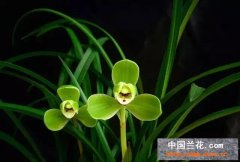
Potting mediumisorchidsone of the foods, and isorchid growingthe foundation. With a good potting medium,orchid growingis more than half successful, and the importance of potting medium is self-evident. Orchid growers all attach great importance and attention to potting medium, and their evaluations of potting medium differ greatly; as the saying goes, each side has its reasons. The choices of potting medium are highly varied; as the saying goes, the Eight Immortals cross the sea, each showing their own special powers. Today's potting media range from hard to soft, from large to small, from traditional to modern, and are multifarious; as the saying goes, all categories are complete and everything is available.
No matter what potting medium it is, and no matter what characteristics it has, all potting media share the common pattern of changing after absorbing water from wet——moist——damp——dry——parched. From the common pattern of change after potting medium absorbs water, it is easy to evaluate and judge the differences and quality of potting media.
A potting medium that considers itself good should be two long and one short. The cycle of change from wet——parched should be long, and the time from moist——damp——dry should be long. The time from wet——moist should be short. If the two long times are long, then the damp time is also long, and the potting medium is good; otherwise, the potting medium is poor.
For potting medium to meet good standards, it should have five characteristics:
First, granular structure. Regardless of the size of the potting medium, even extremely fine particles must be granular. The granules must be naturally or spontaneously formed and will not dissolve after watering, so they will be loose and breathable.
Second, water absorption must be fast. Very dry potting medium can quickly absorb water, and water absorption is even. After potting, there will be no situations of water channels or of being wet outside and dry inside, or wet on top and dry below, and dry cultivation can be carried out.
Third, drainage must be fast. After the potting medium is fully saturated with water, excess water is required to drain out quickly, so as to meet the requirement of a short change time from wet——moist. Watering also becomes simple, and orchids are no longer afraid of rain.
Fourth, water retention must be good. Whether the water retention performance of the potting medium is good or bad determines whether the potting medium is good or bad. If the water retention performance of the potting medium is good, the time of change from moist——damp——dry will be long.
Fifth, it must have natural nutrients, trace elements and minerals, etc.
Potting medium that simultaneously has the five characteristics can only be found in soil. Since I began growing orchids, I have been bitterly searching. I went to the mountains to look for orchids, to orchid farmers' homes to see orchids, and to orchid friends' places to visit orchids. Besides orchids, it was all about potting medium. Paying attention everywhere and spending great effort, I still wore out iron shoes in a fruitless search. In the autumn of 2003, after my orchid friend accidentally discovered “Lazy Man's Soil,” I felt as if I had obtained a treasure; truly, it came without any effort. Lazy Man's Soil is truly magical and has the five characteristics of a good potting medium. After this soil is screened with a No. 60 sieve to remove powder, it is all granular structure of varying sizes. The granules do not dissolve in water and are very loose and breathable. After the potting soil dries, a hand can be inserted into theorchid pot. Very dry Lazy Man's Soil absorbs water quickly, and there is a squeaking sound when it absorbs water. Looking at Lazy Man's Soil absorbing water in a transparent cup, the water descends layer by layer, the boundary between dry and wet is clear, and water absorption is very even; watching Lazy Man's Soil absorb water is also a kind of enjoyment. After Lazy Man's Soil is fully saturated with water, no matter how much water you pour, it can drain out very quickly. Its change time from wet——moist is about 3---4 hours, comparable to granular potting media. Lazy Man's Soil has especially excellent water retention performance, and the damp state lasts a long time. During summer high temperatures, small pots grown with Lazy Man's Soil are watered once every 7---8 days, while others are watered once every more than 10 days. Lazy Man's Soil is humus soil and has natural nutrients, trace elements and minerals. Lazy Man's Soil also has another characteristic: not even an inch of grass grows, truly a wondrous soil. Now I use Lazy Man's Soil entirely to plant orchids, without applying fertilizer and without spraying pesticides, simply and easily.Orchid plantsgrow well, and I enjoy the happiness brought by Lazy Man's Soil.
In the selection of potting medium, I have gone through many choices, used many potting media, and had lessons such as not paying attention to potting medium, copying blindly, following trends blindly, focusing only on looseness while neglecting other aspects. Regarding the selection of potting medium, please note four points.
1. The potting medium must suit the orchid-growing environment and management method. Nowadays potting media are diverse and each has its own performance, strengths and shortcomings. No matter what, orchids will adapt, but it may not suit or adapt to you. A potting medium that others consider good may not necessarily be good for you. The selection of potting medium must proceed from the reality of the orchid-growing environment and be determined according to your own management method. For natural-style growing on a balcony, with strong light, good ventilation and low humidity, the potting medium is required to have good water retention; otherwise it will only increase the watering workload and increase risk. If you like watering and have time to water, choose a potting medium with good drainage and average water retention, so you can water often.
2. Have a comprehensive understanding of the potting medium. After selecting and purchasing the potting medium, do not rush to pot. Be sure to do it yourself and experiment on the potting medium's water absorption, drainage and water retention performance, comprehensively understand the potting medium's performance, and have a clear idea in mind. Do not merely listen to orchid friends or rely on introductions in books. Although they may both be granules or soil, their performance may differ due to many reasons. Even the soil from the same mountain differs in performance: the soil from the mountaintop differs from the soil from the mountainside, the soil on the shady side differs from the soil on the sunny side, and the soil from shallow layers differs from the soil from deep layers. This is a problem that most orchid friends easily overlook.
3. Pay attention to the moisture-retention performance of the potting medium. At present, in the selection of potting medium, there is a deviation that emphasizes looseness and drainage performance while neglecting water retention and moisture retention performance. If the water retention and moisture retention performance of the potting medium is poor, the time of change from wet——parched is very short, which not only affects theorchids'growth and adds risk, but also sharply increases the watering workload.
4. Do not frequently change the potting medium. Everyone has this mentality: as long as they hear of a good potting medium, they all want to try it. When some problems appear in the process of growing orchids, the first thing considered is to look for the cause in the potting medium. Impatient people often change the potting medium: last month granules, this month a mix, next month soil. The result can only be tormenting the orchid plants until they become weak, small, and dead. Orchids will adapt to any potting medium; the only difference is the length of adaptation time. What we need to do is, according to the potting medium's performance, adopt targeted management methods, make the best use of advantages and avoid disadvantages, pursue benefits and avoid harm, and not commonly use the method of changing potting medium.
Recommended material formulas:
Note: all formula ratios refer to volume ratios
① Soil-containingcultivationpotting mediumcompound mixes.
First formula:
50%-60% soil-type potting medium (30% humus soil or sandy loam, 15% pond mud or peat soil, 5% “air sand soil”); 40%-50% “immortal soil” or artificial granular soil.
Second formula:
60% soil-type potting medium; 25% organic potting medium; 15% inorganic potting medium.
Third formula:
50% rice husk charcoal (when the husks are thoroughly burned, immediately splash water so they do not turn to ash, to enhance water drainage and breathability and also remove fire qi); 35% humus soil or sandy loam; 15% pine needles. Especially
suitable for plants with few roots.
Fourth formula:
30% air sand soil; 40% humus soil; 30% wood shavings or pine leaves. Most suitable for the domestication and cultivation of wild-collected orchids.
Fifth formula:
20% sandy loam; 10% “air sand soil”; 10% humus soil; 20% rice husk charcoal; 20% fully burned cinder lumps (after watering to remove fire qi); 20% pine leaves or shredded foam plastic.
Has a good effect on the continuous variation of variegated orchids.
② Compound mixes of soilless cultivation potting media.
Fully inorganic potting medium:
30% shredded foam plastic; 50% crushed brick and tile; 20% perlite or kaolin.
Fully organic potting medium:
30% tender branches; 30% peanut shells; 30% pine leaves; 10% crushed sphagnum moss. Good water retention, has nutrients, suitable for non-professional orchid growers.
Combined formulas:
30% shredded foam plastic; 30% crushed brick and tile; 20% tender branches; 10% pine leaves; lo% sphagnum moss.
50% high-phosphorus stone; 30% foam blocks; 10% pine leaves; 10% sphagnum moss.
50% coarse river sand; 30% foam blocks; 10% pine leaves; 10% sphagnum moss.
Although the above formulas have been proven feasible by the author or orchid friends, resources and climate in different places are not all the same. Specific operations may be changed and need not be restricted to a certain formula.