Orchid Cultivation Tips: How to Grow Orchids with Moss
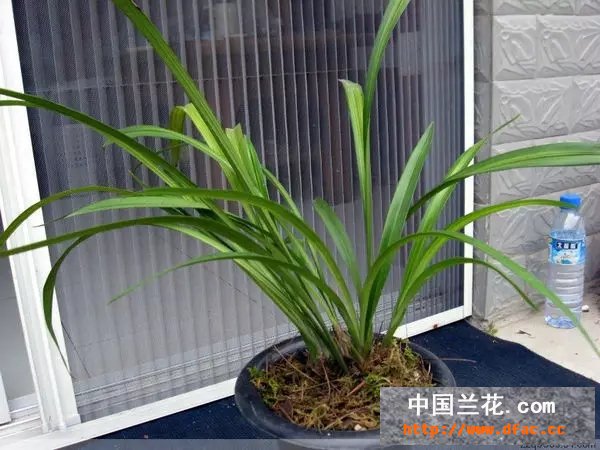
Orchidsare very elegant indoor ornamental plants, especially Chinese orchids (Cymbidium goeringii,Cymbidium ensifolium, Cymbidium tortisepalum,Cymbidium faberiand other terrestrial orchids). The captivating fragrance of their blooms has long been admired by the ancients, and they also fear harsh sun exposure, making them very typical indoor green plants. The orchid culture formed over thousands of years has influenced the flower-appreciation aesthetics of some neighboring countries (such as Japan, South Korea, etc.). In the past decade or so, as our country's living standards have gradually improved and indoor living environments have improved, people's demand for displaying Chinese orchids indoors has also greatly increased. But whenorchidsare mentioned, everyone thinks they are very difficult to keepalive, so the problem of orchids being hard to grow has also hindered orchids from further entering more households.
Are orchids (I mean Chinese orchids, the same below) really so difficult to grow? Based on my personal experience, orchids are among the easiest plants of all to cultivate. As long as you mainly master root aeration, ensure moisture, and provide a certain degree of light, you can grow them successfully.
Here I introduce a very simple method that guarantees a 100% survival rate for your orchids, with fairly flexible management (mainly watering management), very suitable for ordinary indoor households (though the effect is actually not good for large-scale orchid farms).
Togrow orchids well, choosingthe growing mediumis the most critical thing. When you choose the growing medium, you also determine whether the orchid seedlings will survive in the future. Because theorchid'smain growth requirements are: first, aeration; second, water retention; third, nutrition; fourth, suitable light. Aeration and water retention are the hardest techniques to master in orchid growing (in theorchid-growingworld there is a saying that watering takes ten years of practice). Orchids have fleshyroots and need good aeration. Water is a necessary condition for the growth of all plants, yet the two are contradictory opposites: too much water squeezes the air out of the growing medium, so the roots cannot breathe and die; no water is even worse, and any plant will die. Therefore, finding a growing medium that is both aerated and water-retentive, where the amount of water and the length of the watering interval do not greatly affect the orchid, is very important. With ordinary growing media, as long as you master the amount of water and the interval, orchids can grow very well. But there arefour seasonsin a year, and countries have north and south, and temperature changes make the amount of water and the interval very hard to control, causing many people's orchids to either drown or die of thirst. Of course, more drown than die of thirst. Therefore, a good growing medium is one where more or less water, and longer or shorter watering intervals, do not greatly affect the orchid.
I introduce a growing medium with exactly this characteristic, namely moss (sphagnum moss, green moss, etc.), see the picture:
This is a pot grown with mossfor 3 months, a wild-collectedLianbanorchid. Judging from theleaves, the growth is still quite normal. Now let's see how the roots are. Lift off the surface moss, as shown in the picture:
The roots are growing well, and new roots are sprouting vigorously. Take it out of the pot and see how the lower part of the roots is doing!
The lower roots are also growing perfectly. How about that, this method is pretty good, right!
Sphagnum moss is a type of bryophyte belonging to the Sphagnaceae family, also known as peat moss. It can be divided into coarse-leaved sphagnum and fine-leaved sphagnum. Generally speaking, it grows in humid areas or swamps in tropical and subtropical mountain regions at altitudes above 800 m. Its length is generally around 8 cm-30 cm. Its pH is generally between 5-6. Sphagnum moss is very soft in texture and extremely strong in water absorption; its water absorption is equivalent to 15---20 times its own weight, and it has very good special effects such as water retention, fertilizer retention and aeration. Therefore, sphagnum moss can create goodcultivationconditions for higher indoor flowering plants, and is widely used in thecultivationof various tropical orchids, and is the main growing medium for growing tropical orchids. Taiwan, China is an important producing area of tropical orchids in the world, and every year it imports large amounts of sphagnum moss from abroad as a growing medium for tropical orchids.
Since sphagnum moss has the characteristics of excellent aeration and strong water retention, using it to grow Chinese orchids is in principle very good. For this reason I actually cultivated with sphagnum moss, with more than a dozen pots of orchids, for almost 2 years already, and the results are very satisfying. Please see the examples:
This is a pot ofJinsi Mawei(Cymbidium ensifolium)
Taking it out of the pot is very convenient, right? You can check the root growth at any time. Take it out of the pot and look at the roots
Below is a pot of Cymbidium ensifolium Dahe Su
Look at the roots:
Pretty good, right? Now look at therecently plantedCymbidium goeringii:
root condition:
Below is Dendrobium grown with moss, growing very well
The main advantages of using moss as a growing medium are:
1. The growing medium is relatively easy to obtain. If it is available locally, you can collect it locally; if not, you can buy it at the market or online. The price is not expensive. As an orchid growing medium, the quality difference is not great, as long as it isnatural and not artificially dyed.
2. Potting is very simple. Prepare a suitableflower pot, place some foam blocks at the bottom of the pot to increase aeration, then wrap the roots loosely with sphagnum moss, put it into the flower pot, then cover the pot surface fully with sphagnum moss, and when it looks neat and suitable, the planting process is complete.
3. Watering management is very flexible. After planting, you can water it. You can water it every day, or once a week. Any amount of water is fine; excess water will flow out on its own and will not accumulate, so it is relatively easy to manage.
4. Clean, tidy and lightweight. If what you bought is relatively pure sphagnum moss, with almost no soil, just rinse it with water before use and it is very clean. It will not bring soil out of the pot when watering. Also, a pot with orchids planted in it is very light, so it can be moved and placed at will.
5. You can lift off the surface sphagnum moss at any time to check the root growth, which is good for observation.
6. If you water relatively frequently and the humidity is high, the fresh sphagnum moss spread on the pot surface can generally survive. The emerald-green sphagnum moss set off against the upright orchids will add a lot of beauty to the pot of orchids.
Regarding light and fertilizing, it is the same as orchids grown in other growing media, but it is best to use compound fertilizer, which is clean and convenient and will not produce odors or pollute the environment. Use a compound fertilizer with 15% each of nitrogen, phosphorus and potassium, diluted with water at one part per thousand, and apply once a month. You can also lift the sphagnum moss on the pot surface, sprinkle an appropriate amount (not more than 1 gram) of compound fertilizer granules near the roots, then cover it back with sphagnum moss, water it, and let it slowly dissolve and be absorbed.
Special point: because sphagnum moss is very loose with large gaps, over time the sphagnum moss in the lower part of the pot will become humified, and the orchid roots below will have nothing to attach to, which will affect the lower roots' absorption of nutrients, and the pot surface will show some collapsing (you can feel it by gently pressing the sphagnum moss on the pot surface with your hand). Therefore, after half a year, you need to add sphagnum moss to the lower roots. It is very convenient: support the pot surface with your palm (with the orchid seedlings properly held between your fingers), turn the pot upside down, hold theorchid potouter side with the other hand, gently try to pull it out, and after feeling the growing medium loosen from the pot, turn the orchid pot upright, lift gently, and the whole growing medium will come out of the pot completely and intact. Check the roots, fill the large gaps in the lower part of the roots with fresh sphagnum moss (an appropriate amount), and then you can put it back into the pot in its original position. There is almost no effect on the roots, and you can immediately carry out normal placement and management (note: during the operation, do not destroy the integrity formed by the sphagnum moss and the roots).
It sounds very complicated, but it is very simple to do. If the needed materials are ready, growing a pot of orchids with sphagnum moss takes only about 2 minutes; it is truly done in minutes.
Of course, you can also use moss alone or add some granular crushed brick pieces and other materials for potting. Moss is best when white and dry; if it has a lot of dust and is tea-brown, the quality is poorer. Moss has good aeration and water absorption, so it is beneficial to root and shoot growth, but moss itself lacks nutrients, and as the time of use lengthens, its water absorption capacity decreases and its aeration becomes worse. Therefore, the amount of watering must be strictly controlled, otherwise it is very easy to cause root rot. Usually moss should not be used for more than 1 year. If moss can be mixed with charcoal blocks, crushed brick pieces or fern roots, then it is not necessary to replace the potting material every year, and it can be extended to about two years.
Related Articles
- Is spider plant suitable for indoor placement? Learn about its benefits for the human body
- What are the methods to prevent hollow orchid roots?
- How to care for a Christmas cactus after it finishes blooming
- What should I do if the leaf tips of my spider plant keep turning yellow? Reasons the tips stay yellow even after fertilizing and watering
- Can a Clivia miniata with root rot still be saved?
- How to Diagnose and Control Cottony Cushion Scale on Clivia
- What to do if your Clivia miniata has root rot? These treatment methods are very practical
- What are the most suitable temperature and humidity for growing clivia (Clivia miniata)?