How to Grow and Care for Oncidium (Dancing Lady Orchid, Golden Butterfly Orchid)
Growing and Care Methods for Oncidium (Dancing Lady Orchid, Golden Butterfly Orchid)
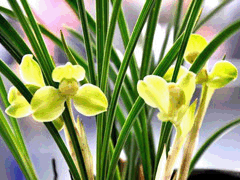 Oncidium originates from the United States, Mexico, Guyana, Peru and other places. Oncidium, also known as the dancing lady orchid, golden butterfly orchid, tuberculate-lipped orchid and so on, is the general name for plants of the genus Oncidium in the orchid family. This genus has more than 750 native species worldwide. The thick-leaved type (also called hard-leaved type) Oncidium prefers warm environments, while the thin-leaved type (also called soft-leaved type) and the sword-leaved type Oncidium prefer cool climates. The suitable growing temperature for thick-leaved Oncidium is 18-25°C, and the winter temperature should not be lower than 12°C. The suitable growing temperature for the thin-leaved type is 10-22°C, and the winter temperature should not be lower than 8°C.
Oncidium prefers humid and semi-shaded environments. Besides watering to increase the moisture of the growing medium, spraying water on the leaves and the ground is even more important; increasing air humidity is more beneficial to the growth of leaves and flower stems. Hard-leaved varieties have strong drought tolerance; they can go without watering for a long time in winter without drying out and dying, showing very strong endurance. Large-scale production requires shade netting, with a shading rate of 40%-50% being suitable. In winter, sufficient sunlight is needed and shade netting is generally not used, which is beneficial for flowering. Use fern roots, moss, volcanic ash, bark chunks and so on for pot culture or growing-bed cultivation. Thin-leaved types have thinner leaves, slightly leathery, and most plants grow robustly, suitable for cultivation in intermediate-temperature greenhouses; thick-leaved types have strong drought tolerance, and when cultivated in a greenhouse they will not die from drought even without watering for dozens of days in winter; sword-leaved types are smaller in plant form and suitable for home cultivation. Article from: Yuhuagu Flower Growing Network
Most types of Oncidium are grown in pots. When planting, use crushed stone or broken bricks to line about one-third of the bottom of the pot to facilitate aeration and drainage. The pots used for cultivation can be plastic pots, unglazed clay pots, porcelain pots and so on. For Oncidium cultivated for more than 2-3 years, the plant gradually grows larger and produces small offsets, and the root system becomes overcrowded, so it should be repotted in time. Repotting is usually carried out after flowering; for plants that have not bloomed, it can be done before the growth period, such as in early spring or after autumn when the weather turns cool. The growing material should be replaced at the same time, and repotting can be combined with division. In summer, attention should be paid to shading, and when the temperature is too high, it should be lowered in time. In midsummer and autumn, water thoroughly once a day, that is, until water comes out of the drainage hole at the bottom of the pot. For fertilizing, compound fertilizer is preferable; use light fertilizer and avoid heavy fertilizer, and it is best to fertilize in the early morning or after 3 p.m. July and August are the period when the plant sends up flower spikes. During this period, due to high temperature and high humidity, bacterial soft rot is likely to occur, which in severe cases can cause the plant to die. For this reason, on sunny days the growing material in the pot can be dried out, so that bacteria are less likely to multiply under dry conditions, and at the same time, rotten leaves and rotten stems should be cut off in time. Before entering the high-temperature, high-humidity season, fertilization should be strengthened, especially by increasing the proportion of potassium fertilizer, to cultivate strong seedlings and enhance the plant's disease resistance.
Responsible editor: Yuhuaren
Share to:
Qzone
Sina Weibo
Tencent Weibo
Douban
Renren