10 Precautions for Growing Orchids at Home
For beginner orchid growers, understanding the precautions for growing orchids at home can help avoid detours. This article summarizes 10 precautions from an experienced orchid grower, covering everything from pots to fertilizer, from watering to changing the growing medium, and from lighting to repotting. It is very valuable for beginner orchid growers.
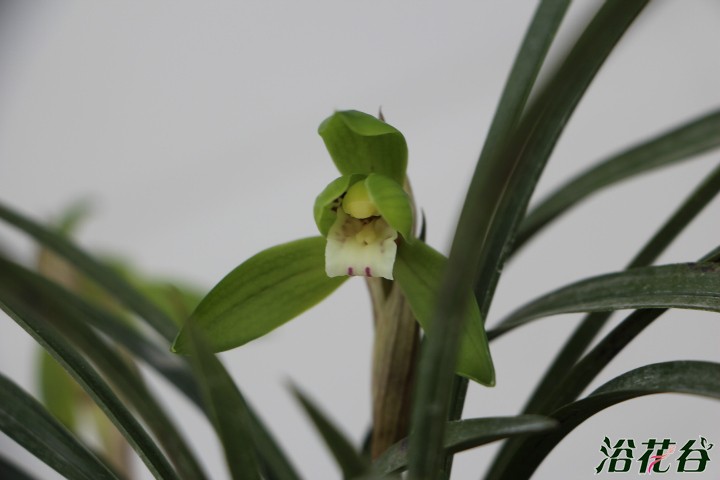
1. Avoid small plants in large pots:
A large pot naturally holds more growing medium, and more medium naturally affects air permeability. For small plants with short, small, and few roots, this is harmful and offers no benefit. Choose the pot reasonably according to the orchid's condition and the plant's size.
2. Avoid frequent watering:
Water is the source of life for orchids, and also their vital weak point. Do not water or mist the surface just because the top of the pot looks slightly dry. When the pot surface is dry, the growing medium in the middle and lower parts of the pot is still moist.
3. Avoid water entering the leaf core:
Washing orchid leaves or giving them a shower is perfectly fine, provided that ventilation or a fan is used to follow up, and in short, the water in the leaf core is blown dry quickly. Otherwise, water entering the leaf core combined with high humidity and high temperature is the source of the two rots.
4. Avoid going too long without watering:
Long-term overly dry growing medium causes orchid leaves to dehydrate, wrinkle, and twist, and roots to become hollow with scorched tips.
5. Avoid shade with no sunlight:
Orchids like shade, but that does not mean they should never see sunlight. Growing in shade produces leaves but makes flowering difficult; growing in shade produces shoots but results in poor resistance. After all, all things grow relying on the sun! Moreover, Cymbidium faberi and Cymbidium faberi 'Hui' naturally like sunlight. Why not let them bask in the sun?
6. Avoid direct sunlight:
Basking in the sun depends on the season. Early spring, mid-autumn, and severe winter can accept full sun. But after spring, early autumn, and midsummer require shading. The sun during this period most easily scorches orchid leaves, causing old pseudobulbs and leaves to decline prematurely.
7. Avoid excessive fertilizing:
As the saying goes: "For crops to bloom, it all depends on fertilizer." With granular growing medium now in vogue, orchids need fertilizer, but not strong fertilizer or heavy drenching with cloudy fertilizer; rather, apply thin fertilizer frequently.
8. Avoid frequently changing the growing medium:
Do not follow others blindly or act on hearsay that some expert used a miraculous growing medium to grow a miraculous flower, and then search everywhere to mix a new growing medium and replant the orchid. In fact, there is no best growing medium, only better management. As long as you understand and master the growing medium you are currently using, that is the best.
9. Avoid frequent repotting:
Do not repot today just to look at the roots, repot tomorrow to look for shoots, and repot the day after to divide the plants. It really cannot stand being disturbed like that.
10. Avoid poor ventilation:
For orchids with fleshy aerial roots, more ventilation and a gentle breeze are absolutely their favorite. Even if home orchid growing cannot achieve this, there must still be circulating air.