Pandemic Pushes Traditional Agriculture to Transform, Agricultural E-commerce Sees New Opportunities
As COVID-19 entered community transmission, a level 3 alert was implemented across Taiwan, China, schools suspended classes, companies and businesses switched to remote work, and small farmers everywhere saw their livelihoods hit hard. With people staying at home, various organic produce e-commerce platforms provided services at the right time, with sales growing severalfold; consumers buying directly
As COVID-19 entered community transmission, a level 3 alert was implemented across Taiwan, China, schools suspended classes, companies and businesses switched to remote work, and small farmers everywhere saw their livelihoods hit hard. With people staying at home, various organic produce e-commerce platforms provided services at the right time, with sales growing severalfold; consumers buying directly from farmers shortens the distance from farm to table and avoids exploitation by middlemen.
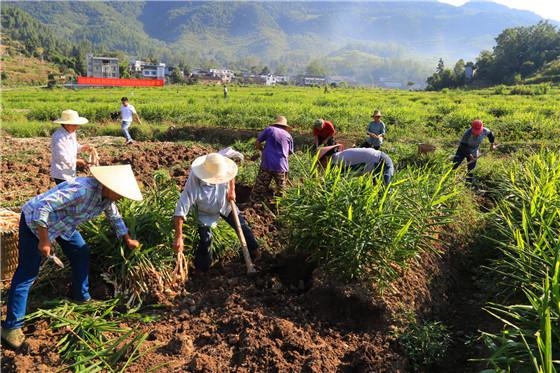
Since entering the level 3 alert on May 19, schools at all levels have suspended classes and school lunches have also stopped, leaving small farmers everywhere who originally supplied organic fruits and vegetables to schools severely affected. The Council of Agriculture joined forces with 60 agricultural produce e-commerce platforms to launch the "Agricultural Produce Carnival" online platform, where people can buy fresh fruits and vegetables directly from farmers online or through a mobile app, with home delivery; since the site launched, sales have grown nearly threefold.
The biggest problem in the production and marketing of agricultural products is that, from place of origin to consumer, they pass through layer upon layer of exploitation. Take fruit as an example: after small farmers in the mountains harvest it, it is transported down the mountain, then passes through middlemen and large wholesalers, reaches supermarkets across northern, central and southern Taiwan, and finally reaches consumers, having already passed through several stages. Take garlic, onions and red beans as examples: they are controlled by a small number of large wholesalers who can manipulate prices, and farmers become the exploited party.
Affected by the pandemic, agricultural produce e-commerce platforms everywhere provide fresh, affordable products with home delivery, not only shortening the distance from farm to table but also eliminating layer upon layer of exploitation by middlemen. In the future, this kind of agricultural produce e-commerce platform will gradually become mainstream, helping small farmers break free from large wholesalers' manipulation and control of prices.
What small farmers need most is marketing and distribution channels. In recent years, universities have launched the University Social Responsibility (USR) movement. Besides being places where young students receive education, universities can also combine with local community organizations to help small farmers and give play to universities' social responsibility. For example, National Chi Nan University is adjacent to Sun Moon Lake, Formosan Aboriginal Culture Village and other places, with many agricultural and tourist attractions nearby. Students launched a project to provide training for coffee production and marketing group farmers in Guoxing, Yuchi, Puli and other places, hold coffee-related activities, raise their profile and also help with marketing.
National Chengchi University in Muzha is surrounded by many tea gardens, famous for Tieguanyin and Sijichun. At the beginning of this year, NCCU 50+1 Social Enterprise was established, calling on alumni to take action to practice community-supported agriculture (CSA). Small farmers who farm organically do not use chemical fertilizers or pesticides, so their costs may be higher. Therefore, supporting local small farmers through the power of the community, so that small farmers have orders before sowing and transplanting rice seedlings, can encourage more farmers to join the ranks of organic farming.
COVID-19 has changed every industry and accelerated digital transformation. If the transportation and marketing of agricultural products can be widely digitalized and a complete production and marketing traceability record can be established, it will help enhance the competitiveness of small farmers. Small farmers sell through e-commerce platforms, face consumers directly and provide home delivery; meanwhile, consumers can buy branded agricultural products with production and marketing traceability records, which is truly a boon for small farmers everywhere.
If universities promote the University Social Responsibility movement, they can, through social enterprise platforms, combine with students or alumni to support local small farmers over the long term. If each person buys 1,000 yuan of organic products from local small farmers each month, 50 alumni can support one small farmer, and 500 alumni can support ten small farmers, using eating to exert real influence.
COVID-19 has brought many negative impacts to everyone, but it has also provided business opportunities for transformation in many industries.