Major Survey of Organic Fruit Products: Average Farm Operating Area Nearly 3 Hectares per Household
However, organic farmers mostly adopt diversified cultivation as their operating model. Farmers include crops they currently or plan to grow in the future in their certified product items, but there is a discrepancy between the crop items farmers actually grow and the registration data. If farmers are classified solely by their main crop category, it is difficult to grasp the actual cultivation status of organic agricultural products.
However, organic farmers mostly adopt diversified cultivation as their operating model. Farmers include crops they currently or plan to grow in the future in their certified product items, but there is a discrepancy between the crop items farmers actually grow and the registration data. If farmers are classified solely by their main crop category, it is difficult to grasp the actual cultivation status of organic agricultural products.
⟦NL>
To depict the organic fruit industry in a more detailed and complete manner, the study "The Operating and Marketing Patterns of the Organic Fruit Industry in the Taiwan Region" first screened farms from the Taiwan Organic Agriculture Information Network whose certification status was "passed" and whose registered items included fruit products, using them as the population for analysis. Through an inventory review, it determined whether they cultivated organic "fruit products" and, at the same time, merged this with information on farms that had been collected over the previous 3 years regarding organic fruit products, to explore the development of the organic fruit industry and to understand the characteristics of operators, providing industry units with a reference for formulating guidance measures.
The scope of the operating overview consists of farm households that passed organic certification (transition period) and whose registered items include organic fruit products. On January 19, 2020, 2,240 farm households with registered items containing fruit products were selected from the Taiwan Organic Agriculture Information Network. Those who had been interviewed under the plan in the previous 3 years or had been merged with others and thus were duplicate certified cases were excluded. The verification result served as this year's inventory roster, totaling 1,149 households. Based on that year's inventory results, farm households that actually cultivated organic fruit products and were not corporate entities were selected, totaling 755 households. Adding this year's inventory results to the 730 households that actually cultivated fruit products under the plan in the previous 3 years, the operating overview and pattern analysis of organic fruit farms were further examined, totaling 1,485 households.
Organic Fruit Industry Operations
I. Characteristics of Operators
Organic fruit farm operators are mainly male, with 1,125 people (75.8%), while females account for 24.2%. As for education level, "junior college and university" was the most common with 568 people (38.2%), followed by "senior high school (vocational)" with 433 people (29.2%). The average age was 55, and the age distribution was most concentrated in "55 to under 65" with 560 people (37.7%), followed by "45 to under 55" with 388 people (26.1%). The average number of years engaged in organic operations was 6.6 years, and more than half had been engaged in organic operations for under 10 years (cumulative 75.4%), among whom those with "under 5 years" numbered 633 people (42.6%), followed by "5 to under 10 years" with 487 people (32.8%). This shows that in recent years the number of farmers joining the organic ranks has tended to increase, and that organic farm operators are characterized by being younger and highly educated.
II. Farmland Resources
The average operating area per organic fruit farm household was 2.9 hectares, of which the average organic farmland area per household was 2.3 hectares (accounting for 79% of total operating area), and the non-organic area was 0.6 hectares (accounting for 21% of total operating area). This shows that some land on organic fruit farms is not cultivated organically, but according to the interviewed farm households, although that land has not been organically certified, part of its cultivation is still managed using eco-friendly farming methods. As for organic farmland area, rented land and self-owned land (including entrusted) each accounted for half, at 51.7% (1.2 hectares) and 48.3% (1.1 hectares) of organic area respectively.
Furthermore, when the organic land area of the 1,485 households cultivating fruit products was sorted from smallest to largest, the cumulative area reached 3,343.2 hectares, yet the area planted with organic fruit products was only 1,940.6 hectares (58%), while the area planted with other non-fruit crops reached 1,402.6 hectares (42%), clearly showing that organic farmers mostly adopt diversified planting as their management model. At the same time, the diagonal line (gray) is the relationship chart of cumulative household numbers and area at 2.3 hectares per household, so observing the cumulative organic total area (red), the distribution of overall organic farmland resources is quite uneven, and from the circled point in the chart, the cumulative slope begins to rise at about just over 1,000 households, representing that more than 70% of farm households operate on a relatively small scale.
III. Crop Planting Combinations
Observing the chart above, farm households growing fruit products alone were the most numerous at 613 households, accounting for 41.3%. Among those spanning 2 crop categories, the combination of vegetables and fruit products was the most common with 377 households, accounting for 25.4%; followed by fruit products and specialty crops with 131 households, accounting for 8.8%. Among combinations spanning 3 categories, specialty crops, vegetables, and fruit products were the most common with 129 households, accounting for 8.7%; followed by coarse grains, vegetables, and fruit products with 63 households, accounting for 4.2%. The remaining combinations spanning 4 or more categories were fewer, accounting for only about 5%.
In summary, this shows that farm households growing purely "fruit products" account for about 40%, and in cross-category crop planting combinations, the combination of fruit products and vegetables is the most common, followed by the combination of fruit products and specialty crops; moreover, those growing fruit products alone had a smaller average organic area of 1.8 hectares per household, but as the number of crop combination items increased, the operating scale gradually expanded, though this expansion in scale was mainly due to an increase in the area of highly mechanized crops such as rice and coarse grains.
IV. Overview of Fruit Product Cultivation
To further explore the cultivation overview of fruit products on organic farms, fruit products were first classified into large berries, small berries, pome fruits, and so on. Among organic fruit products, large berries had the largest cultivation area at 649.5 hectares, followed by pome fruits at 511.5 hectares, and then citrus at 344.2 hectares. The southern region had the largest cultivation area, followed by the eastern region, and then the central region. The southern region mainly cultivated large berries and pome fruits; the eastern region, in addition to large berries and pome fruits, also had quite a few citrus crops; the central region was dominated by large berries; and the northern region was mainly citrus crops.
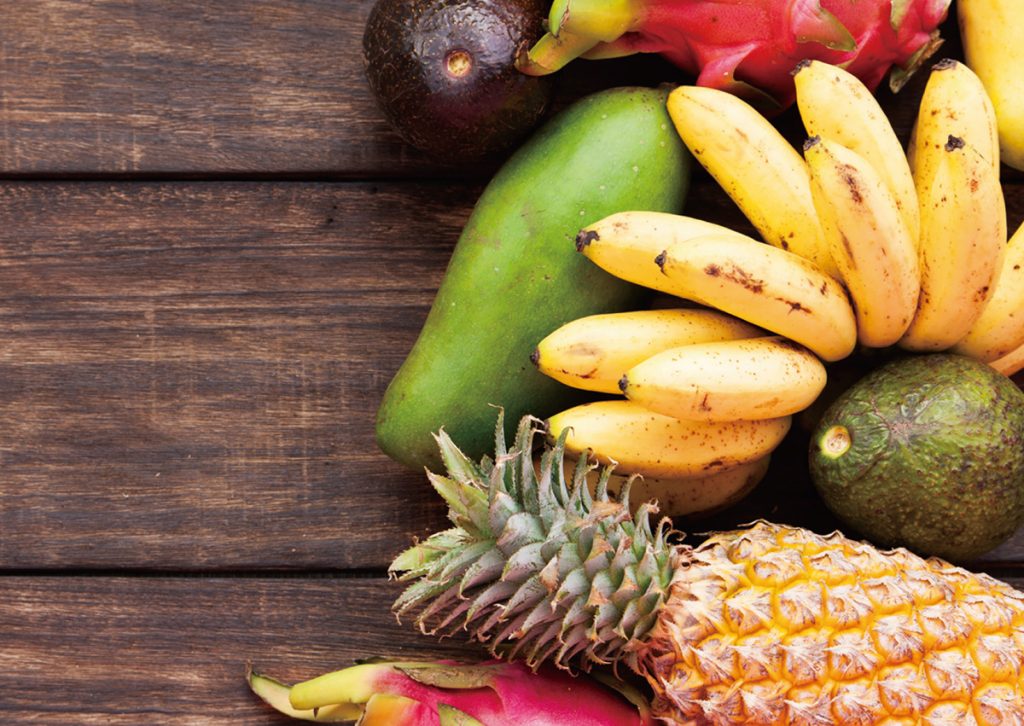
Among the cumulative area of specific fruit product items that farmers chose to plant, Japanese apricot, pineapple, banana, red dragon fruit, and lemon had relatively large cultivation areas, showing that organic farmers, in choosing fruit products to cultivate, preferred fruit products with relatively extensive cultivation management; and there was also considerable area of fruit products that, due to small-scale mixed planting, could not be clearly separated in the survey.
Organic Fruit Products Are Mainly Sold Directly
Regarding the sales channels of organic fruit farms, this article analyzes the sales channels of farmers' main crops. The proportions of organic fruit farms selling organic agricultural products themselves and selling to distributors were similar, but overall "self-selling" was slightly higher, with 763 households (51.4%), among which the "home self-selling" channel was the most common with 451 households (30.4%), followed by the "farmers' market, farmer direct sales station" channel with 159 households (10.7%); while "selling to distributors" accounted for 599 households (40.3%), among which "transporters, wholesalers" were the most common with 243 households (16.4%), followed by the "supermarket, retail store" channel with 169 households (11.4%); there were also 123 households that did not sell (8.3%).
Guidance resources encourage farmers to transition to organic agriculture. In recent years, the number of farmers joining the organic ranks has tended to increase, but because of its latitude, Taiwan is prone to climate impacts and many pests and diseases, and fruit trees have a long growth period, so compared with vegetables and rice, organic cultivation of fruit trees is the most difficult. However, whether profits can be sustained is the main factor supporting whether this economic activity can continue to develop, and profit conditions in turn depend on whether it is competitive.
Therefore, on the production side, in addition to abundant harvest and quality being regarded as goals that must continue to be pursued, it is even more necessary to guide farmers in crops that are not yet organically cultivated at this stage to enter the field of organic cultivation, so as to increase product competitiveness; at the same time, by expanding operating scale to reduce transaction costs and expanding diversified marketing channels to stabilize income, the development of domestic organic agriculture can be accelerated.