Why does India's Darjeeling black tea output keep rising amid drought and the pandemic?
Under the double blow of dry weather and the COVID-19 pandemic, the harvest season in India's key tea-producing regions is facing the dual threat of falling output and stalled tea-picking operations, which could push already-risen tea prices even higher. The UK's Financial Times (FT) reported,
Under the double blow of dry weather and the COVID-19 pandemic, the harvest season in India's key tea-producing regions is facing the dual threat of falling output and stalled tea-picking operations, which could push already-risen tea prices even higher.
The UK's Financial Times (FT) reported that as the Indian government tries to prevent the pandemic from spreading to all 800 tea-producing areas across the country, the Indian Tea Association said at least 90 tea gardens in the key tea-producing region of Assam have reported confirmed cases, along with many declared lockdown zones.
Indian tea gardens have confirmed about 500 cases, but tea growers say more testing is needed to know the true scale of the outbreak.
Tea growers warn that if the outbreak is not brought under control, it could hit the tea harvest season and drive up prices. India is the world's second-largest tea producer, after mainland China.
Assam and West Bengal are key regions for Darjeeling black tea, and both have reported surges in COVID-19 cases. Experts say local elections held in these two regions recently helped fuel the spread of the outbreak. Labor groups blame the sharp rise in confirmed cases on the cramped working conditions inside the tea gardens.
India's tea industry is being hit by multiple negative factors, from unstable weather patterns triggered by climate change to last year's lockdown measures that halted tea picking for several weeks.
The drop in output caused Indian tea prices to rise to a record high last year, giving Kenya and Sri Lanka a competitive edge in the tea export market. Mintec analyst Idoni Boye said the recent blows to India's tea-producing regions will give tea-producing countries such as Sri Lanka an opportunity to sell more tea to major tea-consuming countries such as Russia.
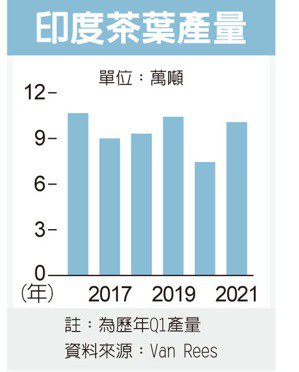
Severe drought is threatening tea growth in Assam and northeastern India, and the pandemic has made the situation even worse. Tea trader Rees said northern India's tea output in March was 47 million kg, higher than last year but still below the 60 million kg harvested in March 2019, the previous "normal year." According to Mintec, the April tea auction price in Kolkata, India, was 287.5 rupees per kg, jumping more than 40% from a month earlier.