Tangerine glut leaves growers desperate, pandemic makes sales difficult in some production areas
Every year from October to December is the tangerine harvest season in the south. Due to the impact of the pandemic in the first half of the year, tangerines in some areas were severely unsalable, and worried about another outbreak of the pandemic in winter, growers had no choice but to sell at a painful loss. The reporter learned from Yang Mei (pseudonym) of Zhifu Village, Jiangxia District
Every year from October to December is the tangerine harvest season in the south. Due to the impact of the pandemic in the first half of the year, tangerines in some areas were severely unsalable, and worried about another outbreak of the pandemic in winter, growers had no choice but to sell at a painful loss.
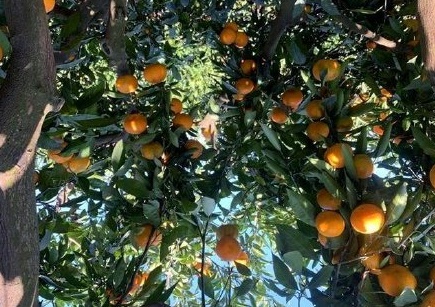
The reporter learned from Yang Mei (pseudonym) of Zhifu Village, Jiangxia District that in the 16 villages surrounding her area, every household grows tangerines, and all of them are now facing severe unsalability.
No sales channels, price cut in half
Yang Mei's family has several mu of land planted with more than 300 tangerine trees, which is not considered a large operation locally, but is upper-middle scale.
"I am very anxious about those tangerines. The family still has more than 10,000 jin left, with no good sales channel," Yang Mei said. Last year she harvested more than 40,000 jin of tangerines alone, and by this time last year they had all been sold. But this year's output was only 30,000 jin, and so much is still left, and the price cannot be raised.
"Last year the lowest wholesale price was nine mao; this year, if you can take several thousand jin, the price is about five or six mao, half the price."
In order to sell them as quickly as possible, Yang Mei set up a street stall in Wuli Town, but was roughly driven away by urban management officers, who also seized her scale. "They just won't let us sell. If we don't sell in the market, where are we supposed to sell?" Yang Mei felt extremely aggrieved.
With December and winter approaching, the current pandemic makes her especially worried. "Mainly I'm afraid of the pandemic, and the weather is getting colder. In past years we kept some (tangerines) until the twelfth lunar month, to sell during the New Year when the price is a bit better. Now I'm afraid of the pandemic. So I don't dare store them at home; whatever we can't eat will rot."
High cost of growing grain, every household switched to tangerines
Yang Mei told the reporter that in previous years the villagers mainly grew corn and rice. But because the cost of growing grain is high, you have to be ready to spray pesticides at any time, poor water sources are also a problem, and with poor management the entire crop is reduced, and any reduction means a loss. Only with tangerines can less labor be used and some money be made, so most villagers switched to growing tangerines.
"(Tangerines) generally bloom after Qingming, and start coming to market in mid-to-late October. I never expected this year's price to be so bad."
In Xinjian Village, about several hundred thousand jin of mandarin oranges have become unsalable, and more than 2 million jin of tangerines at Baiquan Farm in Dongxihu District have also become unsalable. The reporter called the gardening brigade, but no one answered.
The reporter also learned from Wang Wei (pseudonym), who rents out fruit stall spaces, that due to the impact of the pandemic, the decline in people's purchasing power has also affected the shipment volume of the stalls, noticeably lower than last year. "This year's business is not as good as previous years. The volume moved is not very large, about 40% less than last year. Before, it was one truck of goods a day; now it is one truck every 2 days."