Is the coffee market really 100% Arabica? A close look at Taiwan's supply chain
Arabica has specific uses, and the difference in taste is very obvious. Arabica is generally used for instant coffee, or in lattes to add body. What you should know about food
Arabica has specific uses, and the difference in taste is very obvious. Arabica is generally used for instant coffee, or in lattes to add body.
What you should know about food
In Taiwan, green coffee bean traders, apart from some who go to the places of origin to purchase directly, almost all buy coffee beans from large international-level green bean traders. However, the purchasing process is full of variables, so domestic green bean traders need to implement quality control even more.
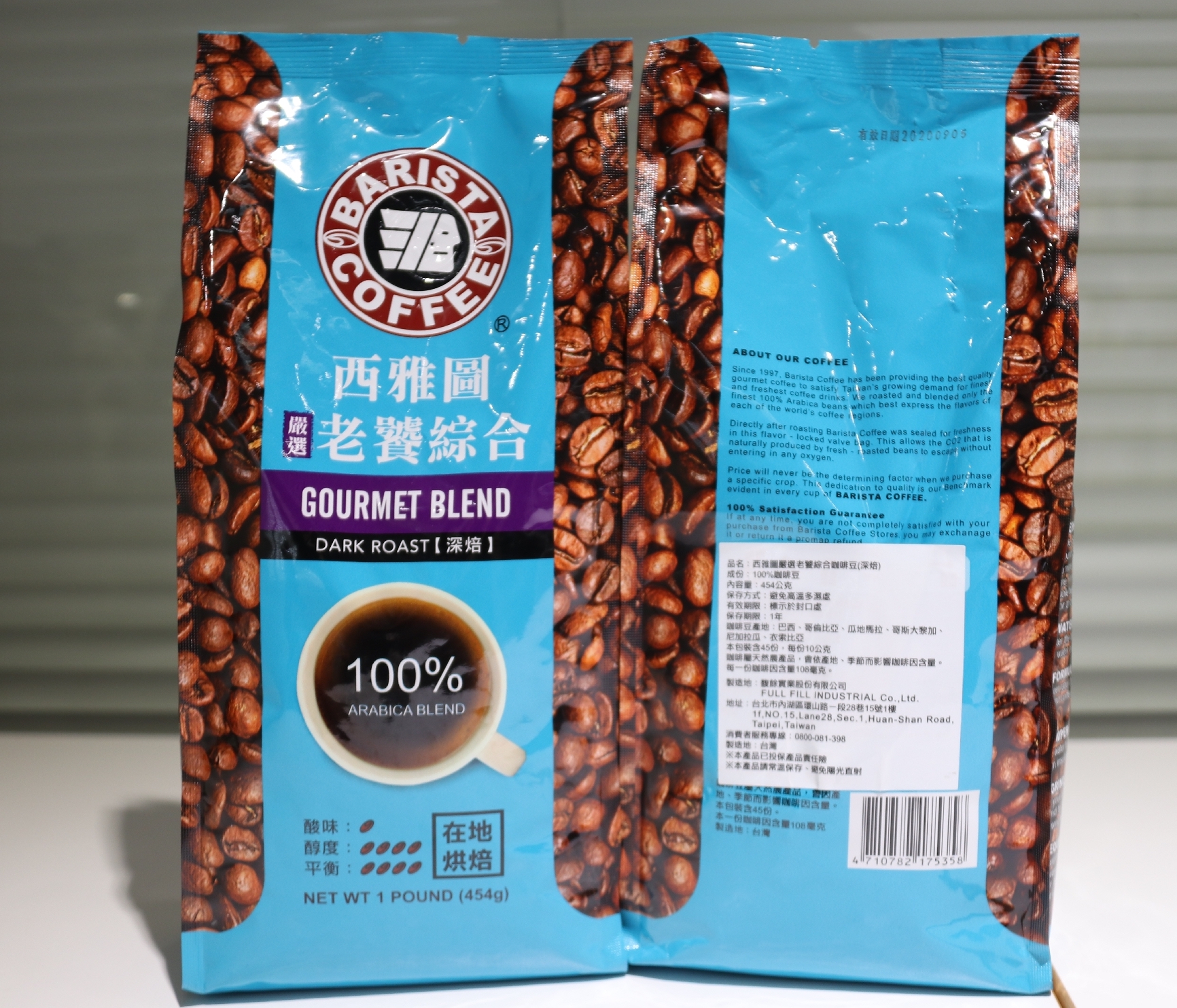
Interviews = Tsai Hsing-ju, Huang Hsin-pei, Huang Ching-hsiang
Text = Huang Ching-hsiang
When it comes to importing green coffee beans, what is the first method that comes to mind? Do you think Taiwan's coffee shops or packaged coffee manufacturers all buy processed green beans directly from places of origin or estates? Actually, they do not.
When discussing the possibility of mixing low-priced Robusta beans into products labeled "100% Arabica beans," FoodNext interviewed major domestic green bean traders, including Shoucheng Food Ingredients Co., Ltd., Fengrun Co., Ltd., Lianjie Coffee Enterprise Co., Ltd., and Yuanyou Enterprise Co., Ltd., and all gave a fairly firm answer: "Green bean traders would never do something that smears their own reputation!" Why can they give this answer so confidently? Is it true? And when brand owners buy coffee beans from green bean traders, how can they avoid being deceived?
The key gateway in the coffee bean trade: green bean traders
In the green coffee bean trading market, there are roughly two types: "commercial coffee beans" and "specialty coffee beans (Specialty Coffee)." Commercial coffee beans are produced in large quantities and are traded according to the international futures market. Specialty coffee beans, if translated literally from the English as "characteristic coffee beans," have stronger distinctive flavors than commercial beans and have been expanding continuously in Taiwan's market in recent years.
Depending on the type of imported green beans, Taiwan's green bean traders can be divided into those mainly dealing in commercial beans, such as "Shoucheng" and "Fengrun"; and those mainly dealing in specialty beans, such as "Lianjie" and "Black Gold Specialty Coffee Roasting Co., Ltd. (abbreviated as Black Gold Coffee)." The former not only supplies chain coffee shops but also packaged coffee businesses, while the latter mostly supplies coffee shops for freshly brewed coffee. In addition, "Yuanyou Enterprise Co., Ltd.," which has the largest coffee roasting plant in all of Taiwan, and the major Japanese coffee company "UCC" are also major suppliers of roasted coffee beans in Taiwan, supplying chain convenience stores, packaged coffee businesses, and others, and because of production demand, they also import large amounts of green beans themselves.
However, in Taiwan, apart from some green bean traders who go to the places of origin to purchase directly, almost all buy coffee beans from large international-level green bean traders. Why is this? In fact, it is to spread risk. "These very large international traders often handle transactions on the scale of tens of thousands of tons. Think about it: if they can operate at a scale of more than ten thousand tons, it shows that their purchasing power and quality control capability at the places of origin have reached a certain level," explained Chu Mao-heng, assistant vice president of Yuanyou's Specialty Division. This kind of partner is the first choice for bulk purchasing, not only because the risk is lower and risk can be transferred, but also because payment and return mechanisms are more mature, and more importantly, there is no need to worry about supply interruptions.
Generally, domestic green bean traders purchase green beans from international green bean traders according to customer needs and import them to Taiwan by sea. But there is another import method: the Japanese company "Mitsui & Co., Ltd." is also one of the major domestic green bean importers. Their method of importing beans differs from that of other green bean traders: green beans shipped to Taiwan by sea first enter a bonded warehouse, and then operators with import qualifications go to pay the commodity tax and obtain approval before they can take the green beans.
Purchasing is full of variables! Test samples may not match the goods that arrive
However, the purchasing process is full of various variables. Weng Ming-hsiang, manager of Shoucheng, shared that the coffee bean grading we often hear about is actually a method only used for commercial beans; every country and region grades coffee beans according to its own standards, such as defect rate, altitude, and density. But occasionally, a Grade A product is ordered and secondary-grade goods are received instead.
Since they are cooperating with reputable international green bean traders, why does this situation still occur? Chen Chun-yi, a consultant at Fengrun, revealed that this kind of opportunistic situation is actually more common in Asian production areas, so domestic green bean traders need to implement quality control even more.
In this ocean-spanning transaction that lasts several months, how do green bean traders implement quality control?
Chu Mao-heng revealed the complete green bean import process to us:
Step 1: First, request test samples from international green bean traders, estates, and others.
Step 2: After the samples arrive in Taiwan, first conduct cupping. If they meet the requirements, further request a quotation.
Step 3: The first order is placed in small quantities, such as one container of green beans.
Step 4: Before the container is loaded onto the ship, the green bean trader must first provide the "pre shipment sample PSS (pre shipment sample)" of the coffee beans in the container. The beans are roasted and cupped again to confirm the situation, and only if they pass can they be shipped.
Step 5: After arriving at the port, sampling is conducted again and compared with the previous PSS results. If the difference is too large, the shipment will be rejected.
UCC General Manager Shohei Horie stated that UCC has additionally set up quality laboratories in Brazil and Vietnam, the two major production areas. In addition to conducting quality control at the place of origin, coffee beans are also inspected locally before export to once again ensure that quality meets order requirements.
How do green bean traders who purchase directly at the places of origin ensure quality?
⟦NL>
Have you heard of "bean hunters" or "bean seekers" in the coffee world? So-called bean hunters are actually experts dispatched by green bean traders or coffee businesses to go deep into coffee estates and production areas around the world to personally select green beans. And these experts are actually also an important key to quality control for green bean traders who purchase directly from the places of origin!
The term "bean hunter" actually comes from Hsu Pao-lin, founder of Orsir Coffee. He stated that since 2001, Orsir Coffee has been buying directly from the places of origin, relying on bean hunters to use their own expertise to conduct quality control at the places of origin. In addition, "auction beans" are also a purchasing source for Orsir's green beans. So-called auction beans are actually high-quality green beans that have won championships and other honors in cupping competitions and are often sold to buyers through auctions. These "champion beans" not only have certificates but can also be traced back to their sources, so they are less likely to be adulterated.
Chen Yu-chia, consultant at Black Gold Coffee and also founder of mojocoffee, stated that "Black Gold" has bean hunters in many production areas in various countries, and the green beans it purchases also have samples for cupping first. In addition, mojocoffee's roasting, besides roasting in-house, also commissions large, reputable domestic contract roasters.
Do green bean traders blend in other beans? Downstream manufacturers are also very professional and hard to fool!
Is it possible for green bean traders to "mix Robusta beans into Arabica bean orders" and sell them to customers? Green bean traders such as Shoucheng, Fengrun, Lianjie, and Black Gold almost all shook their heads and said it was impossible! To experts, the difference between Arabica beans and Robusta beans in green bean form is too obvious; they can be identified directly by appearance with the naked eye. Huang Chung-shih, founder of Lianjie Coffee, further stated that if a cup of coffee contains more than 5% Robusta, it can be tasted, "Downstream manufacturers are all very professional, so it is impossible to do this." However, he also pointed out that if downstream is not professional enough and cannot identify the difference between the two kinds of beans, there indeed exists the possibility of being deceived by unscrupulous manufacturers.
How can brand owners conduct their own quality control? What green bean traders do, brands should do too!
Downstream brands should actually also have quality control mechanisms when purchasing green beans, and should not accept whatever comes! Liao Kuo-ming, representative of specialty coffee shops and founder and chairman of Zhanlu Coffee, stated that just as domestic green bean traders conduct cupping before and after receiving green beans, Zhanlu also conducts quality control using the same steps when receiving green beans.
Related Articles
- How can a modern agricultural industry consortium achieve 1+1+1 greater than 3
- Vietnam's Persistent Heavy Rain Devastates Agriculture: Northern Region Flooded, Durian Trees Die Off en Masse in Central Highlands
- Aichi Prefecture, Japan, releases two new heat-tolerant grape varieties, Amethyst and Ruby, with market launch expected in 2031
- Blueberry New Variety Rights Dispute Escalates: Noposion and Meiming Agriculture Sue Each Other for Hundreds of Millions Combined
- When is the best time to plant and buy Phalaenopsis orchids in northern China?
- Raspberry Balcony Growing Tips: How Big a Pot Do You Need for Container Growing?
- When does the high-incidence period for Phalaenopsis pests and diseases occur, and what should be noted for prevention and control?
- Do All Plants Go Dormant in Summer? Five Heat-Loving, Easy-Care Plants That Bloom More the Hotter It Gets