Why can coffee adulterated with robusta sell at a high price just by claiming to use arabica beans?
Several years ago, the phrase "100% arabica" suddenly appeared. In fact, this claim is aimed at commodity coffee beans sold in supermarkets, whereas in the specialty coffee industry, 95% of specialty coffee beans are arabica beans, because supermarket coffee has always been
Several years ago, the phrase "100% arabica" suddenly appeared. In fact, this claim is aimed at commodity coffee beans sold in supermarkets, whereas in the specialty coffee industry, 95% of specialty coffee beans are arabica beans, because supermarket coffee has always been synonymous with low-priced coffee. Even in specialty coffee shops, robusta beans are only deliberately blended in for latte coffee beans, to add a richer, fuller mouthfeel.
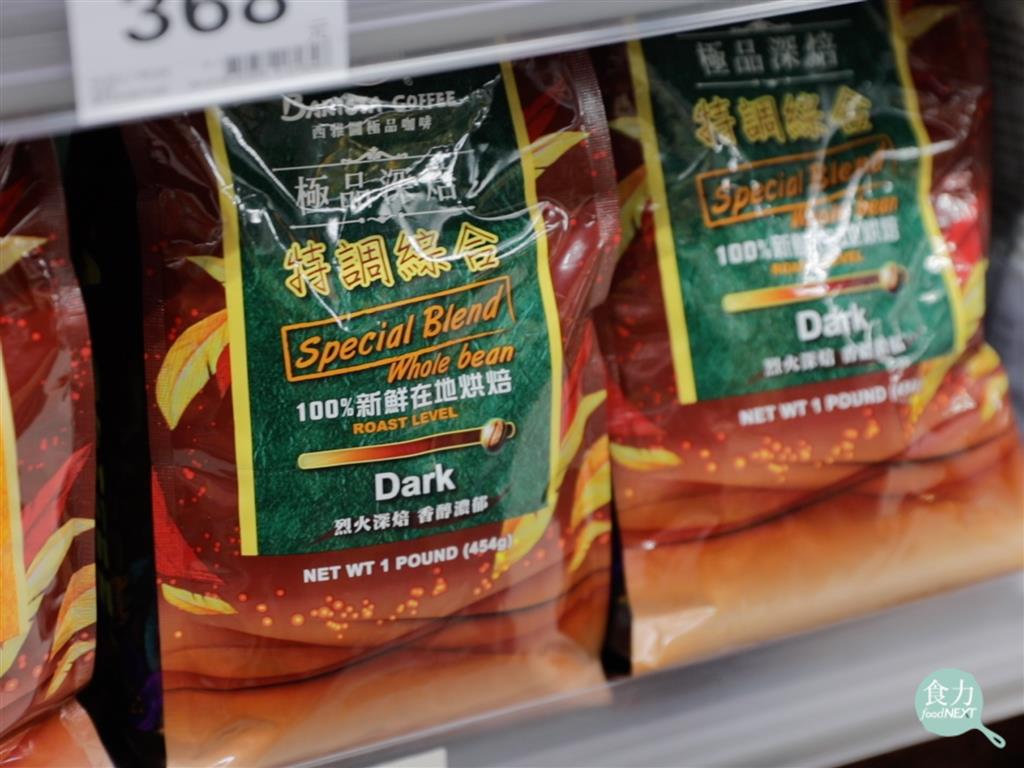
"Seattle Premium Coffee" advertises "100% arabica coffee beans" but is not 100% arabica! After Europol and INTERPOL uncovered 9 cases in Germany, Switzerland and Portugal in April 2019, this was the first coffee bean blending incident found in Taiwan, China on the retail market. How can Foodnext be certain that Seattle blended its beans?
Arabica beans and robusta beans are hard for non-experts to tell apart with the naked eye
The two most famous coffee varieties are arabica and robusta. Because the two differ in the refinement of cultivation methods, processing methods, flavor and so on, their commercial value also differs; robusta costs almost only half the price of arabica! Because of this price gap, unethical merchants blend robusta coffee beans or other bean varieties into arabica coffee beans and label the product "100% arabica coffee beans" to pocket the price difference.
Although green arabica and robusta coffee beans can be visually distinguished from each other, after roasting and grinding this distinction may become indistinct. To further determine whether adulteration has occurred, chemical analysis methods are needed.
"16-O-methylcafestol" is an excellent marker for detecting whether coffee is not 100% arabica!
Besides differing in appearance, arabica and robusta also differ in chemical composition. Coffee contains diterpene compounds, including cafestol, kahweol and 16-O-methylcafestol. The first two are very sensitive to light and heat and are scarce or nearly absent in arabica beans, but robusta beans contain a high proportion of "16-O-methylcafestol," which is heat-stable and will not disappear after high-temperature roasting; it can be detected in both green and roasted coffee beans, making it an excellent marker for detecting whether coffee is not 100% arabica!
There are currently two international methods for testing 16-O-methylcafestol
There are currently two international methods for testing whether 16-O-methylcafestol is present: one is the "German standard analytical method DIN 10779," and the other is "nuclear magnetic resonance (NMR)."
In the EU food safety search operation "8th OPSON operation," jointly launched by Europol and INTERPOL, the DIN 10779 method specified by the Berlin-based Federal Office of Consumer Protection and Food Safety (BVL) was used. Foodnext commissioned the Taiwan, China branch of the German Tentamus Group GmbH, "Tentamus Analytics Taiwan Co. Ltd.," to submit samples to the German "Tentamus QSI laboratory" for testing, using NMR technology certified by the German Accreditation Body (DAkkS) to test whether the samples contained 16-O-methylcafestol.
NMR takes less than an hour to determine whether adulteration has occurred!
What is the difference between these two methods? DIN 10779 uses high-performance liquid chromatography (HPLC) or high-pressure liquid chromatography to distinguish samples, but this method requires 3 days of experimentation. NMR technology, however, is just as accurate as DIN 10779, but its testing efficiency is faster, requiring only 1 hour to obtain results, making it the testing method more commonly used on the market today to detect 16-O-methylcafestol.
⟦NL>
Generally speaking, arabica is of higher quality than robusta beans, although there are robusta varieties whose quality can match arabica beans, they remain few. Because robusta is much lower in price than arabica, it is often used in instant coffee and ready-to-drink coffee products. If it is blended into coffee bean products labeled 100% arabica, it becomes a powerful tool for cutting costs, and the profitability greatly increases the likelihood of blending!
Taiwan, China's coffee market is growing larger and larger, and most coffee beans are imported from abroad. Industry operators should also strengthen their own quality control, and should the government also begin to pay attention to the possibility of false labeling of coffee bean products, so that consumers do not fall victim to deception by trusting labels!