Introduction to the Characteristics and Care Methods of the Xiaoda Mei Chunlan Variety
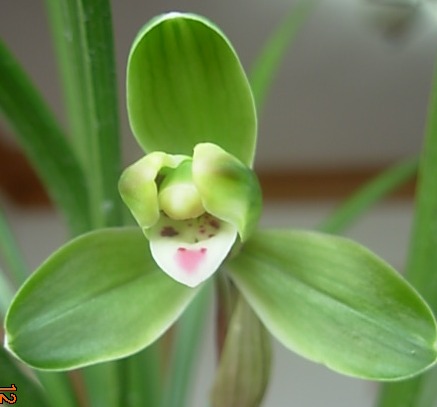
The leaf posture is a mix of semi-drooping and slanting-drooping, the leaves are narrow and slender, the leaf groove is V-shaped, the leaf color is emerald green with a slight luster, the leaf stalk is slender and tapered, the leaf tip is pointed and long, and the leaf buds are purplish-red and slightly pale. The flower bud is pale red, with green color on the tip and reddish-purple veins. The flower stalk is pinkish-purple, with the top node turning green. The three outer petals are short and ovate, with the edges curling inward, shaped like a shallow soup spoon; the silkworm-moth stamen is held in the center, with a liu-hai tongue and red spots...
"It came from the Shantang flower cellar in Suzhou. Because of a dispute over it, it got this name. The flower is very compact and neat, deep green in color, though its shoulders are slightly inferior. Recorded by Dingweng.
Spring is stored at the bottom of the cellar, where the fire is slightly warm; one learns the old village method of forcing flowers. How laughable is the old gardener of Gusu; a quarrel arose over dividing the roots.
Huishi composed this playfully in the Plum Blossom Fragrance Studio"
— (Qing) Xu Gengmei, author; Yang Diqing and Mo Lei, annotated, Annotated Edition of Lan Hui Tong Xin Lu
"It appeared in Suzhou during the Daoguang period of the Qing Dynasty. At that time, a fight broke out over this flower, so it was named Xiaoda Mei. The petals have short feet and round heads, the shoulders droop slightly, the edges are tightly rolled, and the stamen is semi-hard; the tongue is round. The flower stem is slender and long. The old leaves are sickle-shaped, and the bract leaves are dark green. At present, people often pass this flower off as Liangxi Mei."
— Mo Lei, Jin Zhenchuang, and Zheng Liming, editors, New Compilation of Jiangsu and Zhejiang Orchids