Introduction to the Characteristics and Appreciation Methods of the Zhenpin Huilan Variety
Also known as "Zhenpin Mei," it was selected in 1930 by He Gengquan of Wujin, Jiangsu, and named Gengquan Mei at the time; in 1941, after Mr. Xie Ruishan of Suzhou cultivated it and it bloomed again, because its flower shape and bearing were of a rare variety, it was given the new name "Zhenpin"; afterward the orchid world also called it "Dicui" (it shares the same name as but is a different plant from the "Dicui" that was lost by the end of the Qing dynasty...
Also known as "Zhenpin Mei," it was selected in 1930 by He Gengquan of Wujin, Jiangsu, and named Gengquan Mei at the time; in 1941, after Mr. Xie Ruishan of Suzhou cultivated it and it bloomed again, because its flower shape and bearing were of a rare variety, it was given the new name "Zhenpin"; afterward the orchid world also called it "Dicui" (it shares the same name as but is a different plant from the "Dicui" that was lost by the end of the Qing dynasty).
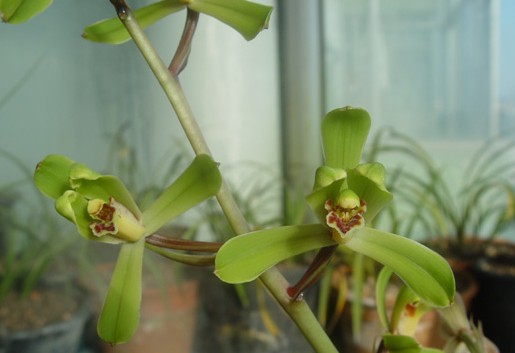
Characteristics: leaves 35-40 cm long, 0.5-0.7 cm wide, leaf color green, leaf texture thick and hard. The three petals are round-headed, slightly tight-edged with pointed tips, narrow at the base, flat-shouldered, with soft pouched silkworm-moth sepals, separated segments, and a small ruyi tongue; the flower scape is slender and upright, rising above the leaf surface, bearing 5-8 flowers. It is one of the rare and precious varieties among modern huilan orchids.