Introduction to the Man Tang Hong Jianlan (Cymbidium ensifolium) Variety and Its Care Methods
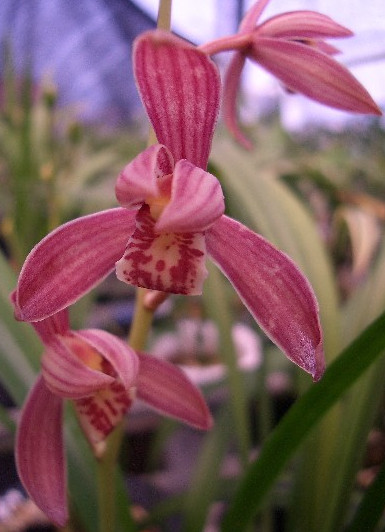
Flower name: Man Tang Hong; Origin: Sichuan (Emei). Content: It is the reddest flower of Jianlan (Cymbidium ensifolium). Grown under strong light, the flowers become redder. Man Tang Hong is not the kind of colored flower that is so red it turns purple; it wins everyone's affection for its form, color, fragrance, and correctness. The vivid red stripes on the petals alternate between light and dark, flowing smoothly. The flower color favors red, and when the plant is strong...
Flower name: Man Tang Hong; Origin: Sichuan (Emei)
Content: It is the reddest flower of Jianlan (Cymbidium ensifolium). Grown under strong light, the flowers become redder.
Man Tang Hong originates from Emei, Sichuan. It is said to have been named by orchid enthusiasts from Hong Kong, China. Man Tang Hong has tall, broad leaves, with the leaf tip suddenly narrowing and tapering after the leaf widens. The flowers are large and brightly colored, with vivid red stripes on the petals alternating between light and dark, flowing smoothly. When the plant is strong, the open flowers form a cupped shape (somewhat like the lotus-petal type). However, the flower color is not the bright red seen online; most Man Tang Hong flower photos online have inaccurate colors, and the actual flower color is dark red. Under sufficient sunlight, Man Tang Hong produces new shoots quickly, but old shoots also decline quickly. Grown under sufficient sunlight, the plant is noticeably dwarfed, with thick, substantial leaves, and the flower color develops well. Under insufficient sunlight, the flower color is dull and develops poorly.
Man Tang Hong is not the kind of colored flower that is so red it turns purple; it wins everyone's affection for its form, color, fragrance, and correctness. The vivid red stripes on the petals alternate between light and dark, flowing smoothly. The flower color favors red, and when the plant is strong, the open flowers form a cupped shape (commonly called the lotus-petal type). A relatively simple way to identify the flower is to look at the colored dots on the lip; this variety will, in nine cases out of ten, press some colored dots along the midline of the lip surface to show its uniqueness.