Vegetables Become Guangxi's Second Largest Crop
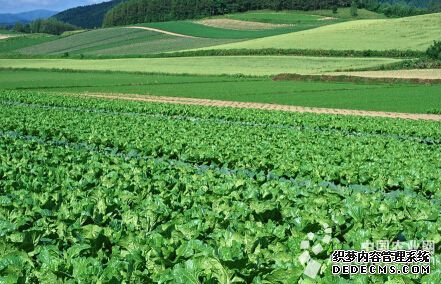
[Lead-in · China Vegetable Network]The latest figures from the Guangxi Department of Agriculture show that Guangxi's vegetable planting area has reached 1.016 million hectares, breaking through 1 million hectares for the first time and becoming the second largest crop after rice. Guangxi is rich in light, temperature, water and soil resources and is known as a “natural greenhouse.”
The latest figures from the Guangxi Department of Agriculture show that Guangxi's vegetable planting area has reached 1.016 million hectares, breaking through 1 million hectares for the first time and becoming the second largest crop after rice.
Guangxi is rich in light, temperature, water and soil resources and is known as a “natural greenhouse.” The entire autonomous region has a great many vegetable varieties, which can be planted and harvested in all four seasons, and in winter generally no special cold-proofing or insulation measures are needed, so production costs are quite low, giving it very obvious advantages in natural conditions and market competitiveness.
Based on this advantage, Guangxi's vegetable industry has developed rapidly since the late 1990s, with the planting area soaring from 610,000 hectares in 1996 to 816,000 hectares in 1999. Even after suffering severe damage from freezing disasters at the end of last year, Guangxi farmers' per capita vegetable output value still reached 225 yuan, with per capita net income of 151 yuan, accounting for 7.4% of that year's per capita net income.
After years of effort, Guangxi has become an important base in China for transporting southern vegetables to the north. Prefecture-level and municipal areas such as Baise, Yulin and Hezhou have established relatively complete socialized service systems for the vegetable industry, and the vegetable product processing industry has also begun to take shape. At present, in the 19 “demonstration counties for winter vegetable development” alone, 161 processing plants and more than 30,000 processing workshops have been built, with an annual processing capacity of nearly 1.4 million tons.
This year, Guangxi has vigorously adjusted its agricultural structure, greatly reducing the planting area of traditional crops such as grain and sugarcane. The planting areas of grain and sugarcane fell by 2.1% and 8.3% respectively compared with the same period last year. Governments at all levels actively guide farmers to use the converted farmland to develop the production of famous, special and high-quality vegetables. The reality of increased production and income over the past few years has stimulated Guangxi farmers' enthusiasm for growing vegetables, and this year the vegetable planting area of the entire autonomous region increased by another 200,000 hectares over last year. At present, the scale of vegetable planting already accounts for 15.8% of Guangxi's total annual crop area, second only to rice and ranking second among crops.