Shishi Uses High Technology to Ensure Safe Vegetables
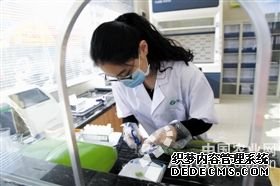
[Introduction·China Vegetable Network]At 8:30 that morning, before I arrived at the Food Safety Testing Center, staff member Xiao Cai had already selected 10 batches of vegetables from the market, including tomatoes, lettuce, Shanghai bok choy and celery, taking a small sample of each and placing them in white plastic bags. On each bag she noted the merchant and stall the sample came from.
Recently, I heard that the Shishi Yuhu Fruit and Vegetable Wholesale Market had established a Food Safety Testing Center, equipped with a set of advanced testing instruments. Out of curiosity, I went to the center to find out more.
At 8:30 that morning, before I arrived at the Food Safety Testing Center, staff member Xiao Cai had already selected 10 batches of vegetables from the market, including tomatoes, lettuce, Shanghai bok choy and celery, taking a small sample of each and placing them in white plastic bags. On each bag she noted the merchant and stall the sample came from. Xiao Cai took the stems and leaves of each sample, placed them separately into small glass tubes, added them to a water bath to heat as required, and added a certain amount of buffer solution, chromogenic reagent and cholinesterase. The whole process takes about half an hour.
I learned that in order to ensure safety “on the tip of the tongue”, the Yuhu Community actively cooperated with the work of the relevant departments and established the Food Safety Testing Center. In recent years, our city has paid increasing attention to food safety, successively setting up food safety testing rooms in major farmers' markets and purchasing pesticide residue testing and food safety testing instruments.
“We mainly test whether vegetables have pesticide residues.” Xiao Cai told me that this work is something she must do every morning, and that so far the Yuhu Food Safety Testing Center has not found any vegetables with pesticide residues. She also said that the center would display each day's test results on a screen on the outdoor wall for residents to see.
“In September 2015, our city purchased a certain number of testing instruments and selected some supermarkets and fruit and vegetable markets in our city as pilot sites to carry out testing work, and our center is one of them.” Wu Yangu, deputy secretary of the Party Committee of the Yuhu Community, told me. Since the introduction of this set of instruments, staff have insisted on taking 10 samples every day, making testing work more convenient, the number of samples larger and the results more accurate. Every morning, testing personnel randomly go to the market to take several kinds of vegetables or meat for testing, to check whether pesticide residues or formaldehyde exceed the standard, and publish the test results, so that people can buy with confidence and eat with peace of mind.