Cuilu Chunlan: Variety Characteristics and Care Methods
Chunlan, plum petal, famous variety. History: In 1993, it originated from Liuheng Island, Zhoushan, and was selected and named by Huang Xiaojin and Yu Canyin. Characteristics: The leaves of "Cuilu" can reach 45cm in length, with the widest part of the leaf at 0.8cm. The leaf base is extremely narrow. The leaves of new growth stand obliquely, while those of old growth gradually curve starting from the upper part of the leaf sheath. The leaf tips are mostly flat...
Chunlan, plum petal, famous variety. History: In 1993, it originated from Liuheng Island, Zhoushan, and was selected and named by Huang Xiaojin and Yu Canyin.
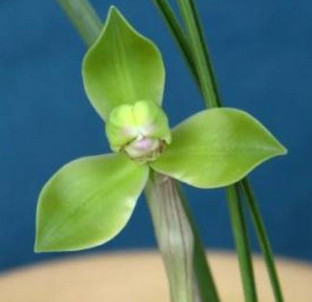
Characteristics: The leaves of "Cuilu" can reach 45cm in length, with the widest part of the leaf at 0.8cm. The leaf base is extremely narrow. The leaves of new growth stand obliquely, while those of old growth gradually curve starting from the upper part of the leaf sheath. The leaf tips are mostly flat, giving an overall impression of slender leaves with an extremely narrow base. The leaf surface is not glossy and has V-shaped grooves. The leaf tip is slender and pointed, the midrib is sunken, and the leaf margin has very fine serrations. The plant form has a narrow base. The leaf sheath is slender and tall, tightly clasping the leaf base, with the tip of the sheath slightly open. There are 3---5 leaf sheaths, with a green ground color and visible fine purple-red vein lines. Because the central leaf is extremely slender and long, it occasionally tends to bend and lie flat. The tips of the lower leaves easily form a shallow spoon shape, extending obliquely rather than drooping. The leaf buds emerge rose-red, with the color going from light to deep from the base upward. After the new leaves emerge from the sheath, purple-red markings still remain on the leaf sheath. The tip of the leaf bud sheath is hooked inward. When the flower bud first emerges, it is rose-red, gradually turning purple-red with green showing through, with deep purple-red vein lines reaching the top. Between the veins, obvious sandy speckled patches are visible. The tip has a tiny bit of white. Against the sheath is a green ground adorned with purple-red vein lines reaching the top. The flower stem is green, slender and round, 15---20cm tall. The three outer petals are edged in white, with level shoulders. When fully open, the two sepals are very broad, resembling large prismatic petals, and can also open in a form with a narrowed base and flared corners, with flat margins, and the petal tips occasionally showing a slight flutter. The main petal is upright and broad. The hard column is tightly clasped back-to-back, and sometimes it can also open as a hard silkworm-moth column, with the column tip adorned with rose-red. The small ruyi tongue is tightly held and not exposed, and the tongue tip or the lower part of the tongue tip is also adorned with rose-red. The two cheeks and the rear lower part of the tongue are purple-red. The outer petals of this flower are broad and the center is tight and hard, giving a sense of imbalance between inner and outer proportions. However, this flower has good substance and excellent flower retention, holding its form for months without changing. The flower color is green and slightly pale, appearing especially fresh and tender, with a brilliant floral sheen, and it wins even more by color. The rose-red on the column tip and tongue tip is like the rouge on a young girl's lips, matching the flower color with much charm. This variety easily produces shoots and flowers. During the bud stage, attention should be paid to bud thinning and full vernalization. Shade before blooming to make the flower color even fresher and more tender.