Selection and Mixing Methods of Cymbidium ensifolium Potting Media
To grow orchids well, the choice of potting materials is key, and it does not matter which type of Chinese orchid it is, but it must be coordinated with weather, watering, and fertilizing to be effective. In the south, mixed potting media are commonly used, and the ratio changes depending on the growing environment: orchid stone, Zhijinshi (orchid stone), granite stone, pebbles, tree fern, Qiaomu wood, ebony, leaf mold, pearl cotton, Xiantu...
To grow orchids well, the choice of potting materials is key, and it does not matter which type of Chinese orchid it is, but it must be coordinated with weather, watering, and fertilizing to be effective.
In the south, mixed potting media are commonly used, and the ratio changes depending on the growing environment:
Orchid stone, Zhijinshi (orchid stone), granite stone, pebbles, tree fern, Qiaomu wood, ebony, leaf mold, pearl cotton, Xiantu, peanut shells, etc.
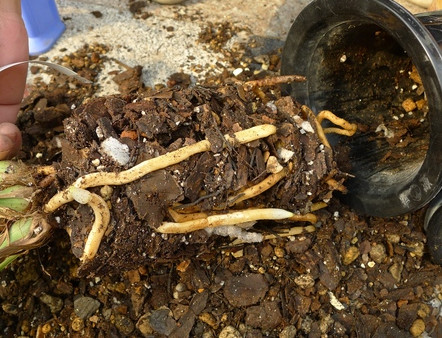
The mixing ratio should be continuously adjusted to suit your own environment. The following views:
1. Using mainly hard potting media for orchids is relatively safe, and the potting medium must be breathable.
2. Roots grown in breathable, non-water-absorbing media such as granite stone and pebbles are relatively snow-white, but this is only suitable for growing strong seedlings.
3. Weak seedlings must use more soft potting media such as tree fern, leaf mold, pearl cotton, etc., plus sphagnum moss to encourage root and shoot growth.
4. Qiaomu wood, ebony, and leaf mold can be used as natural fertilizer, but they easily cause black roots and root rot.
5. Using potting media such as pond mud, peanut shells, and Xiantu requires great care, and effort must be put into water control and breathability.
To make a simple summary: it must be breathable, must drain well, but retain a certain amount of moisture. The mixed formula should be universally applicable across the country.