A detailed guide to cultivating small seedlings, young seedlings, old seedlings and weak seedlings
When I first started growing orchids, I often killed small, young, old and weak seedlings. Later, through repeated practice, I proved that using sphagnum moss to cover the pseudobulb area is a fairly ideal method. No matter how small or weak the seedling is, as long as the moisture is controlled properly, there is almost no damping-off. I now present my method with pictures below so that fellow orchid growers can refer to it...
When I first started growing orchids, I often killed small, young, old and weak seedlings. Later, through repeated practice, I proved that using sphagnum moss to cover the pseudobulb area is a fairly ideal method. No matter how small or weak the seedling is, as long as the moisture is controlled properly, there is almost no damping-off. I now present my method with pictures below so that fellow orchid growers can refer to it:
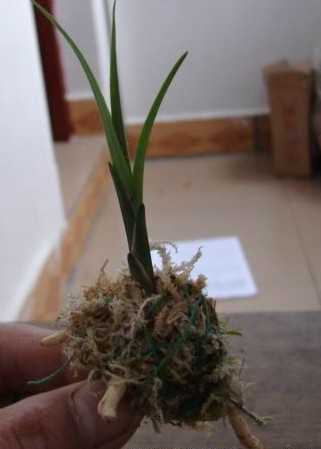
1. Do not be afraid of the trouble. If you really love your little plant and hope it will grow well, prepare a small amount of sphagnum moss (preferably moist) and a piece of tying string:
2. Next, wrap a small amount of sphagnum moss around the pseudobulb, just enough to hold the pseudobulb. Longer roots should be left exposed; do not wrap the roots together with it:
3. Next, place the wrapped orchid seedling into the pre-prepared potting medium. Part of the sphagnum moss should be left exposed; it must not be buried too deep. It is also better to grow several seedlings together in one pot rather than one seedling per pot, which wastes both the pot and the potting medium:
Summary assignment: Once potted, do not repot it casually. Leave it undisturbed for at least 2-3 years. After potting, you can use a spray bottle to mist the sphagnum moss and keep it moist (of course, the inside should be moist too, not just the surface). After that, whenever you see the sphagnum moss has dried, spray it with water. Spray when dry, do not spray when not dry. Absolutely do not fertilize. Eliminate the mentality of seeking quick results and let it grow slowly. After 1-2 years it will send out new growth. Below are small variegated orchids that have been cultivated for three years or more. They have not been repotted to this day, and the sphagnum moss is still as it was when first potted, though it has changed color over the years. When they were first collected from the wild, they were dragon-root seedlings with only 1-2 growths, and all were very weak. Now they have produced many, and the new growths are becoming stronger and stronger: