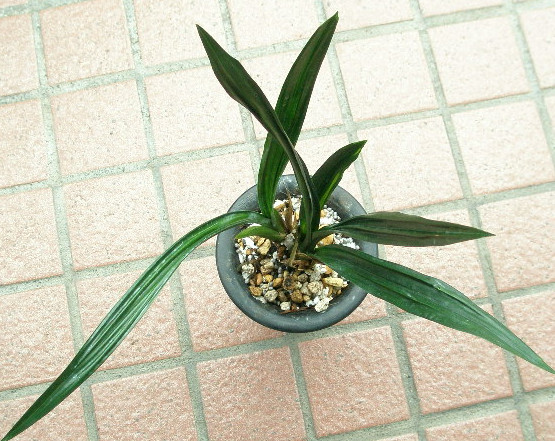
Introduction to the Characteristics of the Auspicious Golden Dragon Cymbidium sinense Variety
In 1996, when the crystal-art trend was sweeping both sides of the Taiwan Strait, the Auspicious Golden Dragon was named by Mr. Liu Minci, former chairman of the Kaohsiung association, who also compiled statistics on the number of Auspicious Golden Dragons and carefully observed their characteristics. In its early days, the predecessor of the Auspicious Golden Dragon was the Black Dragon, which is recorded in Peng Shuang song's "Taiwan Orchids and Huilan"; the orchid world commonly called it Black Tide, Auspicious Dragon, Black...
In 1996, when the crystal-art trend was sweeping both sides of the Taiwan Strait, the Auspicious Golden Dragon was named by Mr. Liu Minci, former chairman of the Kaohsiung association, who also compiled statistics on the number of Auspicious Golden Dragons and carefully observed their characteristics. In its early days, the predecessor of the Auspicious Golden Dragon was the Black Dragon, which is recorded in Peng Shuang song's "Taiwan Orchids and Huilan"; the orchid world commonly called it Black Tide, Auspicious Dragon, and Black Dragon, so the names were not consistent. To unify the designation and make it easier for orchid enthusiasts to recognize, Liu Minci and fellow lovers of the Auspicious Dragon discussed the matter and reached a consensus, naming it [Auspicious Golden Dragon].
The leaves of the Auspicious Golden Dragon are deep green, almost black, hence the common name Black Tide. The leaves often have a spiral form, called "dragon eye," and the shape of each leaf varies, with the leaf tips often resembling a phoenix beak. This variety was discovered in 1976 in Fuli, Hualien, and Peng Shuang song named it Black Dragon in "Taiwan Orchids and Huilan."
The Auspicious Golden Dragon is the pioneering variety that opened up the crystal-art trend in Taiwan's orchid world.