|
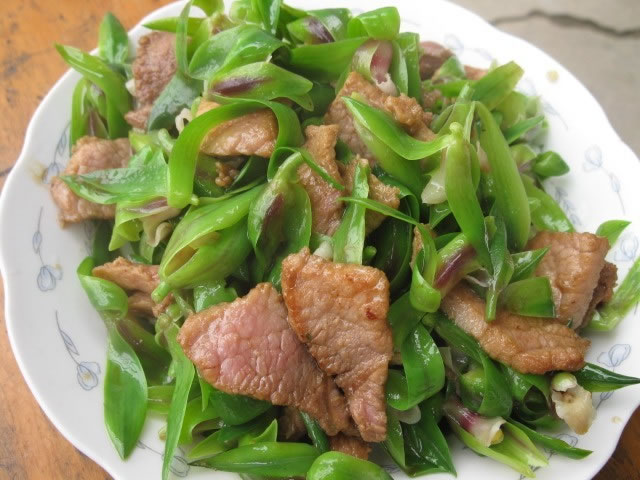
Jianlan (Cymbidium ensifolium) is tall, upright and elegant, with a flowering period spanning all four seasons, a large number of blooms, and abundant fragrance, which is good for health. It also has a long history of ornamental, culinary and medicinal use, and further development and utilization have promising prospects. I. Fragrance enhancement and beautification of the environment Among Jianlan, the upright-leaf four-season orchid (Cymbiaiun rubrigmmun) has thick and vigorous root masses, an upright plant shape, thick and stiff leaves, and a flowering period spanning all four seasons. Even when growers give it only extensive management, it still retains the strong stress resistance it had in the wild. In the late 1980s and early 1990s, foreigners bought it at 5 US dollars per plant to plant as hedges and flower borders. Later, various places also followed suit. Those upright, elegant evergreen leaves, with their valiant and dashing bearing, inspire people to forge ahead; those pretty faces that appear in all four seasons seem to welcome you back in triumph and also see you off toward a beautiful journey; and that faint, distant fragrance, carried by gusts of gentle breeze, rewards passing strivers impartially. Jianlan varieties are extremely rich. Besides the upright-leaf four-season orchid, there are Jianlan of various leaf forms, leaf variegation, flower variegation, flower shapes and flowering periods, and even colored-center Jianlan and plain-center Jianlan that offer fragrance 2 to 3 times each year. They can be selected according to local conditions and planted at the door, in flower beds, corridors, courtyards, living rooms, bedrooms, on desks, and on balconies and windowsills, to green, beautify and perfume your space. II. Health applications of Jianlan "Autumn orchids shade the jade pool, and the pool water is clear and fragrant." The health benefits of Jianlan lie first in its rich fragrance, which is present in all four seasons. Because fragrance objectively exists, it selflessly dedicates itself to everyone along with the gentle breeze. The fragrance of Jianlan is neutral in nature, pungent in taste, and non-toxic. It has the effects of soothing the middle burner and regulating qi, relieving irritability and refreshing the mind, and improving eyesight and intelligence. According to measurements by experts from the South China Institute of Botany, Chinese Academy of Sciences, Jianlan releases most of its fragrance late at night and in the early morning. If your bedroom has blooming Jianlan, the mellow orchid fragrance can relieve your irritation and boredom and help you rest well. Rising early in the morning, you can also fully take in the mellow fragrance, feel especially energized, and be urged to warmly embrace the new day. The medicinal use of Jianlan was already recorded in the Compendium of Materia Medica: "Orchids have the functions of relieving depression, regulating qi, harmonizing blood, and soothing the middle burner. Preserved in honey and added to tea, they can stop diarrhea and promote childbirth; used dried, they can treat insomnia and can clear the pupils and refresh the mind. Plain-center orchid flowers can prevent wrinkles, and when soaked in oil, can treat diabetes, dysphagia, phlegm retention, and irregular menstruation; the flower stalk can treat stubborn ringworm; the leaves are sweet and cold in nature, can treat yin deficiency night sweats, and have the effects of stimulating appetite, clearing the lungs, regulating qi, and calming the liver; the roots can reduce fever and have the effects of eliminating sore throat, loss of voice, and other conditions." Because Jianlan was the earliest to be developed and cultivated, and plain-center orchids were especially emphasized. The above medicinal values of orchids, except for the reference to Huilan treating irregular menstruation and Chunlan whole plant treating neurasthenia, roundworms and hemorrhoids, all refer to Jianlan. Although I know a little about medicine, I am, after all, an amateur, and it is difficult to have extensive verified cases. The most outstanding one is this: using 40 cm long orchid roots stewed with rock sugar and taken as a decoction can indeed rapidly cure "whooping cough," with the functions of calming the liver and regulating qi, clearing the lungs and resolving phlegm, and moistening the throat and promoting fluid production to stop coughing. Also, often keeping company with orchids and immersing oneself in an ocean of quiet fragrance brings peace of mind and joy, and naturally can bring a ruddy complexion in old age and both health and longevity. It is worth mentioning that many private pharmacies in Xiamen, Fujian, collect large quantities of Jianlan flowers and soak them in lychee honey. Whenever patients have lung heat with sore throat, or dry lips and tongue in autumn with excess liver fire, they sell this medicine called "Guanlan honey." Villagers in mountain areas mostly prepare it for their own use. Those who have not timely preserved orchid flowers in honey often, when suffering from lung heat with nosebleeds, sore throat, or excessive phlegm with coughing and wheezing, collect orchid roots at any time and stew them with rock sugar, and can also recover safely after one dose. According to reports, in the 1980s, under the leadership of Professor Gu Zhuping, Gansu Aoqi Industrial Co., Ltd. of Lanzhou conducted chemical tests and analyses on orchid pseudobulbs: it basically clarified that orchid pseudobulbs contain 17 amino acids, including the 8 essential amino acids for the human body, polysaccharides, vitamin A, vitamin B, vitamin C, vitamin D, alkaloids, natural hormones, and various mineral elements such as calcium, zinc, iron, potassium, magnesium and cobalt. The juice made from orchid pseudobulbs can be used as an antipyretic, eyewash and diuretic, and can treat swollen sores, rheumatism, neuralgia, amblyopia, polio, dizziness, diarrhea, dysentery, cough, asthma, emphysema and other diseases. Using these components to make compound medicines can promote cell metabolism, improve the body's immunity and anti-aging function, strengthen the body and brain, prolong life, and preserve youthful appearance. It is an ideal natural health tonic. The company has developed an orchid wine production line. Its products have already been put on the market and are deeply favored by refined lovers. III. Culinary use of Jianlan The culinary use of orchids is much earlier than their medicinal use, and more people have benefited from it! In the Song dynasty work Song Wang Zhao Sou, it is said: "The mountain valley path winds and the flowing water murmurs; bright wind turns the Huilan, and the Chonglan fills the hall; entering the banquet with deer and vermilion mats." It can be seen that orchids, hailed as the finest fragrance under heaven, had already appeared on the plates of grand banquets as early as the Song dynasty. Orchid flowers are tender and fragrant, and using them as an added seasoning in tea, wine, dishes and congee is not unusual. In the vast orchid-producing areas, when herb collectors are hungry in the mountains, smelling orchid fragrance and thinking of eating the flowers is very common. After returning home, they add orchid flowers to tea, then try adding them to wine, and garnish dishes with them... In particular, legend says heaven has osmanthus wine and chrysanthemum banquets, and people naturally imitate this. After the appearance of Can Fang Pu: Orchids, Sichuan's "orchid tripe shreds" and "orchid pork shreds" became famous far and wide. Subsequently, Fujian's "orchid tea"; Yunnan and Guizhou's "orchid wine"; and orchid pastries in Guangdong and other places all sprang up one after another. The rich and colorful fresh flower banquets, including orchids, caused a strong sensation at home and abroad. Later, restaurants and hotels in places such as Yunquan Orchid Garden in Nanhai, Guangdong, the Yibin Orchid Hall and Gaoxian Orchid Hall in Sichuan, and Guangzhou, Kunming and Shantou followed suit and repeatedly came up with novel ideas, and a wide variety of orchid recipes, orchid pastries and orchid beverages emerged as the times required. This further enriched food culture, invigorated business, and powerfully promoted the development of the orchid industry. It should be said that all kinds of terrestrial orchids have certain medicinal and culinary value, but because what is recorded in the Compendium of Materia Medica mostly refers to colored-center Jianlan and plain-center Jianlan, and Jianlan is widely distributed, strong in adaptability and stress resistance, and especially has a very long flowering period and a very large number of flowers. Therefore, the main object of culinary and medicinal use is still Jianlan. Foreign countries long ago listed orchid cultivation as an industry. Domestically, with the development of the market economy, Jianlan, like other terrestrial orchids, has entered the ranks of fragrance-enhancing commodities. Because Jianlan has many varieties, strong adaptability and stress resistance, a long flowering period and a large number of blooms, it is a rare source of fragrant cut flowers and also good material for the food and pharmaceutical industries. A few years ago, there was large-scale cultivation in various places. Whether wild-collected orchids or domesticated mature seedlings; whether traditional seedlings or selected wild-collected varieties; whether common species or high-grade line-art orchids, all were shipped out in a steady stream to earn foreign exchange through export. Under the constraints of the Southeast Asian financial crisis and the laws of the market economy, although there was also a temporary downturn. According to the 1999 annual work summary of the China Orchid Association, "since last year, the orchid market has shown a fairly obvious recovery." The facts are indeed so. Since entering the 21st century, upright-leaf four-season orchids and traditional plain-center Jianlan have gradually resumed export. If the product structure can be adjusted well, the technological content in production raised, and high-quality seedlings and batch fresh cut flowers produced, the production prospects are naturally optimistic.
|