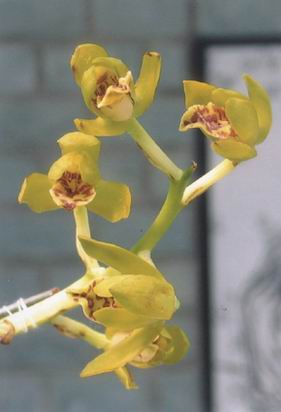
One seedling of Cymbidium faberi 'Jin He', orchid variety appreciation
When appreciating flowers, color is what moves us most. When appreciating orchids, petal shape is what captivates most. Fresh flowers often charm with brilliant colors, while orchids often make their case through petal shape. That is why people say appreciating orchids is a field of study. Whether the petals are broad or narrow, the slightest variation carries a great deal of knowledge within it. This is not to say the ancients were indifferent to orchid color. ...
When appreciating flowers, color is what moves us most. When appreciating orchids, petal shape is what captivates most. Fresh flowers often charm with brilliant colors, while orchids often make their case through petal shape. That is why people say appreciating orchids is a field of study. Whether the petals are broad or narrow, the slightest variation carries a great deal of knowledge within it. This is not to say the ancients were indifferent to orchid color. In fact, the ancients held extremely high standards for orchid color. Generally, orchids with a glutinous, moist color were regarded as superior. What is "glutinous and moist"? Glutinous means fine and tender, moist means gentle and elegant. In fact, this view of appreciating color came from the ancients applying their standards for appraising jade to the color of orchids.
The treasured cultivar "Yi Shu Jin He" kept by Chen Huafeng of Zhejiang is a prized Cymbidium faberi with glutinous, moist color and elegant petal shape. The white-green stem color already gives a sense of delicate elegance and tenderness. The flower color is a tender goose-yellow, especially glutinous and moist. The petal form of this flower is particularly rare: the outer petals are broad and short, a lotus-petal form rarely seen in Cymbidium faberi. The keel petals are mussel-shell keel petals, and the lip is also short, a straight lip that does not curl. Such a standard petal form is seldom seen in Cymbidium faberi. This flower combines color, form, fragrance and charm in one. Its clear, elegant refinement can purify the soul, giving a sense of broad-mindedness and detachment from the world.
Such a delicate, shy beauty with a noble and luxurious bearing is truly a family treasure. He Xiguang of the Tang Dynasty once wrote in a poem: Whose house has yet another golden chamber, deeply locking the east wind to store up A Jiao. The one who locks up the beauty in a golden house is Chen Huafeng of Zhejiang.