How to Grow and Care for Pungent Orchids: Methods and Precautions
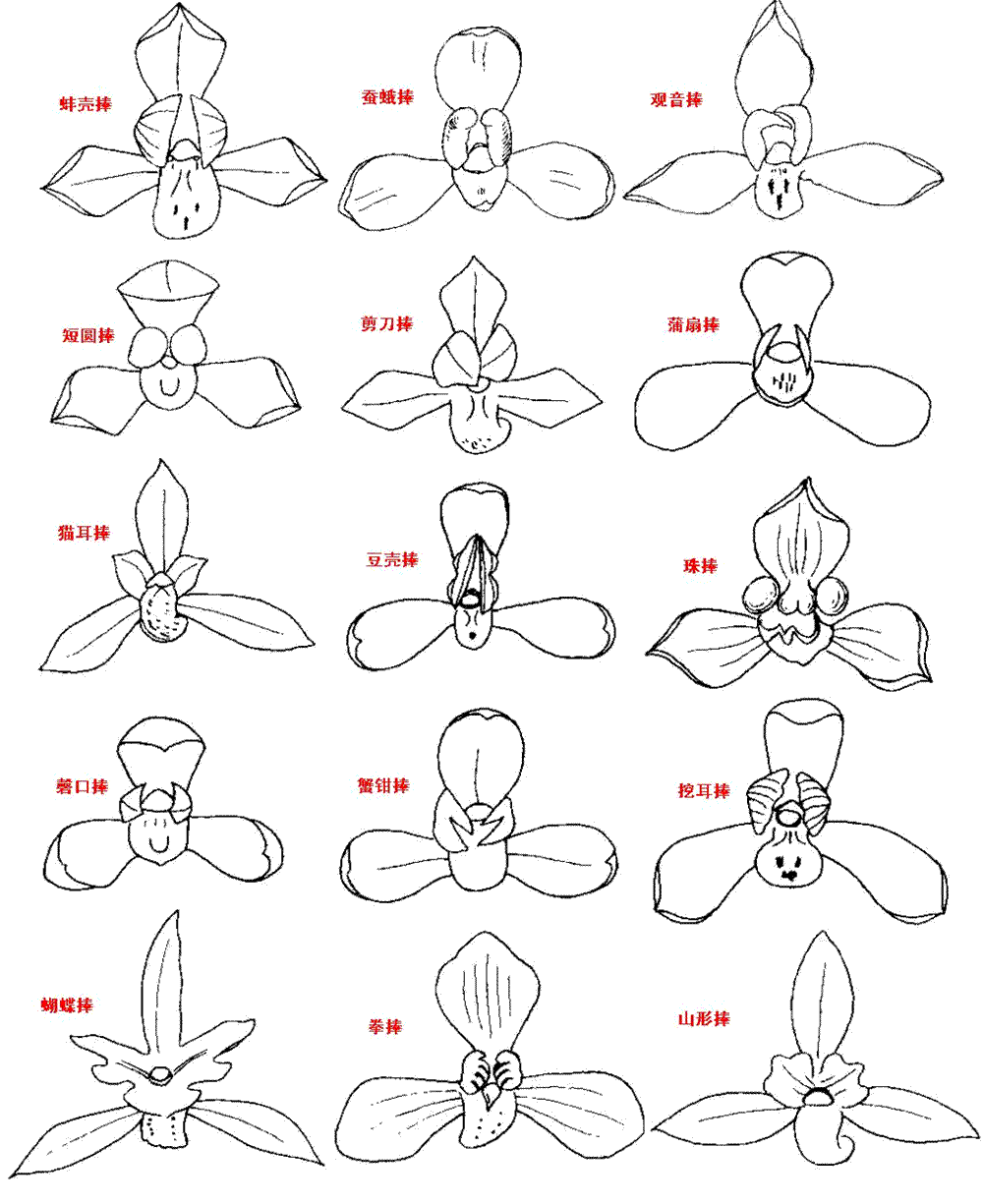
Pungent, namely the two short petals among the inner three petals that stand upright and close outward (slightly shorter than the outer three petals). The pungent petals are mainly judged by their smoothness and cleanliness.
According to their form, they can be divided into:
Silkworm moth pungent shape resembles a silkworm moth. It is further divided into hard and soft types, for example, among Cymbidium goeringii: Lüying, Rongxiangmei, Liangximei, Yichunxian, etc.; among Cymbidium faberi: Dayipin, Peixian, Dangzi, Loumei, Duanmei, Cuimei, Qinghua, etc.
Guanyin pungent (commonly known as Guanyin dou) - shaped like Guanyin Bodhisattva in mythology, with a cupped shape at the front edge of the hat brim, such as Longzi and Chunyipin among Cymbidium goeringii, and Laoruanzi among Cymbidium faberi, etc.
Bean shell pungent - the tip of the pungent petals is relatively round and blunt, the petal flesh is thick, and it has a cupped shape resembling one end of a broad bean shell, such as Guanding among Cymbidium faberi.
Mussel shell pungent - each pungent petal is concave inside and convex outside like an empty mussel shell, such as Changshu and Dakuihe among Cymbidium goeringii, and Taisu among Cymbidium faberi, etc.
Scissors pungent - the pungent petals resemble the shape of scissors, such as Wentuan su among Cymbidium goeringii, and Huazi and Chituanzi among Cymbidium faberi.
Crab claw pungent - the middle of the back of the pungent petal is raised, and the tip is flat and cupped; the most typical example is Wannianmei among Cymbidium faberi.
Cat ear pungent - the front part of the pungent petal turns upward, shaped like cat ears, such as Fengqiao and Duoyun among Cymbidium faberi.
Short round pungent - the pungent petals are short and round, and the arc on the back of the petal is relatively large, such as Zhengtonghe.
Palm-leaf fan pungent - the pungent petals are short and round, but the arc on the back of the petal is relatively small, such as Xishenmei among Cymbidium goeringii.
Qing mouth pungent - although the pungent petals have no cupped shape, the tip edge of the petal slightly has a qing mouth shape, for example, Gaihe among Cymbidium goeringii.
Among the various forms of pungent petals above, silkworm moth pungent is considered top grade, Guanyin pungent is second, and the rest all belong to lower grades. Of course, this must also be treated differently in combination with each type of petal shape. In addition, regarding the posture of the pungent petals, sometimes the two are separated from each other or partially connected, or even mixed and stuck together with the nose (column core) and tongue (lip petal). Therefore, they can also be divided into three forms:
Five-petal separate nest - the two pungent petals are each separate, and the base of the petals is attached at the point where the bases of the outer three petals converge.
Split head joined back - the tips of the two pungent petals are separated from each other, while from the middle to the base of the petals they are connected as a whole.
Joined shoulder joined back - the pungent petals are connected with the nose and tongue into a block-like whole, or the tips of the pungent petals have slight traces of separation from the nose, for example, Caim ei narcissus among Cymbidium goeringii and Panlü among Cymbidium faberi often show similar forms.
Among the three postures of pungent petals above, sometimes the same variety, due to the evolution of genetic factors, can have both five-petal separate nest and split head joined back, but joined shoulder joined back is limited to only a few varieties. Generally speaking, the five-petal separate nest form is the most beautiful, split head joined back is second, and joined shoulder joined back is the worst.