How to Grow Cymbidium goeringii (Grass Orchid)? Detailed Growing Guide
Cymbidium goeringii, also called grass orchid or mountain orchid, has fleshy roots and spherical pseudobulbs, with tufted, firm and tough leaves about 20-25 cm long, narrow and pointed with rough edges. Around the spring equinox, flower stems emerge from the base of the plant; the stems bear white membranous bracts, with a single flower at the tip. There are many prized cultivars with a rich fragrance. Cymbidium goeringii is a common original species of terrestrial orchid, mostly native to temperate zones.
Cymbidium goeringii is best planted in late autumn. Before planting, choose a new clay pot that has been soaked in clean water for several hours; if using a purple clay pot or plastic pot, pay attention to drainage. The pot should be sized so the roots can spread out inside it. For the growing medium, orchid soil is ideal, or use a half-and-half mixture of leaf mold (or humus soil) and sandy loam. Never use alkaline soil. Before potting Cymbidium goeringii, first place pot shards over the drainage holes at the bottom (preferably 3 drainage holes), then add crushed stone, cinders and similar material to about 1/5 of the pot, spread a layer of coarse sand on top, and then add the growing medium. Best to place the orchid seedling in the pot, straighten the roots and let them spread naturally, fill with soil until half full, then gently lift the seedling while shaking the pot so the roots and soil bind tightly together, and continue filling soil to the rim, pressing firmly. Leave about 3 cm of space below the rim for fertilizing and watering. After potting, water thoroughly and place in a shaded spot. In early spring and winter, keep it indoors; the rest of the time, place it under a shade canopy. In summer, shade from 8 a.m. to 6 p.m.; in summer, the shading rate for Cymbidium goeringii should be about 90%. In spring and autumn, about 70%-80% is sufficient.
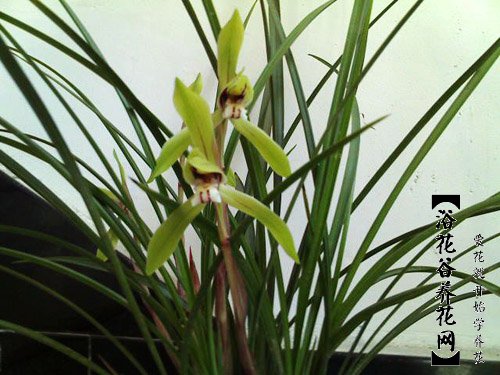
Orchid leaves have a relatively thick cuticle and sunken stomata, making them fairly drought-tolerant, so they do not need much water; it is best to keep the orchid soil "seven parts dry, three parts moist" at all times. Generally, water once every 2-3 days in spring; after flowering, keep the potting soil slightly dry; after April, keep the potting soil slightly moist; in summer, when temperatures are high, water once a day; in autumn, water when dry and let it dry out between waterings; in winter, water sparingly. During the bud stage of Cymbidium goeringii, keep it moist, but not overly wet. In dry and hot seasons, mist the ground around the pot in the evening to increase air humidity.
Orchids dislike strong fertilizer. Newly planted orchids should not be fertilized in the first year; only after 1-2 years of cultivation, when new roots are growing vigorously, may they be fertilized. Generally, from April until the Start of Autumn, apply diluted, fully rotted cake fertilizer water once every 15-20 days. During the intense heat of midsummer, stop fertilizing. The best time to fertilize is in the evening. When fertilizing, avoid getting the liquid fertilizer on the leaves. After Cymbidium goeringii buds appear, select and keep one bud with the best development and the greatest ornamental value, and remove all the rest, so that the flower will be large and beautifully colored. About 10-14 days after Cymbidium goeringii blooms, cut off the flower together with the flower stem; do not wait until the flower naturally fades before cutting, so as to reduce nutrient consumption and benefit flowering the following year.
Article source: http://www.yuhuagu.com/