A detailed guide to orchid propagation methods, easy enough for beginners to pick up
Orchids are commonly propagated by division, sowing, and tissue culture. Division is the most common method. Orchids can be divided in both spring and autumn, and are generally divided once every 2—3 years.
After division, each cluster should keep at least 5 connected pseudobulbs, and these pseudobulbs should have at least 3 robust leaves growing on them. Before division, reduce watering to make the potting soil relatively dry. When removing the plant from the pot, get rid of the old soil around the roots, wash them clean with clear water, and let them dry for 2—3 hours. Once the roots turn white and slightly wilt, use a sharp knife to cut between the pseudobulbs to divide the plant, and coat the cuts with plant ash or sulfur powder to prevent rot.
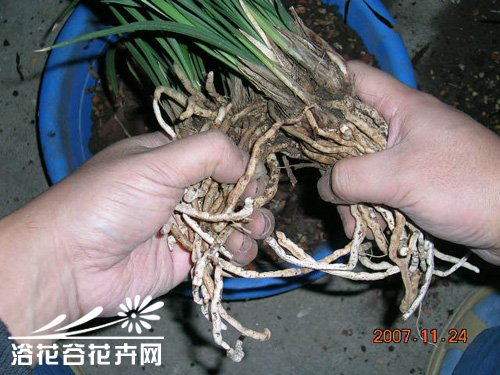
For planting orchids, sandy loam rich in humus is suitable. Clay pots are best, as they benefit plant growth. The drainage holes in the bottom of the pot should be larger than those of ordinary flower pots, preferably with 3—4 bottom holes. The size and depth of the pot should be determined by the size of the plant.
When potting, first cover the bottom holes with broken tile pieces, then spread coarse gravel to about 1/5—1/4 of the pot's depth, then add coarse-grained soil and a small amount of fine soil, so that the soil in the middle of the pot is mounded up before planting. When planting, spread the roots out, and the plant should be tilted slightly. As the potting soil is added, spread the roots out, shake the pot several times, and at the same time press the soil firm with your fingers.
The planting depth should be just enough to bury the pseudobulbs in the soil. After planting, the surface of the pot soil should be slightly arched, leaving a 2 cm rim at the edge of the pot. Finally, spray water 2—3 times with a fine watering can, and place in a shady spot for 10—15 days. When epiphytic orchids need dividing, first trim the roots well and cut them apart appropriately, then wrap the root system with growing materials such as sphagnum moss, fern roots, and dead leaves, and plant them into a slotted pot. Then water and maintain a certain humidity.
Site selection: The surroundings should be open, with good ventilation and close to water, with moist air and no coal smoke pollution. On the southwest side of the site, evergreen broadleaf trees such as Huilan orchids can be planted, with a canopy density of about 0.7. This can reduce afternoon sunlight exposure and regulate humidity and temperature.