How to grow Miltonia? Detailed key points for Miltonia cultivation
Miltonia is heat-tolerant and easy to cultivate. It grows almost all year round, with virtually no dormancy period. Miltonia's flowering period is quite long; if light conditions are suitable, the flowers will be larger and the colors deeper. With proper cultivation, it can bloom once every 8 months. After flowering, the flower stem can be cut off, but do not pull or tear it forcefully! Because as long as the flower stem is still green, it remains tightly connected to the pseudobulb.
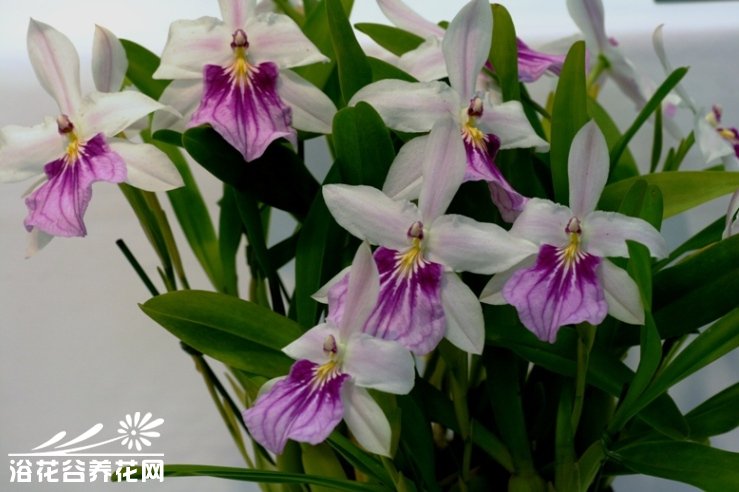
1.Light:
Miltonia is sensitive to strong light. If the light is too strong, the leaves will change from light green to red or light red (depending on the variety), and eventually the plant will be scorched beyond saving.
2.Watering:
Miltonia's roots are slender. If the growing medium is too wet or too dry, the roots will be damaged. Therefore, watering should be done little but often. If the growing medium alternates between dry and wet, it will cause so-called "accordion-style" deformed growth. In severe cases, it can cause new shoots to die.
3.Fertilizing:
Miltonia grows rapidly and produces many flowers, requiring a strong and vigorous plant. Therefore, regular fertilizing is necessary. Since Miltonia is sensitive to salts, avoid direct contact between fertilizer and roots, so that the salts contained in the fertilizer do not damage the orchid roots.
4.Pest and disease control:
Overwatering can easily cause the plant to rot. In addition, Miltonia varieties with soft leaves are also prone to root rot. Scale insects often appear in areas where pseudobulbs are densely clustered and beneath the phloem at the base of pseudobulbs. Since mineral insecticides or rapeseed oil insecticides can harm Miltonia, soap solution washing or introducing natural enemy insects can be used to deal with scale insects. Red spider mites like to inhabit the leaves. They can be introduced in flower rooms and greenhouses.