How to grow Paphiopedilum? A grower's detailed guide to Paphiopedilum care
Paphiopedilum, also known as the slipper orchid, is one of the earliest cultivated and most widespread orchids in the world. Most Paphiopedilum species are terrestrial orchids, with small plants and large, unusual flowers, making them most suitable for pot culture. Paphiopedilum is a perennial herbaceous plant that grows under tropical and subtropical forests, on humus soil, with a few species being epiphytic. The genus contains about 65 species, mainly distributed across southwestern China, the Himalayas to western Asia and the Indonesian archipelago, a vast area. China has about a dozen wild species, most of which have already been used as breeding parents and have been introduced to Europe and the United States.
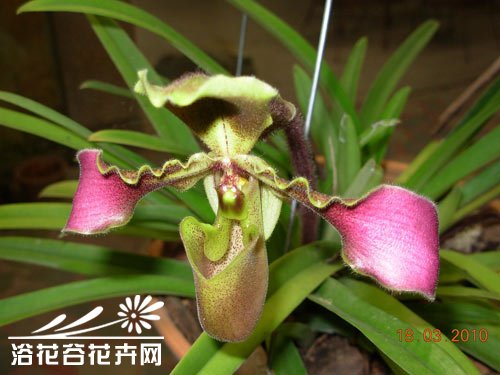
Paphiopedilum flowers are rather elegant, with fairly dignified colors including white, light green, yellow, pink, purplish red, brown, and those with irregular spots or stripes. The petals are relatively thick, and the flowers stay open for a fairly long time. The lip of Paphiopedilum is shaped like a slipper (pouch), which is how it got its name.
Paphiopedilum potting medium
A single-component potting medium or a mixed potting medium can be used, with mixed potting medium being more suitable for its growth. Paphiopedilum can be divided by habit into two types: limestone type and acidic sandy rock type. Among domestic varieties, Armeniacum, Micranthum, Malipoense, Henryanum and others belong to the limestone type; while green-leaved slipper orchids such as Hirsutissimum, Longipetalum, Insigne, purpuratum (Hong Kong slipper orchid, China), and Bellatulum mostly belong to the acidic sandy rock type. For varieties from limestone mountains, use one part leaf mold, one part charcoal or crushed brick, one part crushed eggshell, or simply use pumice granules directly
Planting Paphiopedilum
For those from acidic sandstone mountains, use one part leaf mold, one part charcoal or crushed brick, or plant directly in tree fern root. In the south, fern root and bark are mostly used as potting materials, while in the north, leaf mold and peat soil are suitable as they retain moisture well. Fill the bottom 1/4 of the pot with granular material such as crushed brick to aid drainage and aeration, then plant on top with leaf mold and the like. In southern regions such as South China with tropical and subtropical oceanic climates, fern root, moss, and bark should be used as potting medium, and Chinese orchid potting medium (orchid stone) can also be used, so that the roots drain well, get good aeration, and are not prone to rot.
Paphiopedilum care
Paphiopedilum likes partial shade; in spring, summer and autumn, 70% of sunlight should be blocked, and in winter about 50%, so an environment under tree shade is most suitable. If grown in a shed or greenhouse, a single shade net is enough to achieve this. Paphiopedilum is not as good at resisting dryness as other orchid genera with thick aerial roots, so the potting soil should be kept moist. In dry seasons, water should often be sprinkled around the flower pot to maintain high air
humidity
After flowering, it can be kept on the drier side. During the growing season, after new shoots sprout, apply a dilute liquid fertilizer once every 2-3 weeks. Organic fertilizer must not be applied to the leaf surface, otherwise it easily causes leaf rot. Most Paphiopedilum species are not cold-tolerant; in winter the room temperature at night should be above 5 degrees, and daytime should be 5-10 degrees higher than at night. Generally speaking, types with various purplish red marble-like patterns on the upper and lower leaf surfaces need higher temperatures; in the hot, humid summer, pay attention to ventilation. Many varieties from low latitudes and high altitudes are very afraid of heat; high humidity and moisture easily cause soft rot, with young leaves and tender shoots turning black and dying, and in severe cases the whole plant dies. When this happens, leaf spraying must be stopped, ventilation strengthened, temperature lowered, and fungicides can be sprayed.
Paphiopedilum appreciation
Paphiopedilum is generally small in form; green-leaved types are evergreen year-round, and mottled-leaved types are strikingly attractive. It also has low light requirements, and the rounded, broad leaf shape resembles the dwarf types among Chinese orchids, so it is very suitable for indoor pot culture, or placed on a desk, a bedroom windowsill, or in a bathroom. Large varieties can be placed in the living room or at the entrance. Paphiopedilum has a long flowering period; each flower stays open for as short as 3-4 weeks, or as long as 5-8 weeks, and varieties with multiple flowers on one stem bloom even longer.
Because Paphiopedilum varies by variety, its blooming time varies too; most species bloom in winter and spring, and some varieties bloom in summer and autumn. If cultivated properly, there can be flowers to enjoy in all four seasons. For growing in an orchid shed, lightweight pots are best, such as black plastic bag pots; if the plant is small in form, tall Chinese orchid pots can be used, so that many pots can be placed on one shelf. For some more upscale varieties, decorative outer pots can be used; the transparent inner pot allows you to view root growth and also maintains fairly good humidity.
For indoor display, you can choose antique styles (pottery, driftwood pots, Chinese orchid pots, copperware) or modern minimalist styles (wooden frames, bamboo tubes, ironware, rattan ware, tree fern pots). Adding some sphagnum moss on the pot surface can maintain a certain humidity and make the leaves more glossy.