What are the reasons why Cymbidium goeringii (spring orchid) easily withers and dies in winter?
Orchids are in a dormant or semi-dormant state in winter. If not cared for properly, they are prone to physiological disorders. In mild cases, the leaves turn yellow and withered but can still sprout again in spring; in severe cases, it can lead to death. The reasons are:
1. Potting soil too dry or too wet: Although orchids should greatly reduce water in winter, they cannot go without watering, and the potting soil should not be allowed to dry out completely before watering. If the potting soil is too dry, and combined with the dry winter climate, the pseudobulbs are prone to shriveling, and other tissues are affected in their metabolism due to excessive water loss. The plant will grow poorly, with mild cases showing withered leaves and severe cases resulting in death. In winter, orchids most dread excessively wet potting soil. Too much water and poor soil aeration easily cause root rot and death.
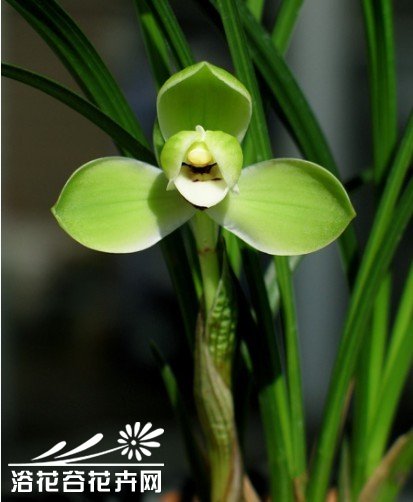
2. Unsuitable water and soil: For watering orchids, rainwater or river water is best. If well water or fresh tap water is used, the potting soil tends to become alkaline, the soil quality deteriorates, the potting soil becomes compacted, water infiltration is poor, and aeration is poor. This makes the potting soil prone to being too wet in winter, and the likelihood of root rot in the plant is high. Therefore, orchid potting soil should be a slightly acidic, loose soil, with a pH between 5—6.5 being suitable.
3. Improper watering method. Orchids should be watered in the morning or evening in other seasons, but in winter it is better to water at noon in sunlight. After watering, place them in the sun for 1-2 hours, and move them indoors after the water at the base of the leaf clumps has dried. If watered indoors, water easily accumulates at the base of the leaves and stems, causing pseudobulb rot and leading to plant death. Because different orchid varieties require different amounts of water, watering in winter should be treated differently. For example, autumn orchids should be watered thoroughly before winter begins, while spring orchids should be kept moist rather than thoroughly watered; during heavy snow, autumn orchids do not need watering, while spring orchids are best kept moist; from the winter solstice to light snow, autumn orchids and spring orchids can go without watering, or the degree of eight parts dry and two parts moist can be maintained.
4. Improper pot choice: For cultivating orchids, clay pots are best. Clay pots have better aeration than glazed pots, drain water faster, and the potting soil dries faster, which is very suitable for orchid growth and less likely to cause prolonged excessive moisture, thereby reducing pests and diseases. Using glazed pots, especially in winter, often easily leads to root rot due to excessively wet potting soil.
In addition, orchids must absolutely not be fertilized in winter. Winter fertilization most easily causes orchid root rot. Indoor temperature and humidity in winter should not be too high or too low, otherwise the plant will also grow poorly. Coal smoke should be avoided, and when room temperature is high, doors and windows should be opened for proper ventilation; when the temperature is too low, pay attention to cold and frost protection. Only in this way can orchids safely overwinter and not wither and die.