What are the famous and precious varieties of Cymbidium goeringii? Detailed introduction to the main varieties
China's orchids, through long-term cultivation and selective breeding by working people, have numerous varieties. Many precious orchids are named according to the special forms of their petal types, such as “×× plum”. “×× lotus”, “×× narcissus”, “×× plain”, “×× odd petal”, etc. Some are described according to their colors, such as “Green Cloud”, “Jade Canopy”, “Green Hero”, “Purple Ribbon and Golden Seal”, “Jade First Rank”, “Red Bee Wonder”, “Immortal Green”, “Large Green Lotus”, “Green Chief”, “Jade Toad”, “Purple Cold Orchid”, “White New Year's Greeting”, etc. Some are named according to the cultivator's name or anecdotes during the selection and breeding process, as well as place names, such as “Song Mei”, “Duan Mei”, “Tang Mei”, “Zhang He Su”, “Xie He Su”, “Cheng Mei”, “Cui Mei”, “Yang's He Su”, “Yang's Su Die”, “Da Yi Pin”, “Xiao Da”, “Changshu Su”, “Suzhou Spring First Rank”, “Yuyao First Mei”, “Shanghai Mei”, “Songjiang Large Lotus”, “Wenzhou Su”, “Juzhou Su”, “Jin'ao Su”, “Longyan Su”, “Guanyin Su”, “Yong'an Su”, “Yongfu Su”, “Jian Lan”, etc. Some are named according to their morphology, such as “Ji Yuan”, “Parrot Plum”, “Seagull”, “Duo Yun”, “Bee Wonder”, “Jade Butterfly”, “Moth Bee Plum”, “Duan Mei”, “Top Grade”, “Fish Mansion Orchid”, etc. Some are named according to the number and appearance of flowers borne on the flower stem, such as “Thirteen Guardians”, “Eighteen Great Phoenixes”, “Dai Mei”, “Hui Lian”, “He He Die”, “Four Joys Butterfly”, etc. In order to let readers understand in detail the history, characteristics, and petal-type systems of China's main famous orchid varieties, a detailed introduction follows:
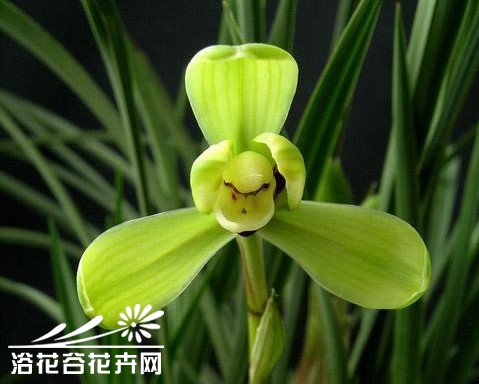
Cymbidium goeringii category
1. Song Mei. Petal type: Plum petal. History: Selected during the Qing Dynasty Qianlong period by the Song Jinxuan family of Zhejiang, hence also called Song Jinxuan Mei.
Characteristics: When the flower opens in plum petal type, the three petals are especially tightly rounded, with silkworm-moth hold and liu hai tongue; sometimes it can also open as lotus-form narcissus petal or plum-form narcissus petal; if the orchid plant is strong, it occasionally has twin flowers. Old leaves are mostly bow-shaped, bracts are light red, leaf color is deep green, leaf width is relatively broad, leaf tips are blunt. It is an outstanding famous variety among Cymbidium goeringii plum petal types and is listed first among the four great famous varieties of Cymbidium goeringii.
2. Yuyao First Mei. Petal type: Plum petal. History: Selected during the Qing Dynasty Daoguang period by Xu Ling of Yuyao. Also called First Round. Characteristics
The three petals are short and rounded, petal flesh is thick, five petals are separated in sockets. Slightly drooping shoulders. Ruyi tongue. Flower stem is thin. Flower color is not pure green. Old leaves are slightly sickle-shaped. Bract leaf tips are light red. Leaves are slightly thick.
3. Xiaoshan Cai Mei. Petal type: Plum petal. History
Selected during the Qing Dynasty Qianlong period by the Cai family of Xiaoshan, Zhejiang; afterward it was lost during wartime chaos; during the Xianfeng period, orchid enthusiasts in Ningbo selected a similar green plum plain to replace it, but the outer three petals are slightly narrower than the old variety, with hard hold, and compared with the old variety, the flower form is inferior.
Characteristics: Outer three petals have tight edges, shoulders are level, mostly fully closed hold (fused together with the column, commonly called three petals and one nose). Thin stem and tall. Color is emerald green. When opening in plum form, the flower shape is slightly smaller and is called Cai Mei. If it opens as plum-form narcissus, it mostly has five petals separated in sockets and a larger flower shape, called Cai Mei Narcissus; because the lip is slightly white-green, it is also called Cai Mei Plain. Old leaves are slightly bow-shaped, leaf veins are somewhat deep, foot sheaths are low, bracts are green. This flower, from strong grass to thin, mostly opens as plum-form narcissus; after lack of fertilizer, when the orchid plant is thin it often opens in plum form, and only after being strong can good flower grades open.
4. Yu Mei. Petal type: Plum petal. History: Selected during the Qing Dynasty Kangxi period in Shaoxing. Characteristics: Five petals are relatively short and rounded, shoulders level, flat-edged short hold, white tongue, near the base of the lip on both cheek edges, occasionally with a slight pinkish blush. Flower stem is relatively short. Early-flowering habit.
5. Qin Mei. Petal type: Plum petal. History: Selected during the Qing Dynasty Jiaqing period from Jiashan, Zhejiang. Characteristics: Five petals short and rounded, tight edges, separated sockets, hard hold, ruyi tongue, thin flower stem, level shoulders. Old leaves are sickle-shaped, leaf tips blunt, bracts light red.
6. Yuanhu First Mei. Petal type: Plum petal. History: Selected during the Qing Dynasty Tongzhi period, also called Wan Zi. Characteristics: Three petals rounded and long, tight edges, level shoulders, petal flesh thick, texture glutinous, emerald green, hold petals have tiny reddish dots at the tips, small ruyi tongue. Old leaves are bow-shaped, bracts deep green, leaf veins deep, foot sheaths low.
7. Xiao Da Mei. Petal type: Plum petal. History: Selected during the Qing Dynasty Daoguang period in a Suzhou flower cellar; because a fight broke out over mutual contention, it was named thus. Characteristics: Petals short-footed with rounded heads and level shoulders, tight edges, semi-hard hold, round tongue, flower stem thin and long. Old leaves are slightly sickle-shaped, bracts deep red.
8. Dai Mei. Petal type: Plum petal. History: During the Qing Dynasty Daoguang period, selected by a Ningbo flower vendor. Characteristics: Three petals rounded and long, semi-hard hold, small ruyi tongue. Often opens two flowers on one stem (stacked one above the other); after lack of fertilizer, it occasionally opens one flower on one stem. Old leaves are bow-shaped, leaf tips blunt, leaf veins shallow, leaf texture thick. Bracts red-purple.
9. Ji Zi. Petal type: Plum petal. History: Discovered in the Qing Dynasty Guangxu Jiashen year by Sheng Aguan of Suzhou in the Tianmu Mountains of Zhejiang. Characteristics
Three petals short and rounded with contracted bases, shoulders level, tight and neat, separated sockets with semi-hard hooded hold, round tongue. Flower stem thin and long, water-red sheath, tips entirely green. Old leaves semi-drooping, leaf texture relatively thick.
10. Yongfeng Mei. Petal type: Plum petal. History: Selected by a flower vendor before the War of Resistance. Characteristics: Three petals tightly rounded, short-footed, contracted bases, ruyi tongue, semi-hard hood, flower stem tall. Old leaves are obliquely drooping, leaf tips sharply pointed.
11. Ji Yuan. Petal type: Plum petal. History: Selected in the early Qing Dynasty Xianfeng period by an orchid enthusiast of Yuyao, Zhejiang. Also called Old Ten Round. Characteristics
The outer three petals are rounded where they join at the base, hence the name Ji Yuan. Sometimes it opens as plum-form narcissus petal, and then the three petals are slightly longer and rounded. Five petals separated in sockets, small liu hai tongue, flower color slightly tinged with yellow-green, shoulders level, petal flesh thick. Flower appearance is dignified; stiff and upright, flowering period long. Old leaves are obliquely drooping, leaf tips blunt, leaf veins relatively deep, leaf texture thick, foot sheaths low. Bracts are green with a slight red tinge. This variety is robust, easy to flower, and multiplies quickly, so it is one of the most widely spread varieties among Cymbidium goeringii. It is one of the four great famous varieties of Cymbidium goeringii.
12. Xihu Mei. Petal type: Plum petal. History: Selected during the Qing Dynasty Guangxu period by the Gong Maoxing flower nursery in Huoyaoju Lane, Hangzhou. Characteristics: Three petals short and rounded, contracted bases, separated sockets, semi-hard hooded hold, small round tongue. Early-flowering habit. Old leaves are sickle-shaped, leaf texture thick. Bracts light purple.
13. Tianxing Mei. Petal type: Plum petal. History: Selected in the Qing Dynasty Guangxu Yiyou year by a flower vendor surnamed Shen. Characteristics. Three petals short-footed with rounded heads, petal width especially broad, texture glutinous, petal flesh with a particularly substantial feel, petal tips often bearing hooked points, color green, shoulders level, tongue large, and the red dots on the tongue may number one, two, three, or four. Leaves are relatively broad, semi-drooping habit, leaf surface glossy, leaf tips blunt. Bracts purple-red.
14. Guiyuan Mei. Petal type: Plum petal. History: Selected by Zhu Xiangbao of Shaoxing. Also called Sai Jinxuan. Characteristics: Three petals short and rounded, flat edges, level shoulders, closed-back semi-hard hooded hold, hold small, liu hai tongue. This flower's sheath has no fleshy color; when the flower is about to emerge from the sheath, most must undergo an operation - after prying open the “lapel” can the flower appearance be neat and the petals flat. Leaves are semi-drooping, leaf color deep, foot sheaths low. After flowering it should be placed in a slightly sunny place, otherwise it is not easy to flower. When the plant is robust, the flower shape is rounded and neat, with tight edges.
15. Heshen Mei. Petal type: Plum petal. History: Selected in the early Republic of China period. Also called Parrot Mei. Characteristics: Three petals short and rounded, contracted bases, separated sockets, level shoulders, occasionally with flying-shoulder opening form, Guanyin hooded hold, liu hai tongue, flower stem not tall, color not pure green. Old leaves grow obliquely, leaf blades glossy, leaf tips blunt. Bracts rose red.
16. Tang Mei. Petal type: Plum petal. History: In the early Republic of China period, selected by the Tang family of Shaoxing. Characteristics: Three petals rounded and large, tight edges, the middle width of the petals slightly fluttering, separated sockets with semi-hard hooded hold, shoulders level, sometimes slightly flying-shoulder, round tongue, petals slightly yellow-green, the three petals have obvious vein lines, and the side petals are often dotted with a few sparse fly-speck-like black dots; this is a prominent marker, flower stem relatively long. Bracts light red. Old leaves semi-drooping habit, leaf color lusterless, leaf texture thin, foot sheaths low. Before the buds open and petals unfold, keep in shade to open, and the flower color tends green.
17. Xiang Zi. Petal type: Plum petal. History: Selected in the early Republic of China period by Zhu Xiangbao of Shaoxing. Characteristics: Three petals rounded heads, long feet with contracted bases, tight edges, color green, shoulders level, separated sockets with semi-hard hold, ruyi tongue, flower stem thin and long. Bracts green, leaves obliquely drooping, leaf texture thin, leaf veins shallow, foot sheaths low.
18. Lü Ying. Petal type: Plum petal. History: Selected in the late Qing Dynasty by Gu Xiangxiao of Suzhou. Characteristics: Five petals separated in sockets, the three petals large-headed with fine contracted bases, shoulders level, silkworm-moth hold, large ruyi tongue, flower stem blue-green, and the color like green plum fruit. Hence this name. Bracts deep red. Old leaves semi-drooping, glossy, leaf tips slightly blunt, leaf veins deep, leaf texture thick, foot sheaths low. It is one of the more widely spread varieties among Cymbidium goeringii. Free-flowering habit.
19. Rui Mei. Petal type: Plum petal. History: Selected before the War of Resistance by Xie Ruishan of Suzhou. Characteristics
Five petals tightly rounded, the three petals have pointed tips, separated sockets, shoulders level, liu hai tongue, flower appearance neat, flowering period long. Old leaves are bow-shaped, bracts light purple tinged with green, leaf color dark green, leaf tips slightly sharp, leaf veins shallow, foot sheaths high. Multiplies quickly, free-flowering habit, and is one of the more widely spread varieties among Cymbidium goeringii.
20. Liangxi Mei. Petal type: Plum petal. History: In the early Republic of China period, originally selected in Suzhou and unnamed at the time; afterward purchased by Yang Ganqing of Wuxi and renamed after the ancient place name of Wuxi. Characteristics: Three petals with contracted bases, rounded heads, the central part of the petal tips slightly notched, shoulders level, large silkworm-moth hooded hold, round tongue, flower stem long, color green. Old leaves are sickle-shaped, leaf veins shallow, leaf texture thin, foot sheaths low. Bracts light red.
21. Rongxiang Mei. Petal type: Plum petal. History: In the sixth year of the Republic of China, selected by orchid vendor Qian Heling. Characteristics
Three petals short and rounded, finely rounded at the base, petal flesh thick and slightly wrinkled, tight edges, silkworm-moth hold, large ruyi tongue, petal color pale slightly yellow-green. Old leaves semi-drooping, leaf tips slightly blunt.
22. Fayang Mei. Petal type: Plum petal. History: Selected in the Xinyou year before the War of Resistance by Qi Zigang of Zhejiang. Characteristics
Three petals long-footed with rounded heads, separated sockets, tight edges, Guanyin hooded hold, ruyi hard tongue. Old leaves obliquely upright, leaves glossy, leaf tips sharply pointed, leaf veins deep, foot sheaths high. Bracts green tinged with red.
23. Taiyuan Mei. Petal type: Plum petal. History: Selected in spring 1922 by Feng Zicai. Characteristics: Three petals rounded heads with contracted bases, petal flesh thick, tight edges, shoulders level, silkworm-moth hold, large ruyi tongue, flower stem thin and upright, color green like green plum, exceptionally radiant. Bracts purple-red. Old leaves obliquely drooping, leaf texture thick, leaf tips blunt, foot sheaths low.
24. Guansong Mei. Petal type: Plum petal. History: Originally selected by Chen Bin of Yiwu, Zhejiang; before the War of Resistance an orchid grand gathering was held at Bansong Garden in Shanghai, and because the flower form was dignified and beautiful, it won first place, hence named Guansong Mei. Characteristics: Outer three petals short and rounded, tight edges, petals with many fine vein lines, soft silkworm-moth hold, ruyi tongue. Old leaves are sickle-shaped, leaf tips blunt, leaf veins relatively deep, foot sheaths low. Bracts red-green.
25. Tianzhang Mei. Petal type: Plum petal. History: It is said to have been selected in 1918 by Yang Zuren of Ningbo, Zhejiang. Characteristics: Three petals rounded heads, contracted bases, semi-soft hold, liu hai tongue, flower scape long. Old leaves obliquely drooping, leaf texture thick, leaf veins deep.
26. Wangjing Mei. Petal type: Plum petal
History: Unknown. Characteristics: Three petals rounded heads, long feet with contracted bases, Guanyin hood, ruyi tongue, flower scape long. Leaves grow obliquely.
27. Yang'an. Petal type: Plum petal. History: Selected in the early Republic of China period by a folk orchid enthusiast. Characteristics: Three petals rounded heads, fine contracted bases, tight edges, silkworm-moth hold, the front end of the hold slightly white, large liu hai tongue. The flower posture and elegance are fully comparable to Song Mei and Xi Shen.
28. Wanxiang. Petal type: Plum petal. History: Selected during the Qing Dynasty Xianfeng period by Ye Wanxiang of Changshu. Characteristics
Three petals rounded heads, contracted bases, petal flesh with a thick texture, shoulders level, flower upright, hard hold, at full bloom the central socket rises. 29. Wenhua Mei. Petal type: Plum petal. History: Selected in 1943 by the author Shen Yuanru. Characteristics: Three petals rounded heads, long feet with contracted bases, soft silkworm-moth hold, liu hai tongue, the main petal trailing hemp.
30. Yixing Xin Mei. Petal type: Plum petal. History: Selected in 1940 by Zhu Jingnan of Yixing. Characteristics: Outer three petals rounded heads, long feet, tight edges, silkworm-moth hold, ruyi tongue, shoulders slightly drooping.
31. Yuan Mei. Petal type: Plum petal. History: Selected in spring 1936 by the author Shen Yuanru. Characteristics: Three petals rounded where they join at the base, texture glutinous and thick, soft silkworm-moth hold, small ruyi tongue, color emerald. Leaves bow-shaped.
32. Nanding. Petal type: Plum petal. History: Selected in 1924 by Zhu Jingnan of Yixing. Characteristics: Three petals rounded heads, contracted bases, tight edges, thick fleshy texture, color glutinous and pretty, straight-line shoulders, semi-hard hold, liu hai tongue.
33. Fang Zi. Petal type: Plum petal. History: Selected by a flower vendor before the War of Resistance. Characteristics: Three petals rounded heads and broad, contracted bases, separated sockets, silkworm-moth hold, ruyi tongue, shoulders level, color green, flower scape long. Bracts red-black, leaf tips blunt, leaf texture thick, foot sheaths low.
34. Yi Mei. Petal type: Plum petal. History: Selected before the War of Resistance by the author Shen Yuanru. Characteristics: Three petals rounded and robust, tight edges, petal flesh with a thick texture, slightly drooping shoulders, semi-hard hood, separated sockets, large liu hai tongue, flower scape tall.
35. Cuiyun Dai. Petal type
Plum petal. History: Unknown. Characteristics: Three petals rounded heads, contracted bases, tight edges, separated sockets, silkworm-moth hold, small ruyi tongue. Leaves grow obliquely, leaf tips sharply pointed, foot sheaths low, flower scape tall.
36. Ling Zi Mei. Petal type: Plum petal. History: Unknown. Characteristics: Three petals rounded heads, long feet with contracted bases, slightly tight edges, petal flesh somewhat thin, Guanyin hood, hard tongue.
37. Zhu's Xin Mei. Petal type: Plum petal. History: Selected in 1938 by Zhu Jingnan of Yixing. Characteristics