Fertilizing Methods for Home Cultivation of Phalaenopsis
Phalaenopsis is a tropical epiphytic orchid. Choose a water-retentive, breathable growing medium such as fired brick chips, coconut husk chunks, charcoal chunks, fern roots, or snake-board slabs, and grow it in a semi-shaded spot with 50%-70% shading. In summer, prevent high temperatures and stuffiness, strengthen ventilation, and maintain 70%-80% air humidity; in winter, take care to prevent low-temperature cold damage.
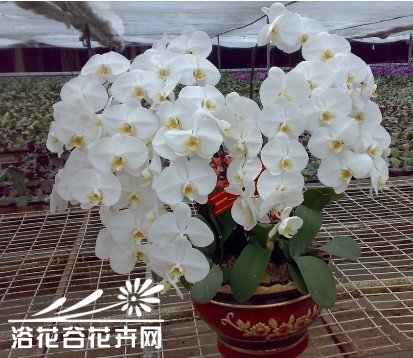
Phalaenopsis mainly relies on foliar feeding to promote plant growth, so during its growing season, spray once a week with a 0.1%-0.3% complete nitrogen-phosphorus-potassium fertilizer or potassium dihydrogen phosphate, as well as pesticides such as lime sulfur mixture, carbendazim, and thiophanate-methyl, to prevent and treat diseases.
1) Greenhouse cultivation of Phalaenopsis: it can be grown in a soilless medium or planted directly in soil. Soilless media can include moss, peat, and bark. Several companies in Yunnan use moss as a potting medium and apply nutrient solution together with water and fertilizer, with good results.
(2) For soil cultivation of Phalaenopsis, the medium can be made from peat, perlite, and leaf mold mixed with an appropriate amount of red soil, and used after steam sterilization. In the greenhouse, build planting beds 1.2 m wide and about 20—25 cm deep. The beds should have good drainage and aeration, and it is best to build raised beds isolated from the ground. Place the growing medium in the beds. The greenhouse should be equipped with ventilation equipment, shading equipment, misting equipment, heating equipment, and drip irrigation equipment.
(3) The planting density of Phalaenopsis is 20—32 plants per square meter, planted at equal spacing. After planting, watering is mostly done by spraying. Use soft water for spraying to prevent water scale from remaining on the leaf surface and affecting growth. Spraying mist both waters the plants and raises the air humidity, which is beneficial to plant growth and development.
(4) Fertilization of Phalaenopsis is basically done together with watering. Generally, macronutrients and micronutrients are dissolved in water in proportion, the pH is adjusted to slightly acidic, and then the whole plant is sprayed once or twice a week at a concentration of 0.1%—0.2%. It is best to use fertilizers that the plant can absorb directly.
(5) According to the ecological habits of Phalaenopsis, adjust the most suitable light, temperature, and humidity, and keep the environment ventilated. Creating the most suitable environment for the growth and development of Phalaenopsis is an important condition for ensuring the yield and quality of cut flowers.
(6) Shaping and pruning of Phalaenopsis: when the plant blooms, the top of the flower stalk sometimes droops, and it can be supported with a bamboo stake. For potted ornamental plants, wire supports can also be used, specifically bending the upper part so that the flower stalk has a certain shape, thereby improving its ornamental value. In addition, for soil-planted plants, remove peripheral dead leaves promptly and burn them in a centralized manner to prevent infection by pathogens.
(7) Main diseases and pests of Phalaenopsis: bacterial soft rot, leaf spot, gray mold, anthracnose, blight, slugs, and so on; prevention and control should be strengthened. Cut flower harvest: the suitable harvest time is when 2—3 small flowers at the base of the inflorescence have opened. After harvesting, the cut flowers are sorted and graded, then packaged as single stems and packed for market. If storage is needed, because Phalaenopsis is sensitive to low temperatures, it should be stored at no lower than 13 degrees C to avoid cold damage.
Humidity for Phalaenopsis: Phalaenopsis likes relatively high air humidity and should be kept at 70%-80% during the growing period. Therefore, water should often be sprayed into the surrounding space to increase humidity, but the moisture in the medium must not be too high, otherwise root rot easily occurs; a slightly dry medium favors the growth of new roots.
Light for Phalaenopsis: according to weather conditions, open the shade net promptly every day to promote photosynthesis in Phalaenopsis. When the temperature is relatively high or the humidity is too great, open the roof vents for ventilation. Fertilization for Phalaenopsis: adhere to the principle of "light fertilizer, frequent application." A 1500-fold compound fertilizer can be mixed with 5000-fold boric acid for spraying, and thereafter apply 1500-fold compound fertilizer once every other week. In addition, Phalaenopsis has fleshy roots, and to make its root system thick, the application of potassium fertilizer is relatively important.
Light and Shading
Orchids grown outdoors need shading: 70%-80% shading in summer, 50%-60% shading in spring and autumn, and 40%-50% shading in winter. Shading materials include shade nets, curtains, or homemade racks made of wooden strips or bamboo slats. Homemade shade racks should have strips 4-5 cm wide with 3.3-4 cm spacing, placed about 1 m above the orchid pots.