How do you grow orchids? Getting the root system healthy comes first
Roots are the foundation of all growth and the main part through which plants absorb nutrients. If the roots are not well cared for, then the flower or tree will certainly not grow very well. Among flowering plants, the roots of orchids are especially important. But keeping orchid roots healthy is not an easy thing.
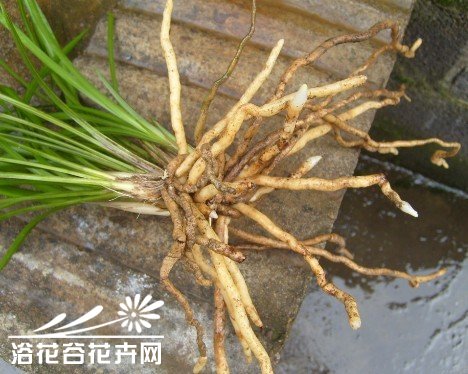
However, keeping orchid roots healthy is no easy task. Not only beginners in orchid growing, but even famous orchid growers inevitably make the occasional misstep. Now, based on the experience and lessons of various growers in keeping orchid roots healthy, combined with my own practical experience, the causes of poor orchid roots and the methods to prevent them are described below:
1. Orchid root damage caused by lifting seedlings, transport, division, and so on:
Such damage is unavoidable; the only option is to operate as carefully as possible to reduce broken roots and rotted roots. All broken roots and rotted roots should be cut off, then the roots should be turned and sun-dried in weak light for one to two hours, or air-dried for half a day to a day, to help the wounds scab over. Then place them in a 0.2 percent potassium permanganate or other sterilizing agent solution and soak for one hour to disinfect, remove and wash clean, then air-dry again before planting. Do not water within two days after planting; supplement nutrients by foliar spraying.
2. Unsuitable growing medium:
Improper pH of the growing medium. In areas where the soil tends to be alkaline, the pH of the growing medium should be carefully tested, and the pH value of the growing medium should be adjusted to 5.5 to 6.5.
The growing medium is not loose and airy enough, and its drainage performance is low. The sand content of the growing medium should be around 40 percent. You can also mix in 20 percent burned soil that has been thoroughly leached by repeated rainfall; because burned soil has no stickiness, it can ensure the growing medium stays loose. To enhance the air permeability and drainage of the growing medium, if conditions permit, mix in 10 percent wood shavings or dried root shavings of ferns.
3. Improper choice of orchid pot:
Some orchid growers, often in pursuit of beauty, buy porcelain pots. Because porcelain pots are fine and dense in texture, their water seepage and air permeability are extremely poor, which affects orchid root growth. It is best to choose rough-textured earthenware pots with tall feet, and ideally with drainage and air holes at both the bottom and the rim of the pot.
4. Improper management:
Waterlogging damage. Most beginners in orchid growing mistakenly believe that orchids like moisture, so they water every day, or even several times a day, causing the fleshy orchid roots to breathe poorly and rot. The most appropriate time to water is the second or third day after the surface soil shows slight signs of drying and whitening. http://www.yuhuagu.com
Drought damage. Beginners in orchid growing, fearing that too much watering will cause waterlogging damage, only water a little each time watering is needed, just enough to moisten the surface soil and the pseudobulb area, causing the plant's leaves to wilt.
Freezing damage. Orchids cannot tolerate subzero low temperatures or attacks of frost and fog. From mid-autumn onward, nitrogen fertilizer should be stopped, while phosphorus and potassium fertilizers and compound trace elements should be increased, and the amount of light should be gradually increased to enhance cold resistance. When a cold wave is approaching, protective measures should be taken. In the south, plastic film can be used to seal tightly for insulation; in the north, plants should be moved into a greenhouse to prevent freezing damage.
Fertilizer damage. Whenever the growing medium contains organic fertilizer that has not been fully fermented, or the proportion of organic fertilizer is too large, fertilizer damage often occurs. If chemical fertilizers such as agricultural potassium sulfate compound fertilizer are applied, the concentration should be controlled between 600 times and 800 times, and within half a day after application, fertilizer water and leaf-washing water should be applied. During the growing period, it can be applied once every half month; do not apply during the flowering period or dormant period, and do not apply when the temperature is low or on cloudy and rainy days. It is worth noting that urea can only be sprayed at extremely low concentration and must not be used for drenching.
Fungal and insect pests. The causes of orchid fungal and insect pests, besides seedlings carrying pests and diseases and poor disinfection, also include culture media, orchid pots, and sites that have not been disinfected or were poorly disinfected. In addition to frequently checking for fungi and insects and regularly using pesticides to wipe out fungal and insect pests, the disinfection of seedlings, media, orchid pots, sites, hands, and tools must not be neglected. For pests such as cockroaches, flies, and mosquitoes, related chemicals such as “Miehai Ling” should also be chosen and sprayed on the pot rims and the site to eliminate them. Orchid growing medium should also be disinfected. When the temperature begins to rise again, combine with watering and choose low-residue, high-efficiency agents such as thiophanate-methyl, carbendazim, and agricultural streptomycin, applying one type alternately once a month.
Stale air damage. Orchids like ventilation and air permeability, and fleshy orchid roots need fresh air even more. In my orchid-growing practice, I also insert a drainage and air-guiding tube with a diameter of 1 cm to 2 cm and with many small holes around it into the orchid pot, to achieve all-around ventilation and air permeability.