How to Increase Orchid Fragrance? A Detailed Guide to Practical Care Methods
In nature, orchids exude a delicate fragrance that refreshes the heart and mind, earning them the reputation of the “king's fragrance” and making them highly favored by people around the world. For thousands of years, people have cherished orchids, and their charm lies in that delicate fragrance. An orchid without fragrance is not worth keeping. Practice has shown that to increase orchid fragrance, attention must be paid to the following issues.
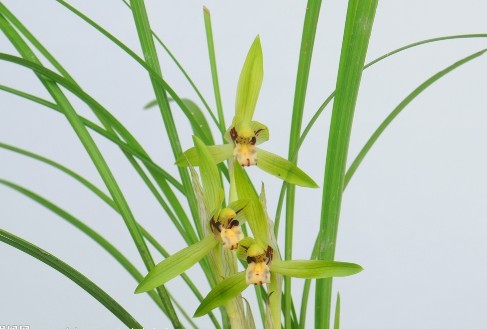
First, the growing medium must be rich in nutrients
It is best to use improved orchid soil. For thousands of years, people have always used orchid soil to grow orchids and raise orchids (Cymbidium). As long as they are planted and cared for properly, they will naturally be fragrant year after year. To better solve the problem of air permeability and drainage in the growing medium, modern people have advanced with the times and created various granular growing media, which is a major step forward. Because artificial granular growing media generally lack nutrients, people have also used modern technology to create various orchid fertilizers to supplement their insufficient nutrients, achieving relatively good results. However, artificial chemical fertilizers cannot fully meet the large demand of orchids for trace elements and minerals during growth. Therefore, if orchids are grown solely with artificial granular media and flower fertilizers, their flower quality, especially the delicate fragrance of the orchids, will be affected to varying degrees. Practice has shown that the best way to grow orchids is to combine modern and traditional methods, mixing sieved orchid soil with artificial granular growing media to plant orchids. The orchids and cymbidiums will then be robust, the flower colors beautiful, and the delicate fragrance overflowing, giving the best effect.
Second, appropriately increase light
Let orchids get more sun. Much of the nutrients needed for orchid flower bud differentiation and opening are produced through photosynthesis. The longer the light duration, the more nutrients are produced through photosynthesis, and the stronger the floral fragrance. If light is insufficient, although the plant may grow luxuriantly, because fewer nutrients are produced, the orchid will rarely bloom, and even if it blooms, the fragrance will be mediocre. Therefore, appropriately increasing light and letting orchids get more sun in spring, autumn, and winter is a necessary condition for orchids to bloom and release fragrance on schedule.
Third, strive to create a suitable temperature difference
Orchid growth is a unity of photosynthesis and respiration. On one hand, during the day the orchid plant continuously produces nutrients through photosynthesis; on the other hand, the orchid plant continuously carries out respiration day and night, consuming nutrients. The higher the temperature, the more nutrients are consumed; the lower the temperature, the less nutrients are consumed. Only when the nutrients produced by photosynthesis exceed the nutrients consumed by respiration is it possible for the orchid to bloom and release fragrance. It can be seen that a necessary temperature difference is an indispensable condition for the delicate fragrance of orchids.
Fourth, orchids and cymbidiums need sufficient vernalization
The winter temperature for wild orchids and cymbidiums is generally between 0°C and 15°C. Although the orchid seedlings do not grow, the flower buds continuously grow and fill out, accumulating nutrients in preparation for blooming. This is an unavoidable stage that orchids and cymbidiums must pass through before blooming. If the winter temperature is too high and vernalization is insufficient, orchids and cymbidiums will show bud blasting. Even if they bloom, the flower quality will be poor and the fragrance weak.
Fifth, during flowering the potting soil should preferably be moist with a touch of dryness
When orchids are in bloom, the moisture level of the potting soil is also one of the factors affecting orchid flower quality and floral fragrance. Before the flowers open, water thoroughly once; after the flowers open, generally do not water, otherwise it will affect orchid fragrance. Practice has shown that allowing orchids to bloom under moderately dry conditions makes the orchid fragrance stronger. This is a trick for increasing orchid fragrance.